Holy oils for use across the Archdiocese of Detroit in the coming year offer lessons for all priests, Archbishop Weisenburger says
DETROIT — Priests from across the Archdiocese of Detroit gathered April 2 to celebrate the annual Chrism Mass with Archbishop Edward J. Weisenburger at the Cathedral of the Most Blessed Sacrament in Detroit, where they received the holy oils that will be used for baptisms, confirmations, anointings, ordinations and blessings of churches and altars across southeast Michigan in the year to come.
Archbishop Weisenburger said he looks forward every year to the liturgy, which he said “reveals the fullness of the Church,” and, as the years go by, he focuses less on the oils themselves and more on those who will be anointed by them.
This year, the Archdiocese of Detroit is set to receive 1,428 people into the Church at Easter, the highest number since 2005.
In addition to using the oils to welcome catechumens and candidates into full communion with the Church this weekend, Archbishop Weisenburger noted the coming Eastertide also will include the ordination of four transitional deacons to the priesthood, who will be consecrated with the sacred chrism.
The Chrism Mass holds special meaning for all priests, Archbishop Weisenburger said, as it's the day when priests around the world renew their vows and celebrate their priesthood.

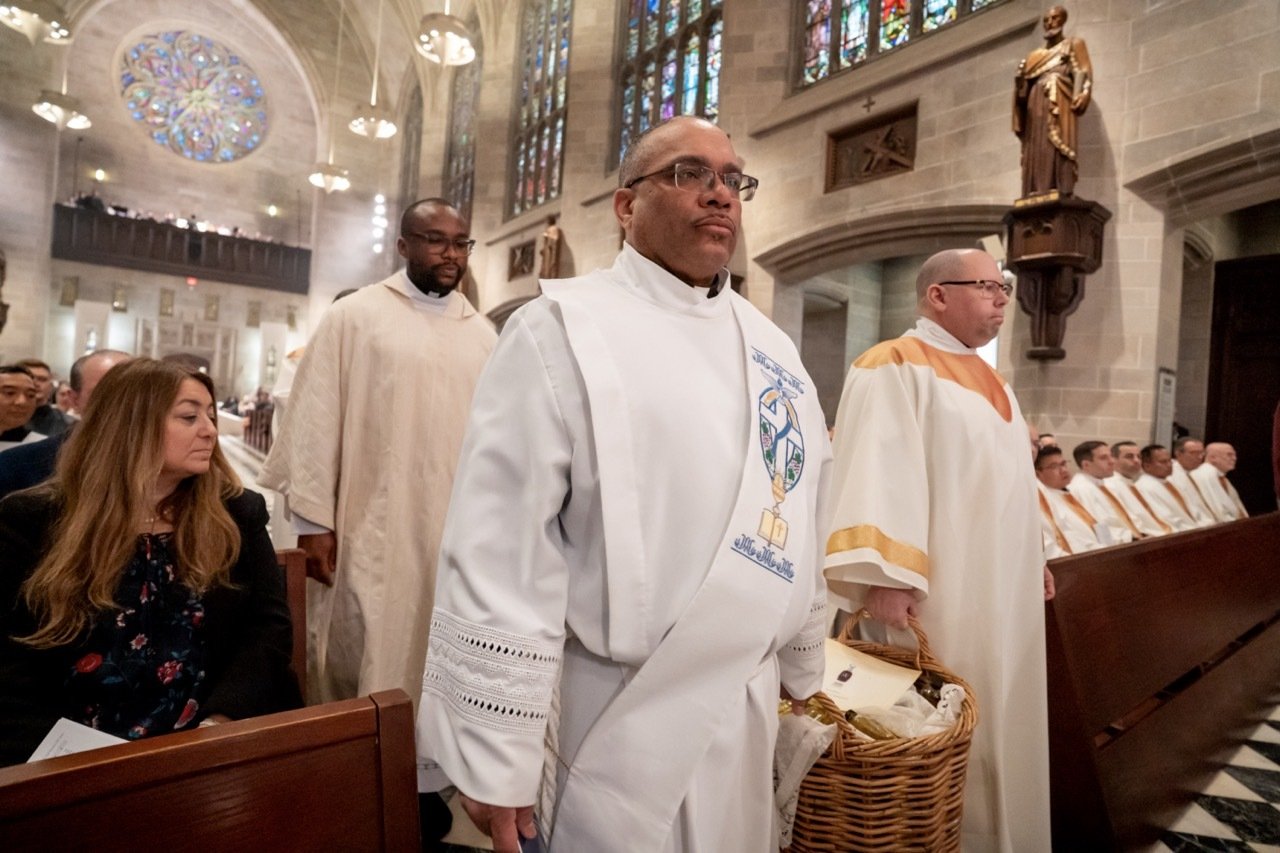
While there are many blessings to be counted in the archdiocese in the year ahead, including the significant number of people entering the Church, Archbishop Weisenburger said local priests are also facing many challenges and hardships.
However, the holy oils offer a lesson for all priests, the archbishop added.
“Just as a grain of wheat must be ground down, to be made into the Bread of Life, and just as the grape must be crushed so that it becomes the drink of our salvation, and just as the olive is pressed so that the finest might be made into the very oil that conveys the holiness of God, perhaps, Fathers, this is the time that we priests are being — dare I say it — ground down, crushed or pressed,” Archbishop Weisenburger said.
“As the grapes are crushed, is it not in preparation for them also to be refashioned into the very blood of our Redeemer?” the archbishop asked. “The olives sent to be pressed were not pressed in the sense of being destroyed — quite the contrary. The pressure applied was to prepare them to convey God’s presence and life.”
Archbishop Weisenburger pointed to examples of archdiocesan priests who were pressed, refined, and challenged and who served their communities faithfully, including the late Msgr. Daniel Trapp, Fr. Gabriel Richard, and Fr. Norman DuKette, the first Black priest to serve the Archdiocese of Detroit.
“Fathers, if there is something of the grain of wheat, if there is something of the grape, or if there is something of the olive in every great priest, then, rather than in any way resenting what we are being refashioned and remade into, perhaps we should recognize we stand in the footsteps of these giants before us and embrace the challenges of today with a certain hopefulness and trust,” Archbishop Weisenburger said.
“For after all, just as we will and must first celebrate our Lord's passion and crucifixion, only then on Easter will we know the fullness of redemption and joy.”
Additional photos