
Observance of World Day of Migrants and Refugees at cathedral reflects the Church’s long-held teaching on human dignity
DETROIT — For 112 years, the Catholic Church has set aside a specific day to recognize the God-given dignity of migrants and refugees.
The World Day of Migrants and Refugees was instituted in 1914 by Pope St. Pius X, who was moved by the trauma of Italian migrants who suffered, faced oppression and endured indignation after traveling to the New World.
Every year, the universal Church sets aside a Sunday in the early fall to pray for the safety and well-being of people forced to leave their homes.
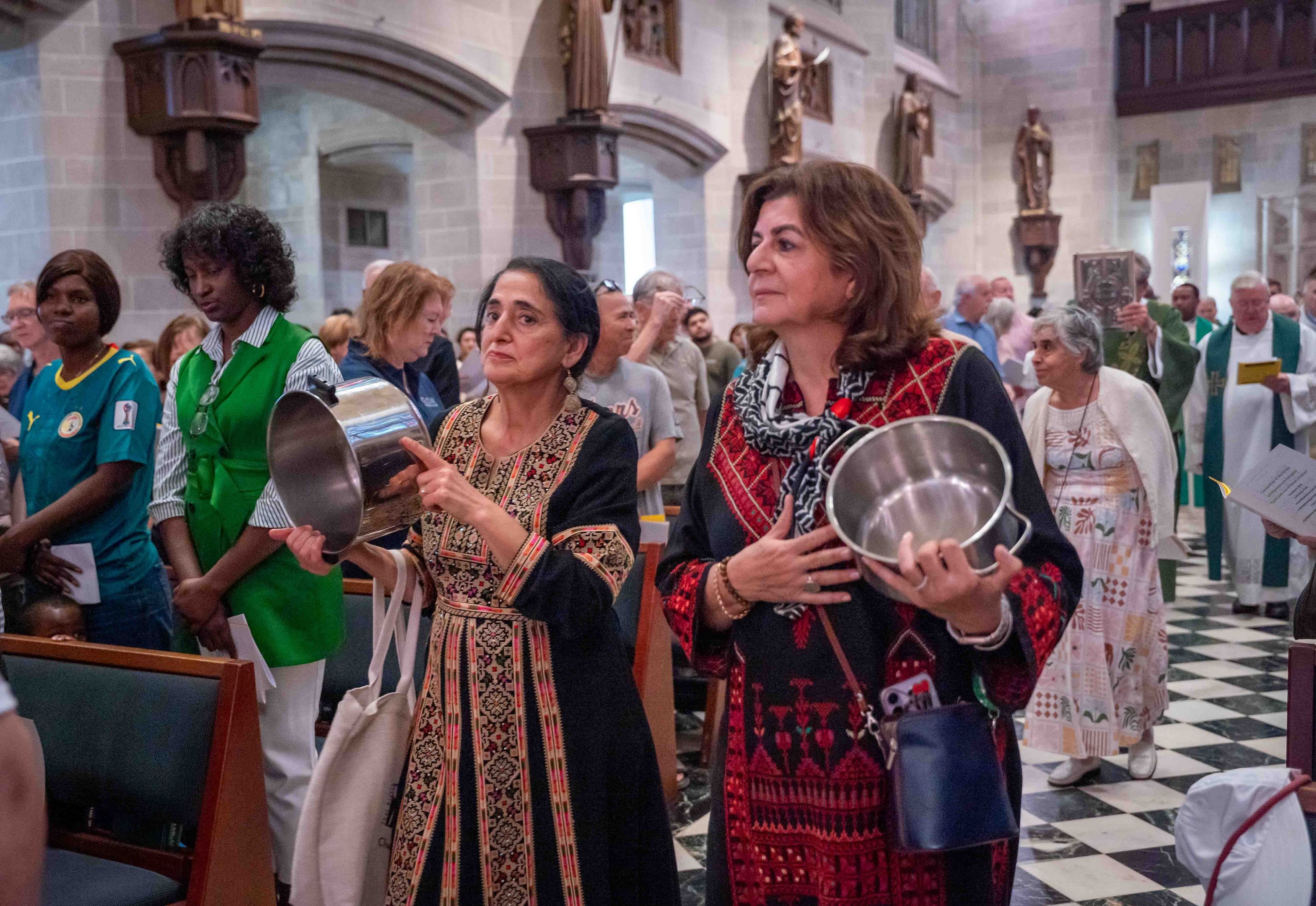
Following the universal Church's observance of the 112th World Day of Migrants and Refugees, the faithful of the Archdiocese of Detroit gathered Oct. 4 at the Cathedral of the Most Blessed Sacrament to reflect on the plight of migrants and refugees in 2026, and the perpetual call to see Christ in the stranger.
Detroit Archbishop Edward J. Weisenburger opened his homily with sobering statistics from the United Nations Refugee Agency regarding the state of migrants and refugees from its latest report released in 2025.
In 2025, 117 million people — roughly one in every 70 people on earth — were forced to move from their homes. In total, 304 million people — one in every 27 people in the world — were at some point international migrants, forced to leave their homes due to economic circumstances, political instability, demographic shifts, environmental change, labor demands and the potential for education.
“With these sobering statistics in mind, perhaps we can meet them with the words found on the opening page of the United States Conference of Catholic Bishops' website on immigration and migration,” Archbishop Weisenburger said: “‘The Catholic Church in the United States is an immigrant Church with a long history of embracing diverse newcomers and providing assistance and pastoral care to immigrants, migrants, refugees, and people on the move. Our Church has responded to Christ’s call for us to 'welcome the stranger among us,' for in this encounter with the immigrant, the migrant, and the refugee in our midst, we encounter Christ.’”
The situation and countries of origin for immigrants coming to the United States in 2026 have changed since 1914, when mostly European migrants arrived by ship to Ellis Island and faced few requirements and barriers to entry. Today, most migration to the U.S. comes from Latin America, with aspiring migrants facing stringent work requirements, lengthy asylum processes and financial and legal barriers that are often insurmountable.
But despite the circumstances, the Church's mission remains the same: to see the human dignity in every person, Archbishop Weisenburger said.
The archbishop cautioned against extremes in the debate surrounding immigration, drawing upon the Church's clear and consistent teaching.
“We’ve gone from a level of migration and immigration that was admittedly unsustainable, to a suspended immigration system that is morally unacceptable,” Archbishop Weisenburger said. “It’s clear we need change, and serious change. However, as painful as it is to acknowledge, I think we’ve learned the truth from the pro-life movement that changing laws is no guarantee for long-term change. While addressing immoral, unethical laws, policies, and procedures is a critically important endeavor, there’s no guarantee of lasting success unless we first change minds and hearts.”
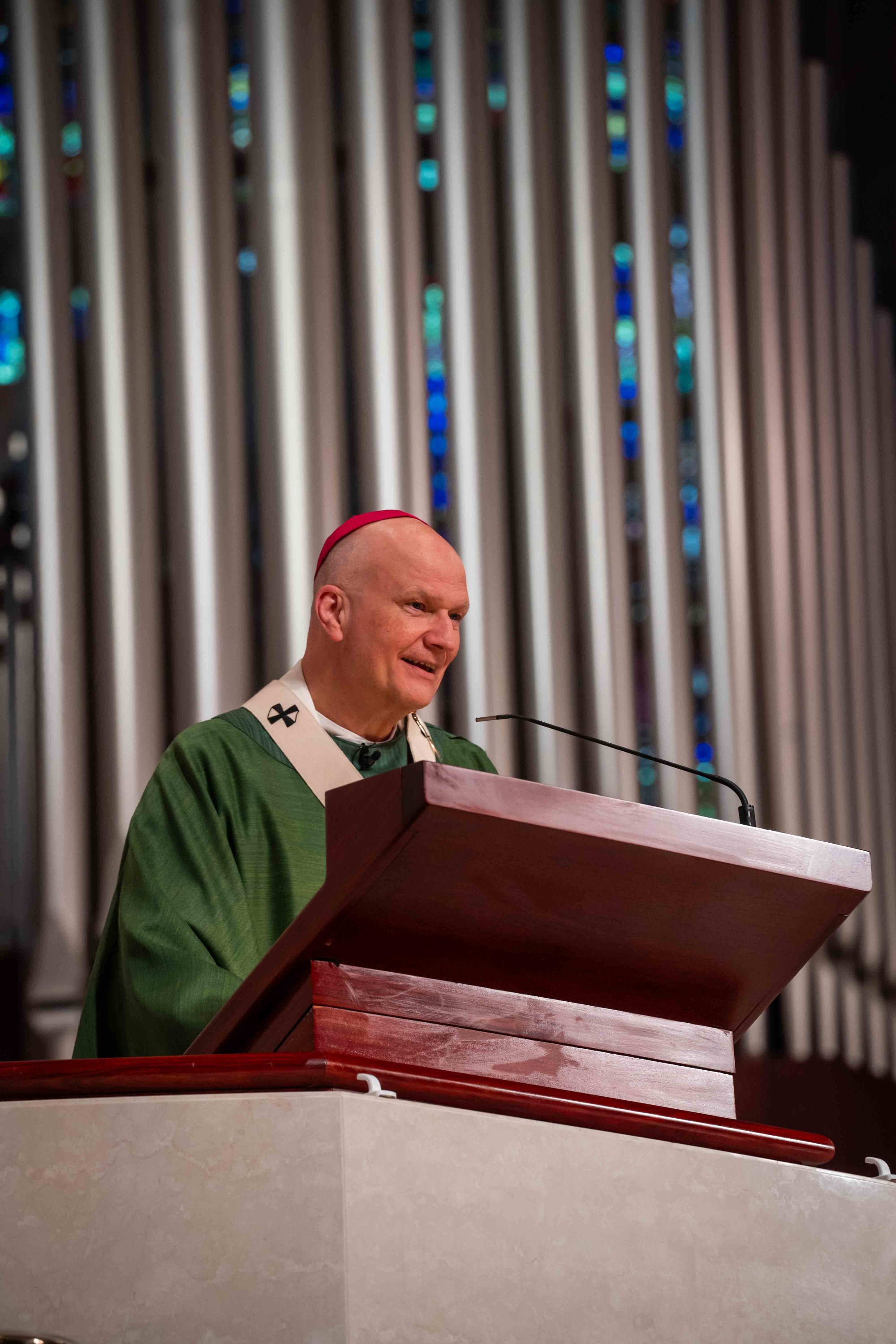
Reflecting upon the Gospel reading from St. Matthew, in which the tenants of the master's vineyard plot to kill the master's son in order to take possession of his property, the archbishop drew parallels to the fortunate situation of many in America today.
“I suspect a majority of us here today are actually citizens of this great nation. And to be a citizen of the United States is to be privileged. We have been given much, but we equally must acknowledge that we have taken much," the archbishop said. "And yet, with an economy where the richest few become bizarrely wealthier, and the poor grow even poorer, could it be that our nation has entered into a collective fear — fear of losing what we have — that has led us to shut the doors to the world’s poor?”
Such fear "takes us where we really would not want to go," the archbishop continued, including the vilification of those who look different, of the downtrodden and the suffering.
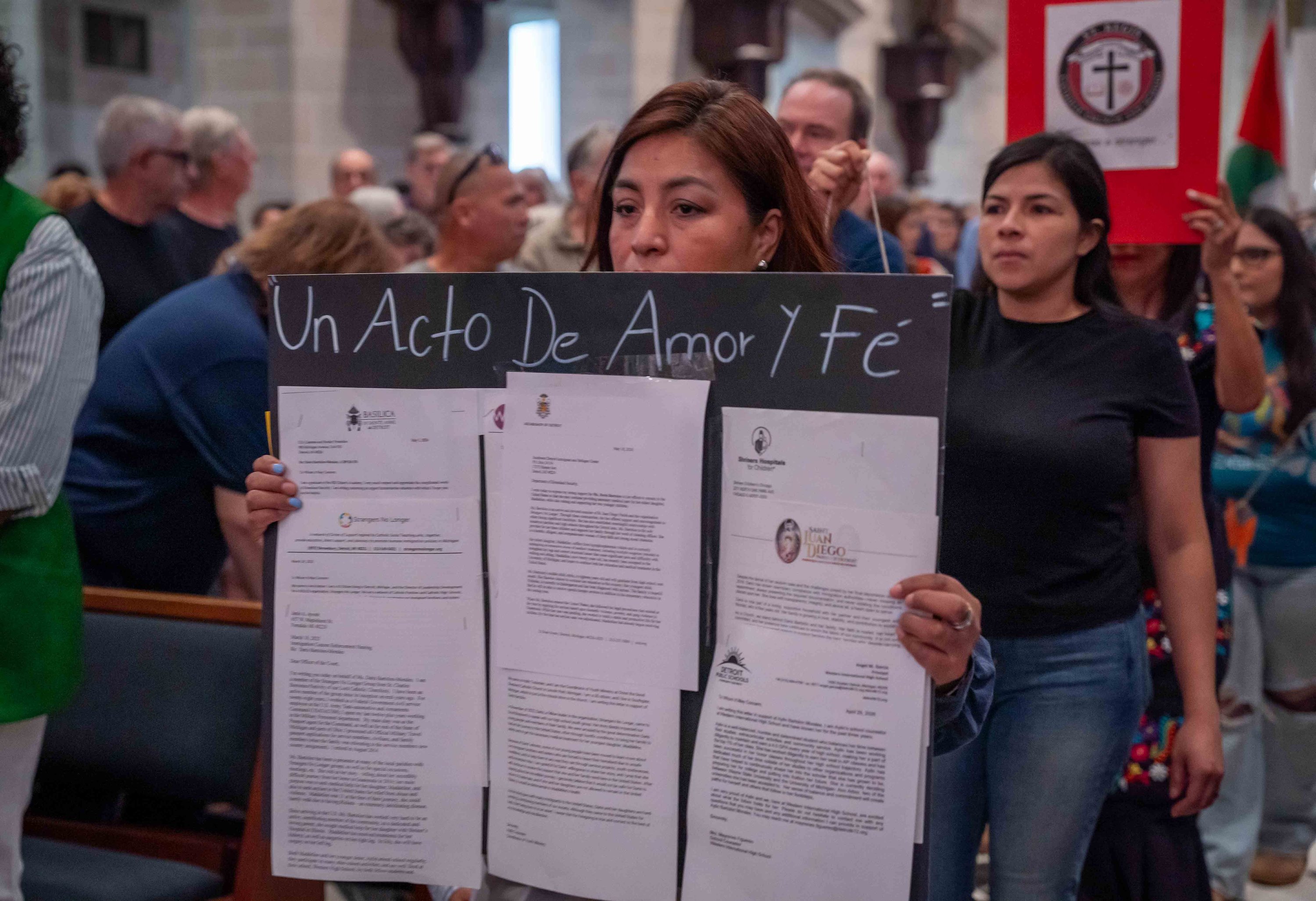
Before Mass, members of Strangers No Longer, a Catholic lay-led organization that promotes the rights and dignity of immigrants, organized a procession around the cathedral grounds, calling to mind those who have faced deportation, incarceration, or even been killed in encounters with Immigration and Customs Enforcement.
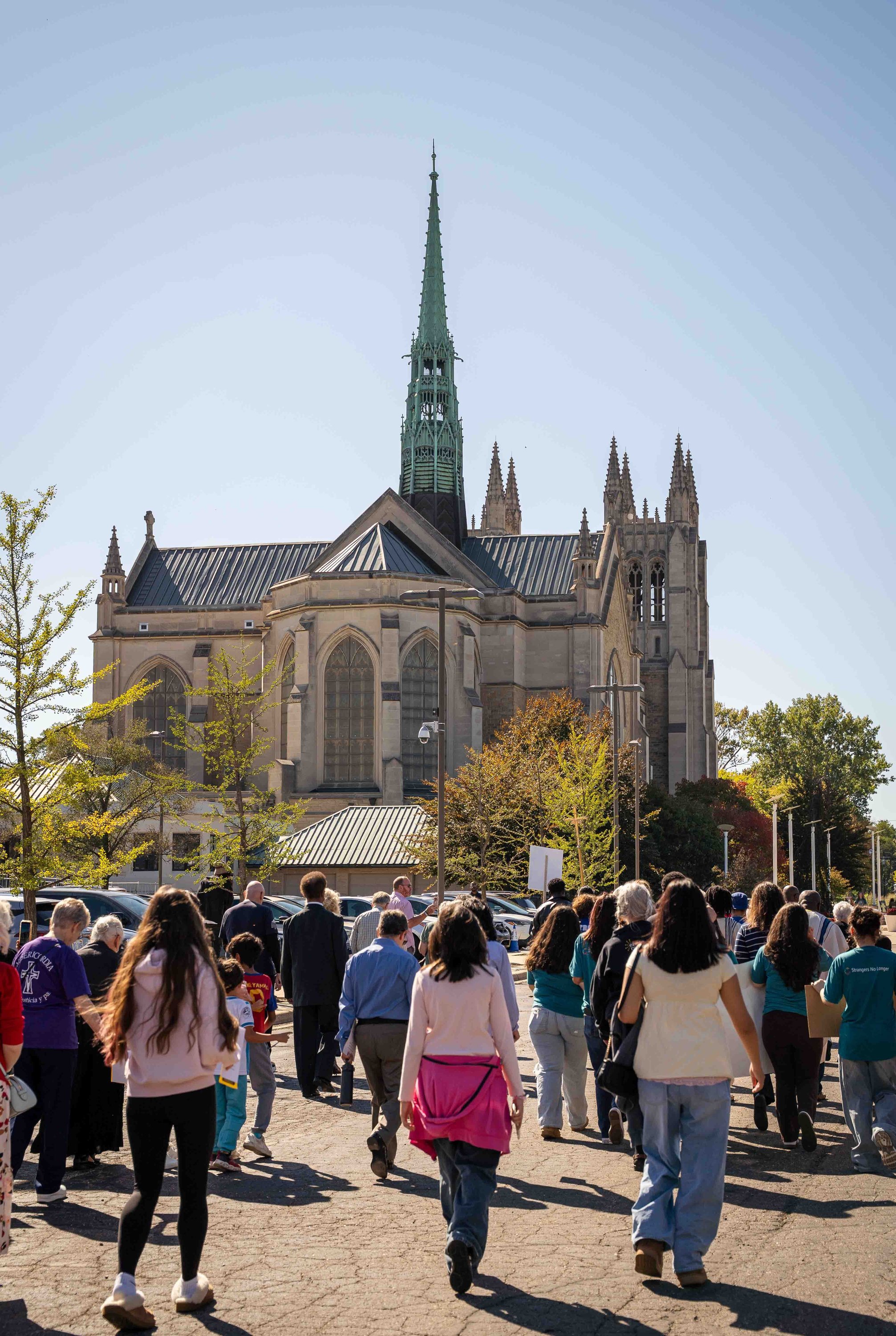
Della Lawrence, campus minister at Notre Dame Preparatory in Pontiac and a parishioner at St. Mary of the Hills Parish in Rochester Hills, led a reflection before the procession.
Lawrence drew upon the words of Cardinal Robert W. McElroy in celebrating the 112th World Day of Migrants and Refugees in Washington, D.C., who, in reflecting on the parable of the Good Samaritan, challenged Catholics not to idly "pass by" those in need.
“For the last year and a half, people of the United States have witnessed the suffering of undocumented people in our midst," Lawrence said. “We were told that enforcement efforts would be confined to securing the border and deporting those who had committed serious crimes, but we witnessed the indiscriminate raids of farm workers and families. People have been arrested in Home Depot parking lots, in nursing homes, in schools. This is a war on every undocumented immigrant in our lives, including those who have been here for decades and contributed enormously to our economy and to the culture of this nation.”
The celebration of World Day of Migrants and Refugees included time for groups to gather to discuss how their communities can better stand in solidarity with migrants and refugees.
Kate Kulish, a senior at Mercy High School in Farmington Hills, is part of the Strangers No Longer youth group that helped organize the Mass and celebration at the cathedral.
“In our reflection today, we talked about all the children who were held unjustly in detention, and then we read all the names of people who have died by ICE,” Kulish said. “It was just a full circle moment, and it just really spoke to the issues happening in America right now.”
Eleanor Kromer, a student at Bishop Foley High School in Madison Heights, joined the Strangers No Longer Circle of Support at her school after learning about some of the ways young people are suffering. Kromer was likewise moved by the reading of the names of those who had died in detention centers.
“It’s just sad to hear how much these people have suffered, supposedly in our name,” Kromer said.
Kulish and Kromer both said they see it as their responsibility to call for greater accountability and raise awareness among their peers of the need for just immigration policies and enforcement.
“Our generation wants, at the end of the day, our country to see immigration as a human rights issue,” Kulish said. “We want to see everyone treated fairly, especially because in America, everyone has rights. It’s in the 14th Amendment; anyone who enters the United States has rights, no matter how they got here. We want to see the Constitution upheld, so everyone will be treated with rights and dignity.”
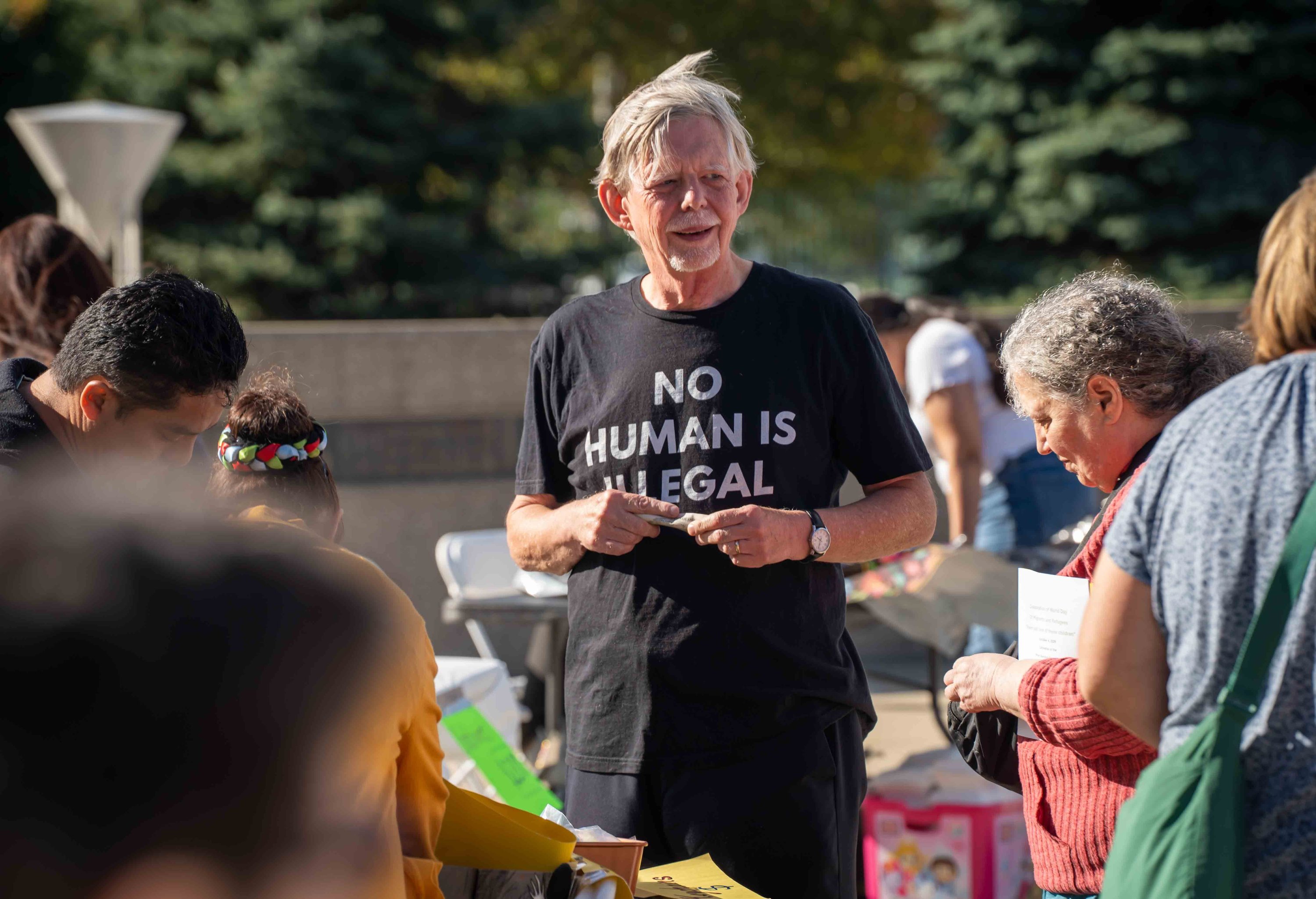
After Mass, members of Strangers No Longer organized a cultural celebration in the cathedral's plaza with food, music and information representing the many cultures in the Catholic Church.
“We have a whole bunch of ethnic foods from different nationalities as a way to celebrate how many years of migration from different parts of the world have made our Church and country richer,” said Christina Potkay, Strangers No Longer circle leader at Resurrection Parish in Canton.
Potkay said the presence of a Circle of Support at her parish has led to a greater awareness of Catholic social teaching, especially surrounding immigration.
“It reminds us that we're part of a larger community filled with our brothers and sisters all around us, and that we're one in Christ,” Potkay said.