
Detroit native encourages Society of Jesus to continue to go to the margins, following in the footsteps of pioneers of decades past
DETROIT — Cardinal Joseph W. Tobin, the archbishop of Newark, N.J., returned to his hometown July 31 to celebrate the 150th anniversary of the Society of Jesus’ presence in Detroit during a Mass at SS. Peter and Paul (Jesuit) Parish in downtown Detroit.
Celebrating the Feast of St. Ignatius of Loyola, founder of the Jesuit order, Cardinal Tobin — a Redemptorist himself — said the occasion was much more than a time for reflection on the successes of the past, but a time of discernment about the Jesuits' mission for the future.
“We gather at an extraordinary milestone, 150 years of Jesuit ministries in the city of Detroit,” Cardinal Tobin said. “A sesquicentennial is a remarkable achievement, but we’re not here merely to dust off old yearbooks. We, as Pope John XXIII said, must ask, ‘Are we curators of a museum, or are we gardeners, willing to sink our hands in the warm, fertile soil and help grow the Ignatian tradition?’”
Cardinal Tobin joined Detroit Archbishop Edward J. Weisenburger in celebrating Mass with members of the local Jesuit community, including those serving at the University of Detroit Mercy, SS. Peter and Paul (Jesuit) Parish, Gesu Parish, University of Detroit Jesuit High School, Loyola High School, Manresa Retreat Center, and the Pope Francis Warming Center and Bridge Housing Facility, among others.
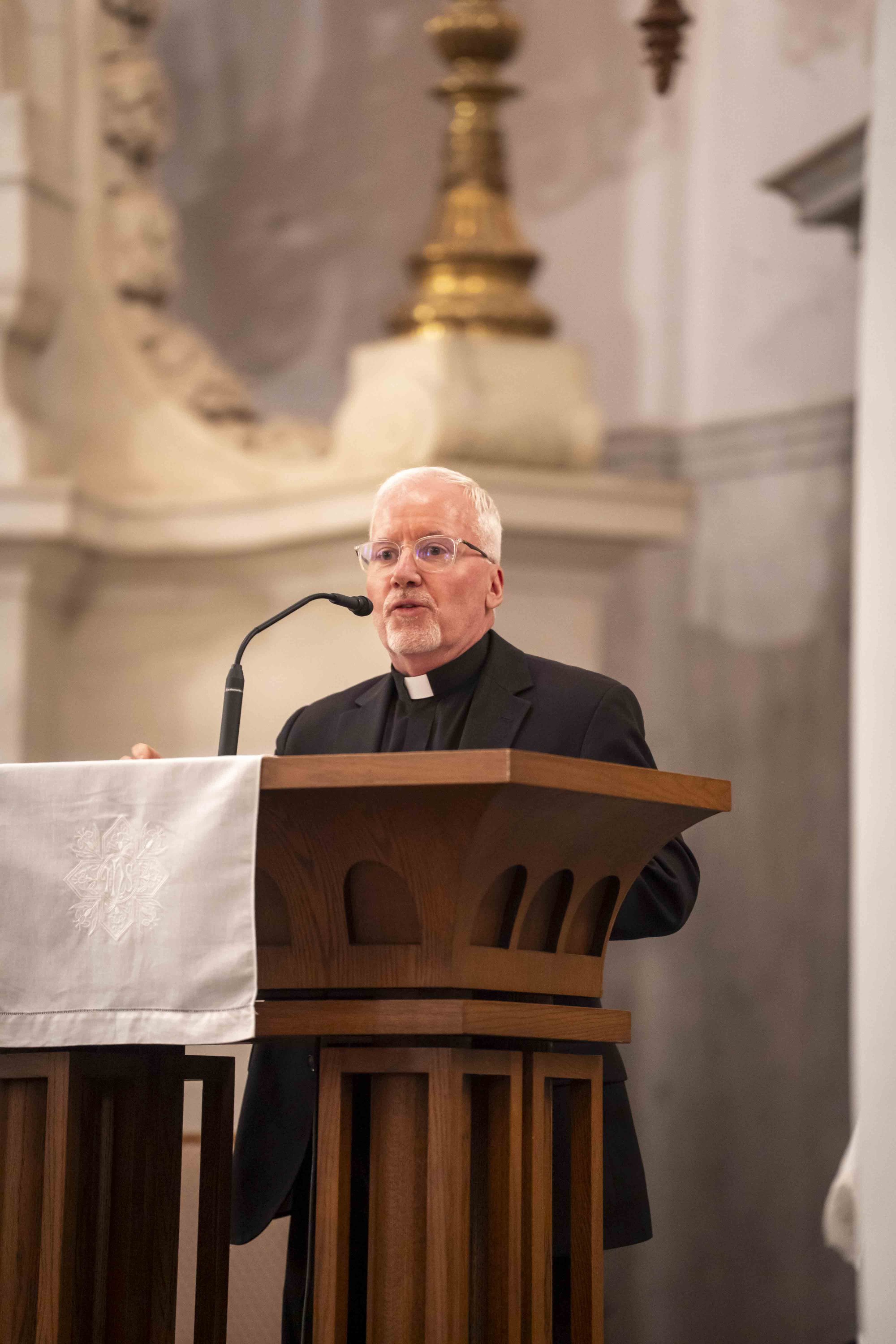
Fr. Tim McCabe, SJ, executive director of the Pope Francis Center, a ministry serving Detroit's unhoused and hungry, welcomed Cardinal Tobin — an alumnus and former pastor of Most Holy Redeemer Parish and School in southwest Detroit — to the celebration.
“All of you know he is a beloved son of Detroit,” Fr. McCabe said. “The story goes that when he was a boy, as a student at Holy Redeemer, whenever there was a fight or commotion on the playground, the sisters would throw the windows open and shout, ‘Joe Tobin, knock it off.’ They know from experience that he was somewhere in the middle of it all.”
Fr. McCabe recalled first meeting Cardinal Tobin in the mid-1980s, when Fr. McCabe was working with refugees from Central America and asked Holy Redeemer Parish for assistance.
“As he grew older, that fiery spirit didn’t fade; it was transformed into a profound love for the Gospel and a deep commitment to the poor and marginalized.” Fr. McCabe said. “I remember knocking on the rectory door to ask for help, and without a moment’s hesitation, he made sure the Redemptorists stood by that ministry, supporting us year after year in welcoming refugees.”
The anniversary celebrations mark 150 years since then-Detroit Bishop Casper H. Borgess invited the Society of Jesus to Detroit in 1876 to establish a college.
In 1877, the Jesuits arrived, with Bishop Borgess gifting the Society of Jesus the Cathedral of SS. Peter and Paul, from which Detroit College — now the University of Detroit Mercy — was established.
Cardinal Tobin said the Jesuits who arrived in Detroit in 1877 were there to serve those on the periphery, just as is the order’s mission today.
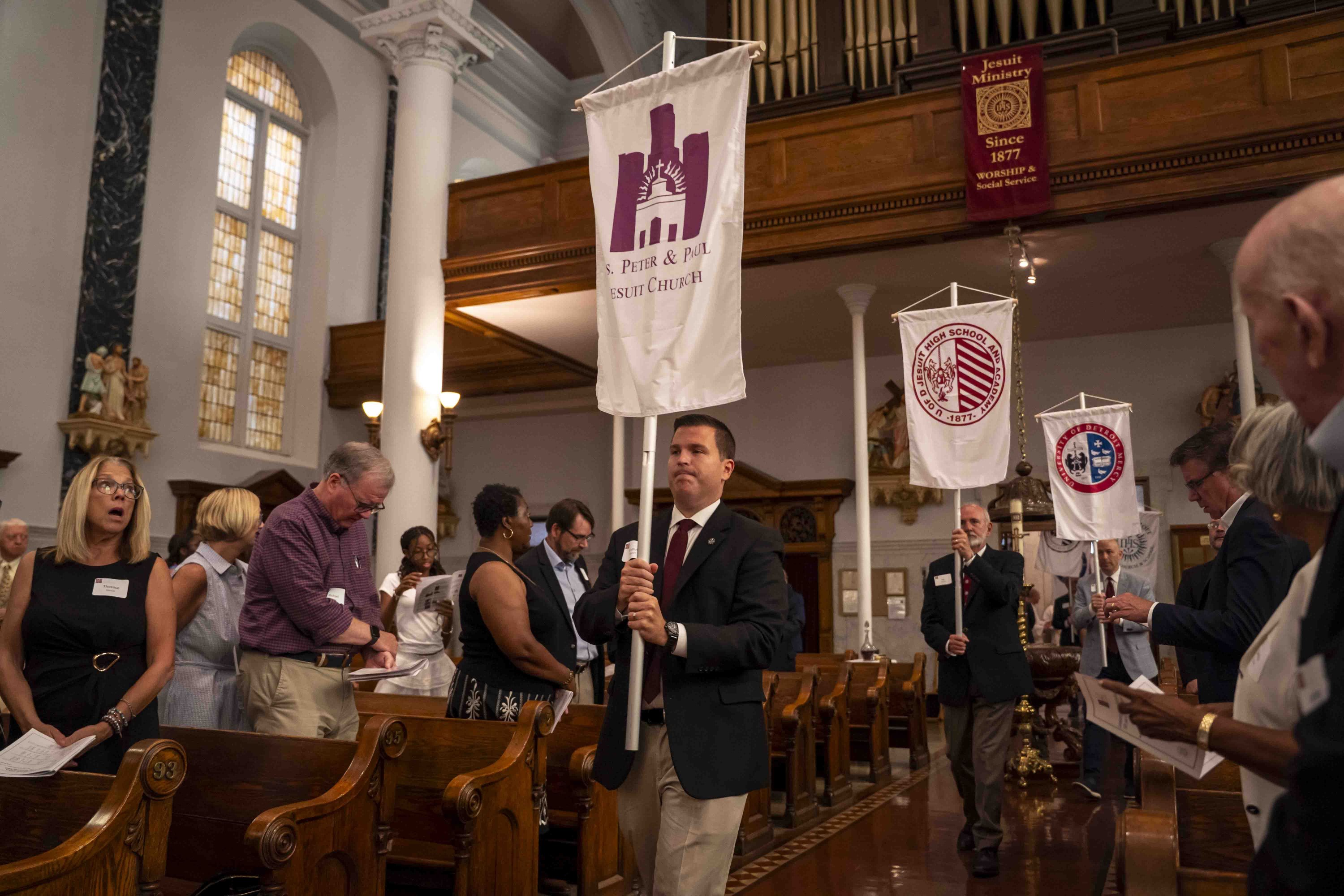
“When the first Jesuits arrived in Detroit nearly 150 years ago, they did not find a museum,” Cardinal Tobin said. “They found a bustling, chaotic and rapidly industrializing frontier. The city was on the cusp of becoming an engine of global manufacturing, a place where waves of immigrants were arriving with nothing but hope and the strength of their hands. It would be a destination for African-Americans from the South, a place where they hoped to find a better life. And the characteristic Ignatian response to this reality was the attitude the society had to not wait for the people to come, but to meet the people where they were.”
Cardinal Tobin noted that through the all the ups and downs Detroit has experienced — from the industrial boom of being the Arsenal of Democracy and putting the world on wheels, to the pains of deindustrialization and racial strife during the civil rights movement — the Jesuits have been there, operating schools and universities, running retreat centers, serving the homeless, promoting literacy and advocating for the rights of workers and immigrants.
It’s a mission that must continue for the next 150 years, Cardinal Tobin said, as the Church — and the world — faces new challenges in living out the Gospel of Jesus Christ.
“Two months ago, Pope Leo XIV published his groundbreaking social encyclical, Magnifica Humanitas — 'Magnificat Humanity,'” Cardinal Tobin said. “In it, the Holy Father addresses one of the most critical frontiers of our time, the explosion of artificial intelligence and digital acceleration. The Holy Father underscores the temptation to view human beings merely as an optimization project, a data set, or an economic unit to be managed by an algorithm. This mindset strips away the transcendent mystery of the humble person; it tells us that our worthiness is found only in productivity and purchasing power.
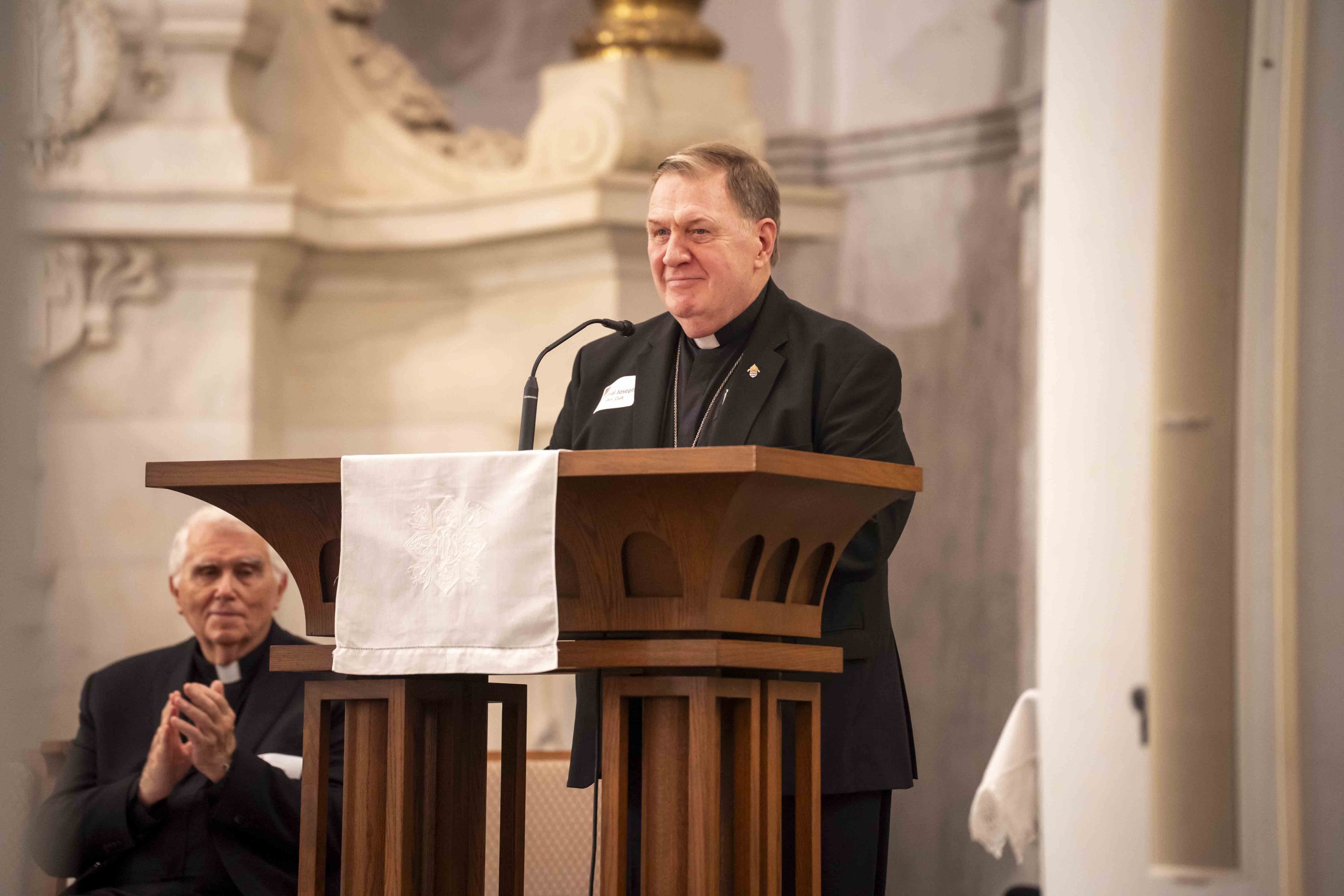
“Here lies a vital mission for Detroit’s educational and social ministry,” Cardinal Tobin added: “As a city built on technological innovation from assembly lines to modern robotics, Detroit also led the way in ethical innovation.”
Addressing the lay faithful also in attendance, including alumni from the University of Detroit Mercy, University of Detroit Jesuit and Loyola High School, along with volunteers and supporters of the Pope Francis Center and Manresa Retreat House, Cardinal Tobin said the responsibilities of the Society of Jesus in southeast Michigan go beyond the professed priests and brothers of the order.
“My dear friends, clearly this mission does not belong to the Jesuits alone,” Cardinal Tobin said. “To the lay collaborators, the benefactors, the alumni, the civic supporters in this church tonight, you are an essential part of the grace that flows from this ministry. You are an essential part of those graces. The Ignatian spirituality has always been a shared one. The Jesuits have taught us that we are all on a journey, called to be weavers of hope. In a world all too ready and primed to despise, without your generosity, your faith and your hard work, the last 150 years would not have been possible, and the next 150 years wouldn’t be possible.
“So let us leave our celebration tonight with a new commitment to walking together into the future,” Cardinal Tobin concluded. “Let us envision a Detroit where power is continually displaced by conscience, where economic progress is measured by solidarity, where technology is always alleged to serve the dignity of humans. Through the intercession of St. Ignatius of Loyola, may the Lord bless the Society of Jesus in Detroit.”
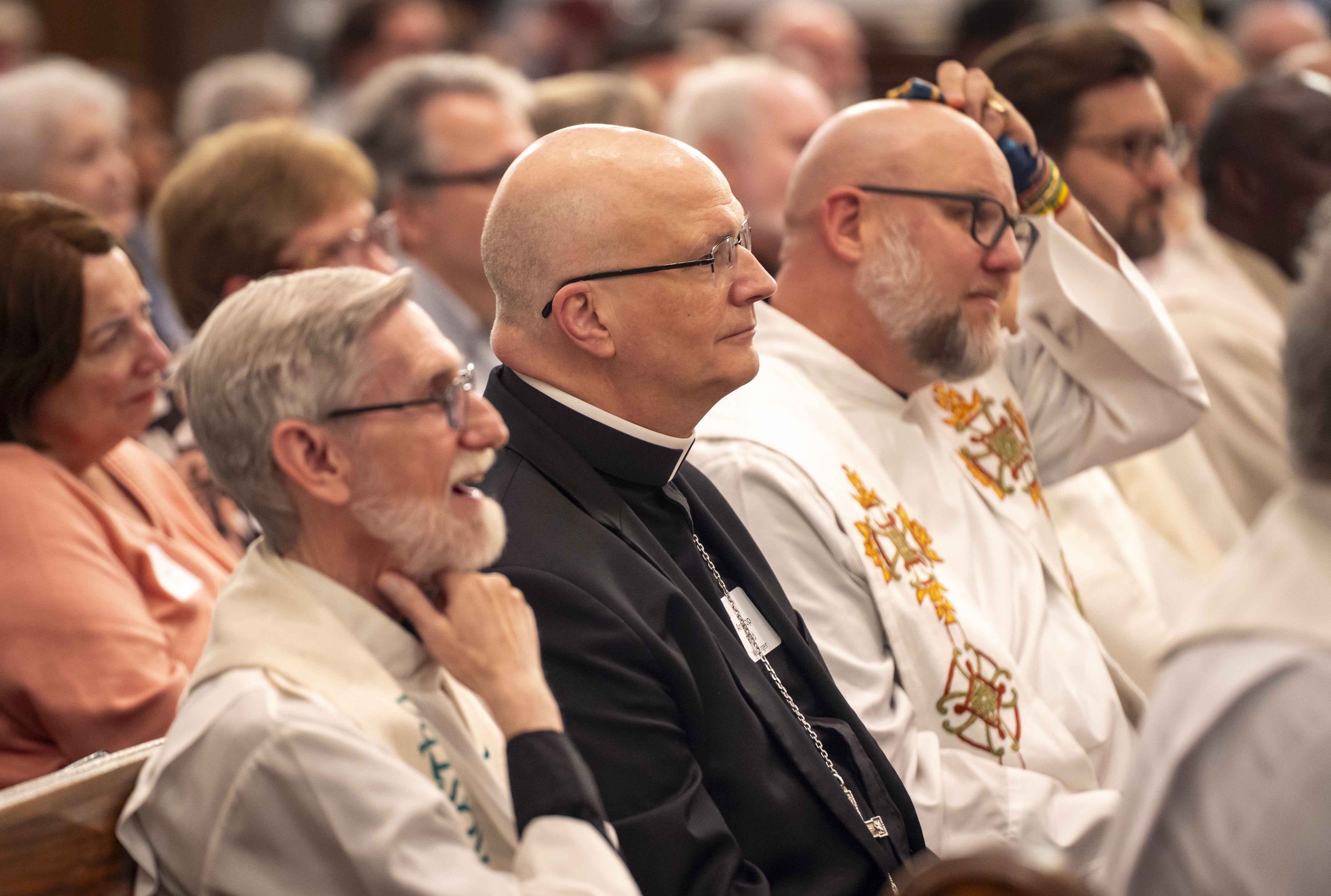
Following Mass, Archbishop Weisenburger thanked Cardinal Tobin for his presence at the celebration and remarked how, through the Jesuits, his prior ministry as bishop of Salina, Kansas, has a connection to the city of Detroit.
“My first predecessor, the first bishop of Kansas, was a man named John Baptist Miège, a Jesuit,” Archbishop Weisenburger said. “He was originally from the Savoy area (in France), and when he came over, he dedicated himself profusely to the work of the order and the good of people.”
Archbishop Weisenburger said that while his ministry as bishop of Salina required him to serve a territory of 27,000 square miles, Bishop Miège's vast territory included all of present-day Kansas, Nebraska, the Dakotas and Montana.
“How surprised he was to get the call to become the first apostolic administrator in the Kansas Territory,” Archbishop Weisenburger quipped. “He probably had to drive himself.”
After Bishop Miège's 15 years in Kansas, the Vatican finally accepted his retirement, when he promptly returned to the Jesuits, only to be sent off to another new place to start a college: Detroit.
“As His Eminence said, what we do is not our own, but is God’s,” Archbishop Weisenburger said. “Certainly, founding a church in Kansas wasn’t his task. Founding a college here in a city he had never visited wasn’t his task. Rather, it was a blessing to have a small role in what was God’s mission.”