

St. Mary Mercy Livonia configures emergency center to address unique needs of older patients
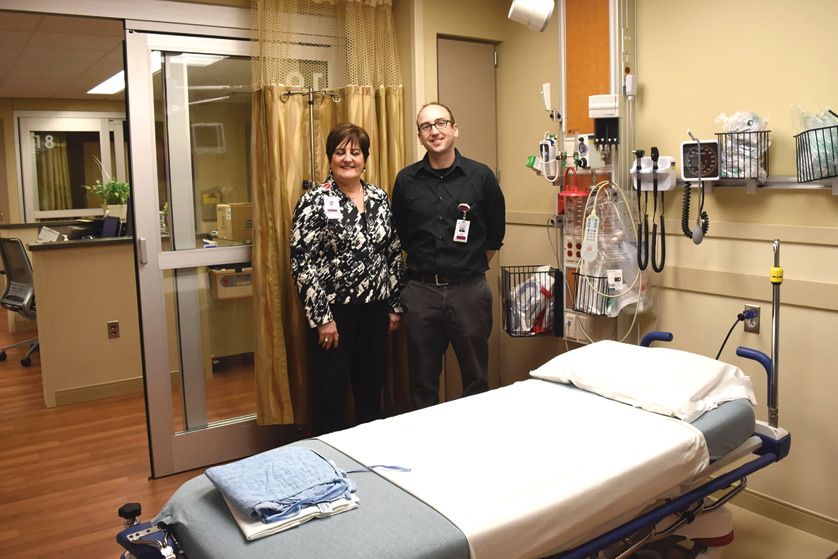 Karen Bostick, RN, director of the emergency center at St. Mary Mercy Hospital in Livonia, and Dustin Deriemacker, RN, nursing manager of the emergency center, stand in the senior emergency center at the Livonia hospital. The senior emergency center is one of the first in the state specifically tailored to seniors and their families.
Photos by Dan Meloy | The Michigan Catholic
Livonia — The nation is getting older, people are living longer, and by and large, seniors are living healthier lives.
When the U.S. Census was taken in 2000, 14.7 percent of the population was 62 years and older; in 2010, it was 16.2 percent. In total, the country’s elderly population increased from 41.2 million to 49.9 million — a 21.1 percent increase — with analysts from the Census Bureau saying the trend will continue.
The aging population has caused health care providers to rethink hospitals and treatment for the elderly, from reworking hospital design to a greater emphasis on patient follow-ups.
In 2010, St. Mary Mercy Hospital in Livonia, part of the St. Joseph Mercy Health System, established one of the first senior emergency centers in the state.
What began as six dedicated rooms within the “old” emergency room has since been transformed into 30 private rooms designed with senior care in mind in the new ER, which opened in 2012.
“As seniors age, they become more susceptible to injury and chronic diseases, can have cognitive impairment and have people living alone,” said Michelle Moccia, senior emergency room program director at St. Mary Mercy Hospital. “So when we have older people come into the emergency center, we find out if they live alone, do they have a caregiver willing to help, did they have any recent falls, and if so, why are they falling.”
Moccia said part of caring for seniors is getting the complete picture of what their home life is like, from the layout of their homes to what kind of assistance they need from day to day.
“At the senior emergency center, we look to see if they have been in an emergency recently, do they have a history of cognitive impairment,” Moccia said. “We know if a senior is on five or more medications, it will put them at risk. We’re looking at all these risks older adults might have.”
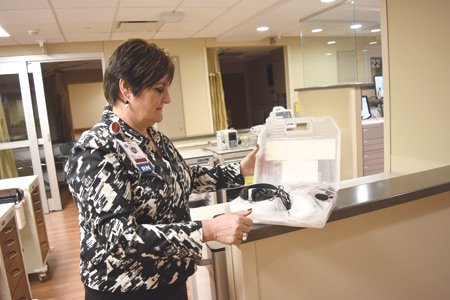 Karen Bostick, RN, opens up a listening device for hearing-impaired patients, one of the many innovations at the hospital's senior emergency center.
When the risks are identified, patients are paired with a social worker who does follow-up work with the patient upon leaving the emergency room.
Senior emergency care starts with doctors and nurses asking the right type of questions to patients, making sure all needs are being addressed while in the hospital, said Dr. Rahul Mehta, chair of the emergency department at St. Joseph Mercy Oakland.
“At St. Joseph Mercy, we’ve equipped the senior area with technology to help the seniors better understand what’s happening,” Dr. Mehta said. “It all starts with education, starting with the nurses with geriatric nurse education, doing a senior assessment. It all starts with training staff to go slower, take time to listen, identify types of needs seniors might have that other patients wouldn’t.”
Even the layout of the hospital itself is designed for seniors, from private rooms that create a quieter environment, to large clocks and whiteboards so patients can easily see what’s going on and follow along with the treatment process.
“We designed the private rooms to make them quiet,” said Karen Bostick, registered nurse director at the St. Mary Mercy Emergency Center. “We invite families to be part of the examination, so they can stay informed and ask questions the patient might not think to ask.”
St. Mary Mercy Hospital features more than 30 private rooms, each equipped with listening devices for hearing-impaired patients and separate doors for visitors and medical personnel.
The emergency center’s design keeps the families of patients in mind, who are often the patient’s primary caregivers, staying in the hospital with patients for three to eight hours at a time.
“We have internal waiting rooms for patients’ families,” said Dustin Deriemacker, registered nurse and nursing manager for the St. Mary Mercy Emergency Center. “Caregivers need resources as well; if they get burned out, they have a place to relax and recharge. We get a lot of feedback on our plan of care and taking the time to communicate with patients about what is going on and how they’re feeling today.”
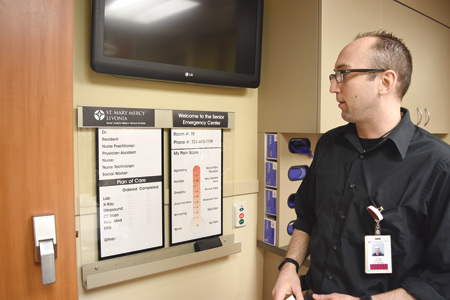 Dustin Deriemacker, RN, shows some of the large-print charts to help hospital workers better care for senior patients.
Deriemacker said the new emergency room comes with a mentality to slow down and go through all the procedures that are being done with the patient, giving them a sense of comfort that they know what’s happening.
“Everything we’ve done for seniors, translates into general adult care,” Deriemacker said. “That extra attention takes more time, but you learn how to better communicate with people. Making sure they’re understood, how they communicate and interact with the care provider.”
With the population getting older, hospital administrators will have to spend more time thinking about ways to better serve older patients, Moccia said.
“We have a staff that’s trained to look at things, making sure they’re staying strong,” Moccia said. “We want them to stay functional, strong. We’ve found out they teach us so much, and they are so thankful for anything we do. Nobody wants to come to the emergency center, but we want to make sure the emergency center is seamless.
“With older adults, we’ve learned to slow down, be steady and purposeful, and that’s something everyone needs to think about looking ahead.”