
Dia De Los Muertos festivities come alive in Southwest Detroit
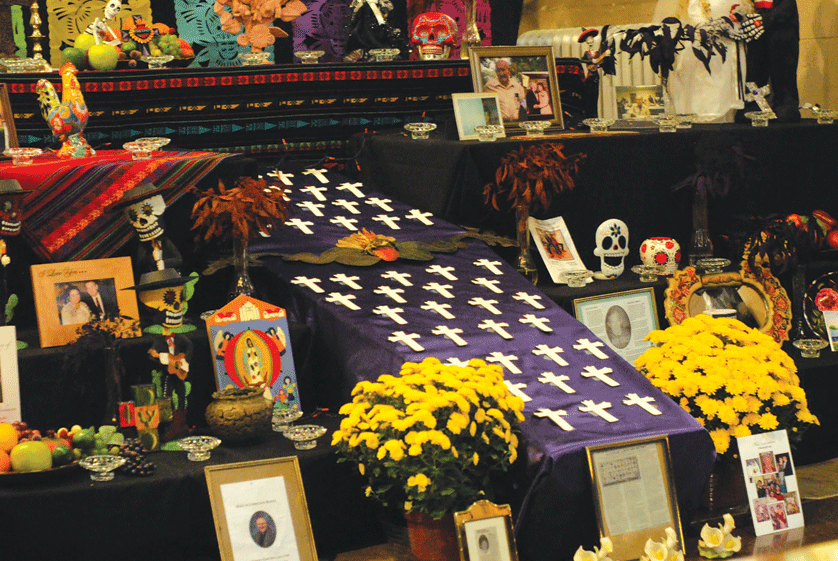 An ofrenda, which is an altar decorated to honor the dead, is seen in churches that celebrate Dia De Los Muertos. This is the ofrenda from Ste. Anne de Detroit Parish.
Dan Meloy | The Michigan Catholic
Detroit — Whatever you do, don’t call it Halloween.
Dia de Los Muertos is growing in popularity across the United States. The Mexican tradition is celebrated on All Souls Day by decorating altars to remember the dead, dressing up skeleton dolls, eating favorite foods of deceased relatives, and “making fun” of death itself.
According to local Catholics who celebrate it, the holiday is a result of a cultural clash between All Souls Day from Spanish conquistadors and the ancient Aztec custom of honoring the dead.
“When the Spanish conquered Mexico, the conquistadors combined Spanish customs with the indigenous,” said Connie Meade, a member of Ste. Anne de Detroit Parish who helped set up the parish’s “ofrenda” — an altar to honor the dead.
“It’s about celebrating All Souls, the spirit of our ancestors and keeping the customs of both sides. Most people celebrate by cooking the favorite food of their deceased family members; but salt, water and bread are also big parts of the celebration.”
Southwest Detroit has become a hotbed for Dia De Los Muertos celebrations. Many shops in the area have their own ofrendas and the bakeries make a special kind of bread to celebrate the day.
Tourist groups visit Southwest Detroit around the holiday, viewing ofrendas and learning more about the rich history of the holiday and Southwest Detroit’s Mexican-American community.
“This area used to be French, but then the Hispanics moved in,” Meade said. “Stores around here celebrate the day, and it really shows how much the neighborhood is in tune with the Church.”
Auxiliary Bishop Donald Hanchon, who studied Hispanic culture in Mexico in the 1980s and served as pastor of parishes in Detroit’s Hispanic community, said the remembrance of the dead was something indigenous and Catholic culture have in common.
“Catholic missionaries always look for an opportunity to interact with the local culture,” Bishop Hanchon said. “Among many indigenous tribes, there was a great reverence for the dead. In the Catholic calendar, we have All Saints and All Souls days; so the missionaries used those days to explain to the indigenous that there was an afterlife and they’re right to remember their loved ones.”
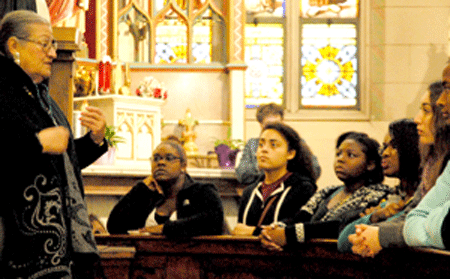 Sr. Nina Rodriguez, CSJ, teaches students that the "Day of the Dead" is about celebrating life, and recognizing death as a part of life. Dan Meloy | The Michigan Catholic
Another common celebration of the holiday is visiting cemeteries and grave sites of the deceased. Graves and ofrendas are decorated with skeleton dolls dressed up in different costumes and pictures of loved ones. All of this is meant to “make light” of death, according to Bishop Hanchon.
“In Aztec culture, there was this confronting of death; death is not something to be avoided, it was meant to be talked about with ease,” Bishop Hanchon said. “Today, a lot of people find this rather peculiar. You see dolls of various sizes for sale that are dressed up as all kinds of tradespeople. Bakeries make a special kind of bread for visiting the grave, kind of like an offering to the dead.”
Dia De Los Muertos translates to “Day of the Dead,” but the focus of the day is life, celebrating all which makes life — and death — beautiful.
“These people loved us, and that love lasts forever,” Sr. Nina Rodriguez, CSJ, said. “Our love for them keeps them alive. It’s not about death. We’re celebrating life. It’s like poking fun of death; it’s all part of life.”
The influx of Mexican traditions in mainstream American culture has created more awareness for Dia De Los Muertos and its traditions, especially from people from non-Hispanic backgrounds.
But Meade and Bishop Hanchon said people of all ethnic backgrounds can celebrate the day.
“It’s a newer part of American culture, but non-Hispanic member of Holy Redeemer Parish are invited to bring memories of their loved ones to the ofrenda,” Bishop Hanchon said. “All can make a contribution, to say their loved ones are deceased, but are alive in their hearts.
“Every culture wants to remember there is life after death. Remembering the dead is something Catholic, Hispanic and many European cultures have in common, and we should all cherish that tradition.”
Originating from a merger between Catholic and indigenous culture, Dia De Los Muertos has become part of the trinity of days — along with Halloween and All Saints Day — designed for honoring the dead, bringing together a clash of cultures into one universal Church and creating something entirely its own.