
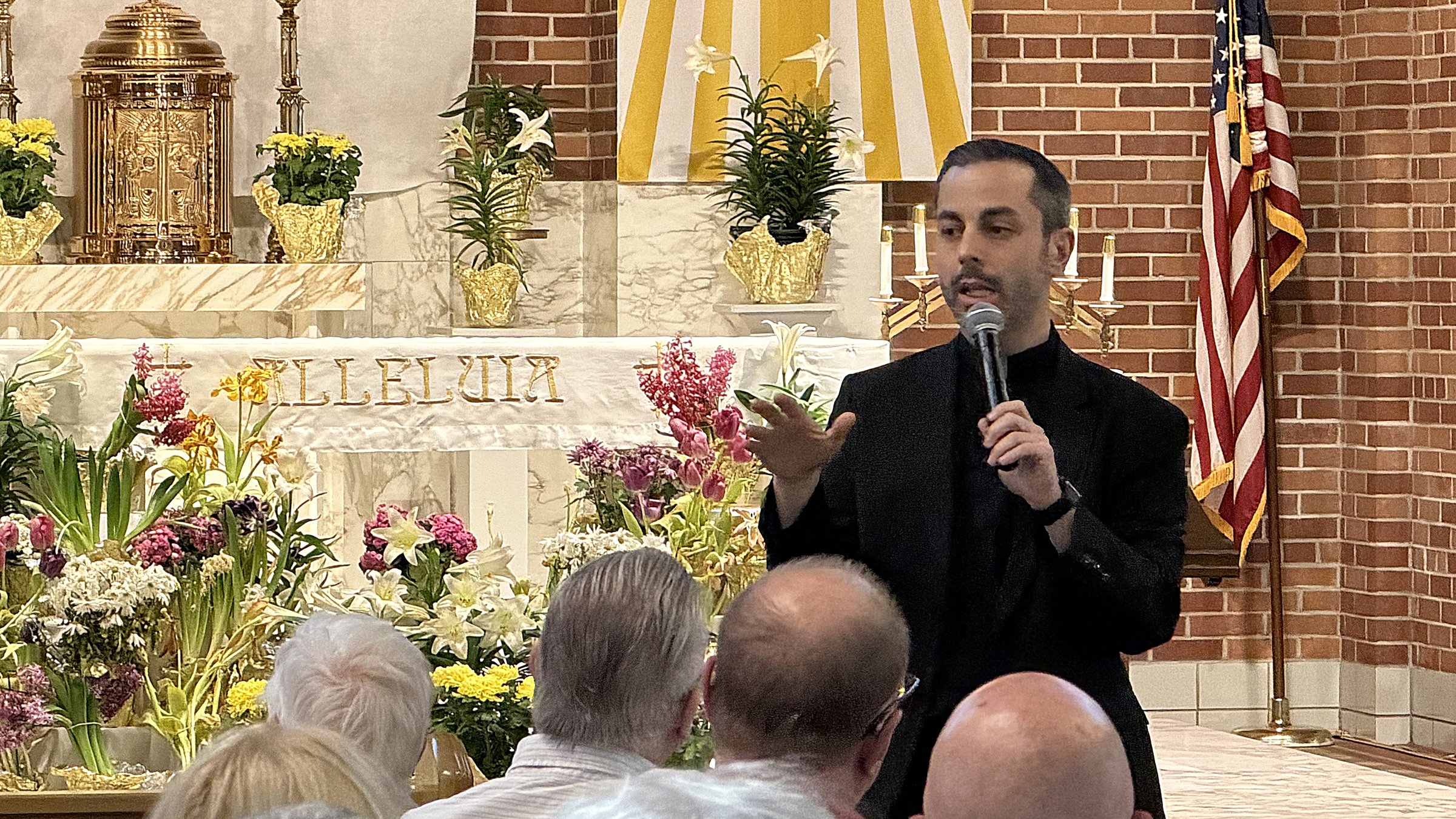
Parishioners encouraged to sign up for listening sessions, offer honest feedback on pastorate models involving their parish
DETROIT — The Archdiocese of Detroit’s Department of Parish Renewal has completed just over one-third of its planned parish listening sessions in the archdiocesan restructuring process.
In an effort to gather as much feedback as possible from parishioners regarding proposed pastorate models, 156 sessions had been completed across 78 parishes as of May 7, with each parish hosting two sessions.
As part of the restructuring process, the Archdiocese of Detroit has been divided into 15 planning areas for the purpose of examining options for potential pastorate models, with the first set of listening sessions happening in planning areas 2, 3, 4 and 5, spanning portions of the city of Detroit, Hamtramck, the Downriver area and Monroe County.
“I would say the first set of listening sessions has been well received,” Fr. Mario Amore, executive director of the Department of Parish Renewal, told Detroit Catholic. “People have been willing to offer their feedback in reviewing the models.”
Fr. Amore acknowledged that some of the proposed pastorate models might reflect difficult realities, such as in the case of parishes where Sunday Mass may no longer be offered.
“Obviously, there are places where people see a model, and they see their parish would not have weekend Masses going forward, and that can cause anxiety," Fr. Amore said. "But those human emotions are to be expected.”
However, Fr. Amore stressed, it's important to note that the proposals are just that — proposals — and that's why feedback is important. In other dioceses where similar processes have played out, as many as 20% to 40% of the initial pastorate models have changed as a result of parishioner feedback, he said.
Parish listening sessions: What to expect
The listening sessions are run by volunteer facilitators, who welcome parishioners and introduce a series of videos explaining the restructuring process.
After viewing the videos, which include a message from Detroit Archbishop Edward J. Weisenburger, an introduction from Fr. Amore, participants are then shown statistics about the financial, demographic and sacramental trends in the archdiocese as a whole, as well as their planning area, followed by a presentation of proposed pastorate models that were crafted by priests in the area.
Participants are then asked to provide feedback, factoring in various ministries, social services and collaborations that should be considered to fit their parish’s particular needs.

“In the listening sessions, there are two basic questions,” Fr. Amore said. “The first is, ‘Based on what you’ve seen, what do you think is heading in the right direction?’ So simply, 'What do you like about this? What makes sense?' And then, on the other hand, ‘What do you think is heading in the wrong direction? Why might these proposed pastorates not be a good fit for reaching others?’ Sometimes it has to do with geography or travel patterns.”
Priests in the Archdiocese of Detroit first developed the models in January and reviewed the proposed models in March, but Fr. Amore said it is just as critical for parishioners to weigh in during the listening sessions, in case the priests are overlooking issues or variables the laity can more easily recognize.
“If there’s something that you don’t see or something that you feel really needs to be known about a particular parish or an area of the diocese, we need to know that as we move into the refinement phase,” Fr. Amore said.
Even though some parishes have their listening sessions later than others, Fr. Amore stressed the template for each parish listening session is the same, as on any given night, there could be 10 to 15 listening sessions happening across the archdiocese.
Once all listening sessions in a planning area have been completed, the videos and proposed models for that planning area are posted on restructuring.aod.org for everyone to view and to provide additional feedback via an online survey.
“Now that all the listening sessions have happened in planning areas 2, 3, 4, and 5, as of Friday, May 1, all of the information — the videos, the statistics, the models, all of that — has been uploaded to the restructuring website,” Fr. Amore said. “People can spend more time with the models and then submit additional feedback through the survey.”

The next two waves of listening sessions will be completed on May 20 and June 17, after which draft pastorate models and information for those planning areas will be posted to the website. People who have signed up to attend a listening session will receive a link to review the models on the archdiocesan restructuring website and will be asked to complete an online survey to offer additional feedback.
No predetermined plan
Fr. Amore and his team in the Department of Parish Renewal are working to solicit as much feedback as possible from the laity, so Archbishop Weisenburger and his advisors can make the most informed decision regarding parish restructuring.
The listening sessions, and the feedback that's gathered both in person and via the online survey, are a critical part in the process, Fr. Amore said.
“We’re not naïve to the reality that there are a lot of skeptics and people who are cynical about the process, thinking the archdiocese already has a set plan for the parishes,” Fr. Amore said. “When I get questions or see comments on social media saying everything is all decided, it bothers me in a sense because I know it’s not true.”
In addition to collecting feedback, Fr. Amore said the Department of Parish Renewal is taking great care to answer every question about the process that comes in via the restructuring website, or via [email protected].
In other parts of the country where parish restructuring has taken place, parishioner feedback has had a significant impact on the final outcome, Fr. Amore stressed.
“When we’ve looked at other dioceses who have gone through restructuring, anywhere between 20-40% of the models initially proposed change by the time of implementation. Time will tell, but I think we’re going to have similar numbers based on that feedback,” he said.
Fr. Amore encouraged all parishioners who have not signed up for their parish's listening session to do so. Once they sign up, they will receive an email containing a video explaining what to expect from the listening session and a link to their parish workbook, containing key information about their parish, so they will come to the listening session prepared.
Even after the listening sessions are completed, everyone will have the opportunity to offer feedback until July 31 via the online survey.
“We know that two hours is not enough time to digest all of the information and give all of the feedback that someone might like,” Fr. Amore said. “That’s why we’re giving them the chance to spend as much time as they want with those models until the end of July.”
After July 31, the restructuring process will move into a period refinement, Fr. Amore said, when all of the feedback from priests, key parish leaders and parishioners will be collected, analyzed and considered.
“We’ll begin to analyze that data and highlight key themes that have emerged, what we need to be mindful of, and then we’ll start the process of refinement by working with smaller groups of representatives from each of the planning areas,” Fr. Amore said.