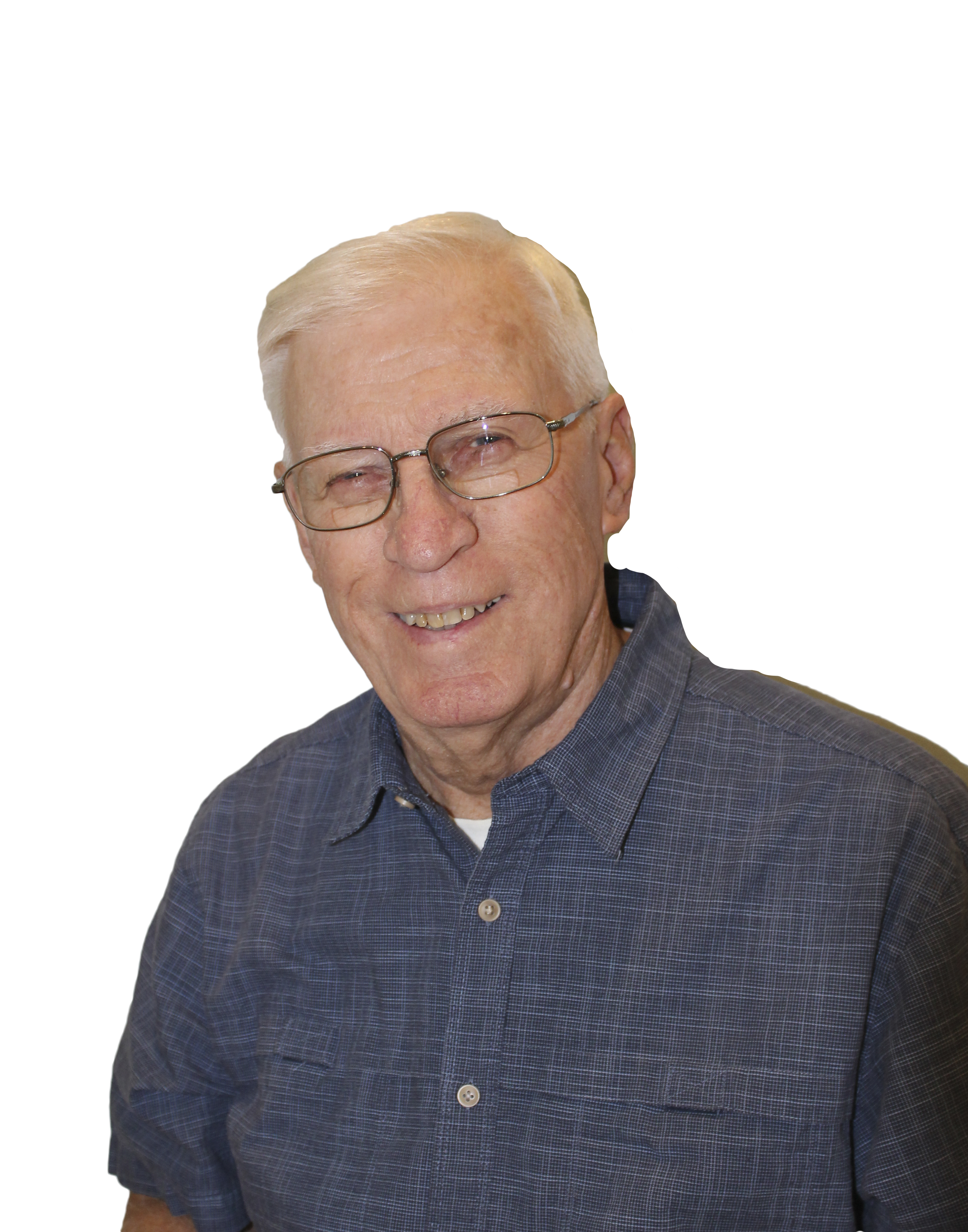

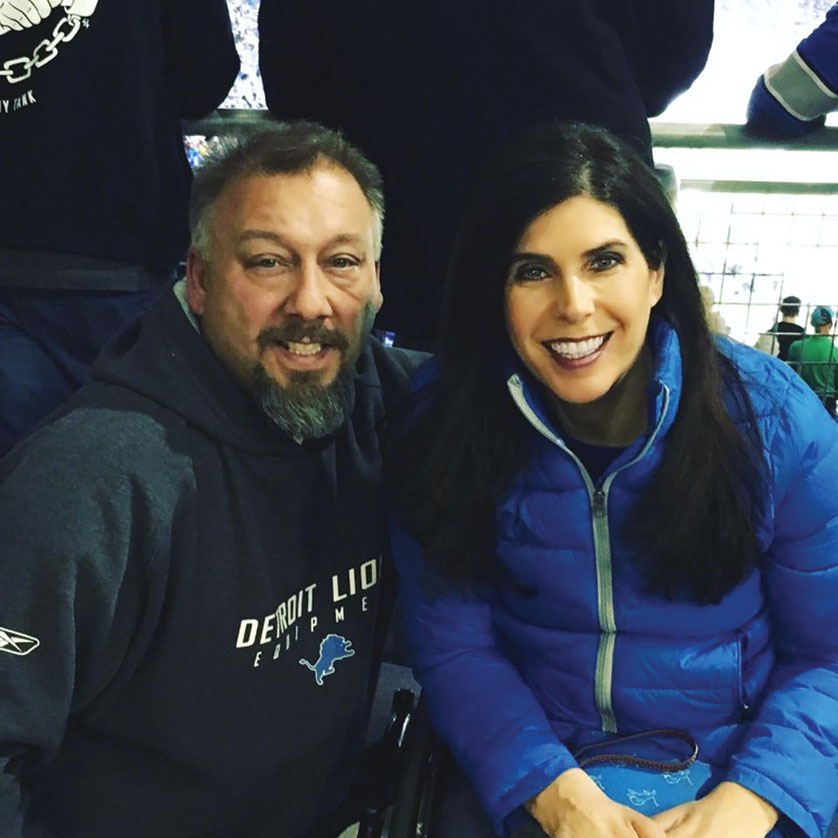
 Shawn Kornoelje, the new swim coach at Pontiac Notre Dame Prep, is pictured with his wife, Cheryl, a retired Paralympic swimmer.
“Do what I tell you to do.”
That’s the coaching philosophy of Shawn Kornoelje. He has an impressive résumé to back up his challenge, having enjoyed success on every level where he’s been.
Kornoelje (pronounced “Core-KNEEL-yay”) arrived on the Catholic High School League pool scene last fall with the girls team at Pontiac Notre Dame Prep in one of a series of chess board-like coaching moves.
 Don Horkey
He succeeded Mike Venos, who also coaches the boys at Bloomfield Hills Brother Rice, who took over at Farmington Hills Mercy for the departed Shannon Dunworth, and then was hired at Novi Detroit Catholic Central, where Dunworth had also been stationed. You got all that?
After graduating from Eastern Michigan, Kornoelje, 51, coached at Ann Arbor Huron (girls state runners-up in 1989-90, and boys state runners-up 1990-91) and the Grosse Pointe South girls swim team in 2003 (Coach of the Year).
From 2005-15, he was the associate head coach at Oakland University, where the distance swimmers he coached set Horizon League records during the Golden Grizzlies’ 2014 and 2015 championship years.
While in Ann Arbor, Kornoelje met Jason Wening at the local swim club. Wening, a University of Michigan graduate in his early 20s, was a double below-the-knee amputee. This introduced Kornoelje to the world of Paralympic swimming, an adaptation of the sport for athletes with disabilities, and set the stage for Kornoelje’s greatest coaching achievement.
“Coaching disabled swimmers, you find out what they can and can’t do, and go on from there,” Kornoelje said. “Jason was the hardest working swimmer I’ve ever coached.” Wening went on to win five gold medals and a bronze in the 1992, 1996, and 2000 Paralympic Games.
Kornoelje was a key member of the U.S. Paralympics coaching staff from 1998-2004, assisting in the training for the 2000 Sydney Games and the 2002 World Championships in Argentina, and serving as head coach of the men’s team in the 2004 Athens Games.
Recently, the United States Olympic Committee presented Kornoelje the Order of Ikkos Medallion. The medallion signifies the highest level of excellence that a coach can achieve.
As for his greatest personal achievement, that has its roots going back to his native Zeeland on the west side of Michigan. He was a high school junior then, doing the backstroke for the swim team. “I tried out for diving, but I hit the board three times, so the coach decided I should stay in the pool.”
At about the same time on the east side of the state, 14-year-old Cheryl Angelelli was practicing a new racing dive for a Mt. Clemens swim club. She hit her head on the bottom of the pool, suffering a spinal cord injury that left her paralyzed from the chest down, but with full use of her arms and very limited use of her legs.
Despite her disability, Cheryl graduated in 1986 from Warren Regina High, then pursued a degree in communications at Oakland University. In the meantime, she resumed her training, where met Kornoelje at a swim meet. “It was just a random meeting. I flirted with her, but didn’t get very far,” he said.
Cheryl was ranked among the world’s top five swimmers to qualify for the 2000 Sydney Paralympic Games. She didn’t win a medal, but she gave in to Shawn’s charm, and two years later, they were married.
“I was her coach while we dated and as her husband,” Shawn smiled. “It was the only time I could tell her what to do.” He added: “Cheryl is very competitive. She has a drive to do well, to succeed.”
She won a pair of bronze medals in the 2004 Paralympic Games in Athens and two silver medals at the 2008 Games in Beijing. She is a seven-time world champion and still holds 15 American records and two world records. She retired in 2013.
For the past 20 years, Cheryl has been director of marketing and public relations at the Rehabilitation Institute of Michigan, where she rehabbed as a teen.
“Being a coach,” Kornoelje said, “is an opportunity to make a difference in a person’s life. Whether they are able or disabled, you can help them realize their potential, that they can decide what they want to do.”
Listening to the coach, however, helps.
Don Horkey may be reached at [email protected].