

Archbishop-emeritus Vigneron encourages Shrine's faithful to reflect on a century's worth of sacraments, blessings and graces
ROYAL OAK — For 100 years, the National Shrine of the Little Flower Basilica has drawn the faithful from near and far to the corner of Woodward Avenue and 12 Mile Road to give thanks to God for the many blessings He has bestowed upon them.
This past Friday, June 26, the parish gathered in its magnificent edifice to give thanks for a century of blessings that have flowed through the community.
Detroit Archbishop-emeritus Allen H. Vigneron celebrated the historic basilica's centennial Mass, during which he asked the faithful to call to mind all the joys, pains, triumphs and tragedies they have brought to the altar.
“In this service, we give God thanks for the graces poured out in this community over the last 100 years,” Archbishop Vigneron said. “This centenary is a significant milestone in the life of the church, and it’s right to mark it. We’re also marking the 250th anniversary of our country, but our form of marking and commemoration (in the church) has a particular character — because we remember principally in order to give thanks. We offer, in this Holy Eucharist, (our thanks) back to God the Father.”
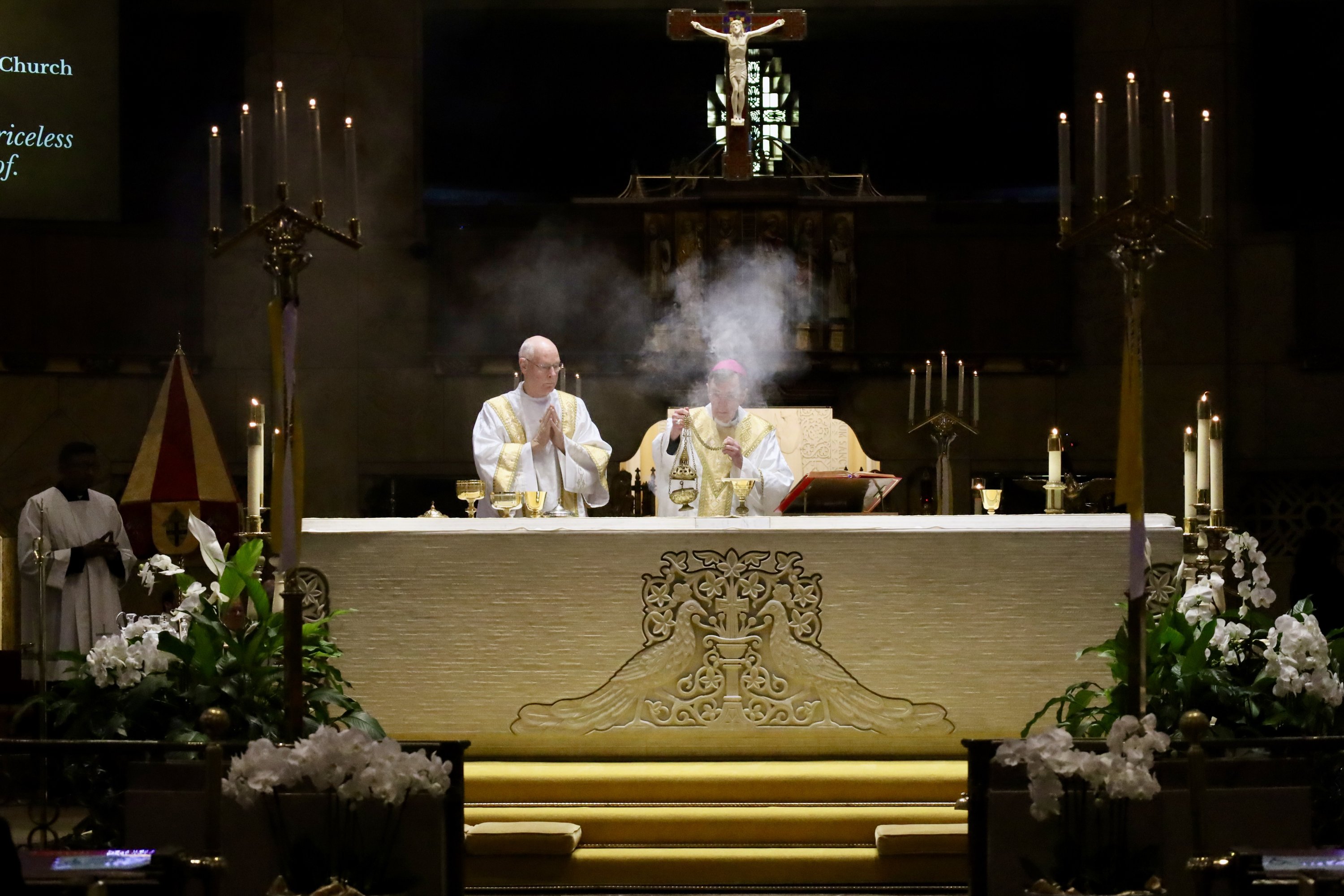
In a liturgy where the propers of the Mass — the Introit, the Collect, the Preface and Communion prayer — all reflect on giving thanks for the dedication of the church, Archbishop Vigneron said it is just as important to give thanks for all the sacramental graces that have taken place at the National Shrine of the Little Flower, which Pope Francis named a minor basilica in 2015.
“For 100 years, in each of these communities, there has been true worship,” Archbishop Vigneron said. “God has been praised, rightly. The sacraments have been celebrated. The Eucharistic sacrifice has been offered in this holy temple, the consecrated church, this place of true worship. So we give God thanks for the 100 years where the prayer offered by Christ and members have risen from this parish.”
The archbishop asked each of the faithful to reflect on their own personal moments of grace that have occurred within the basilica's walls, especially those known only to them.
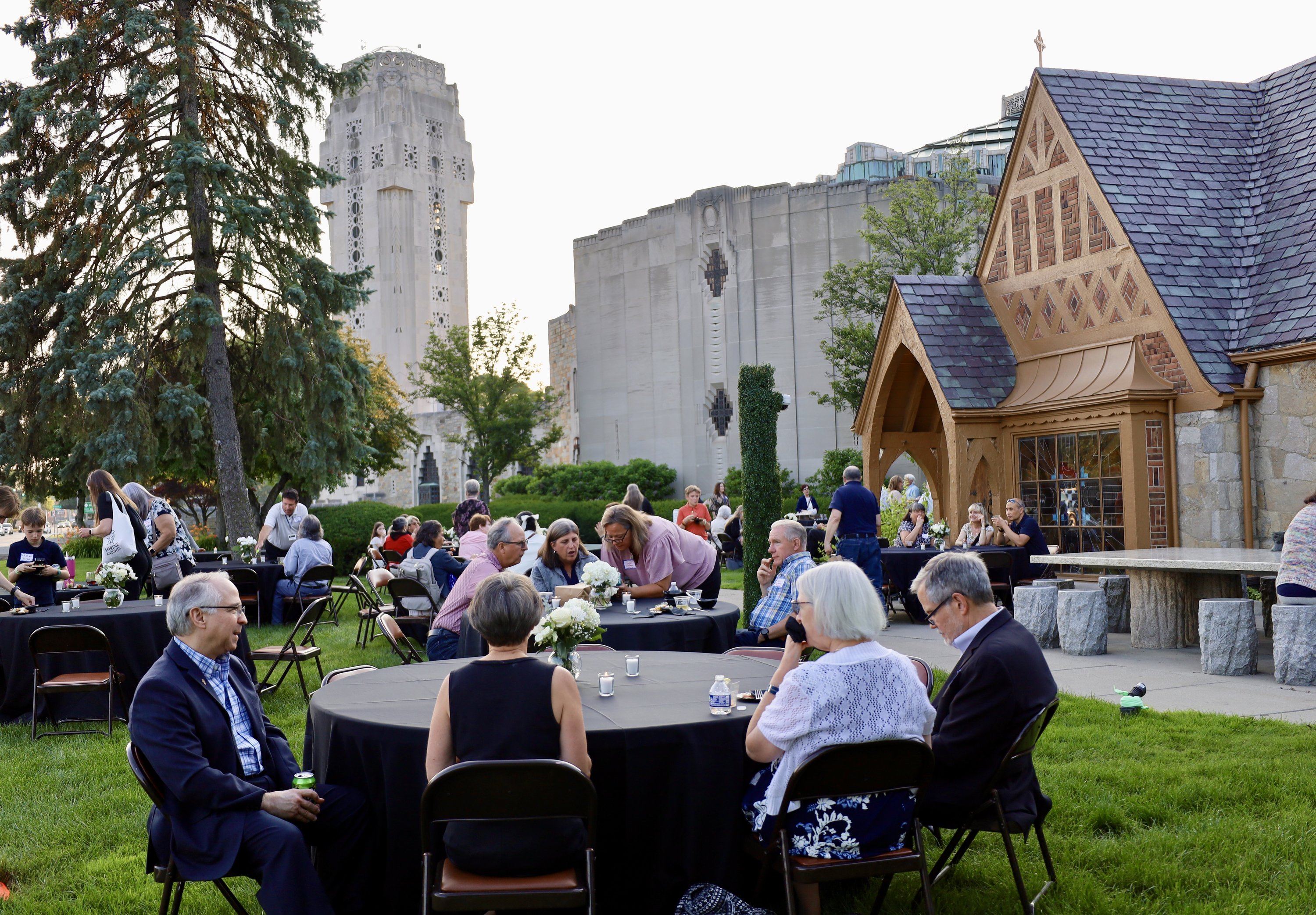
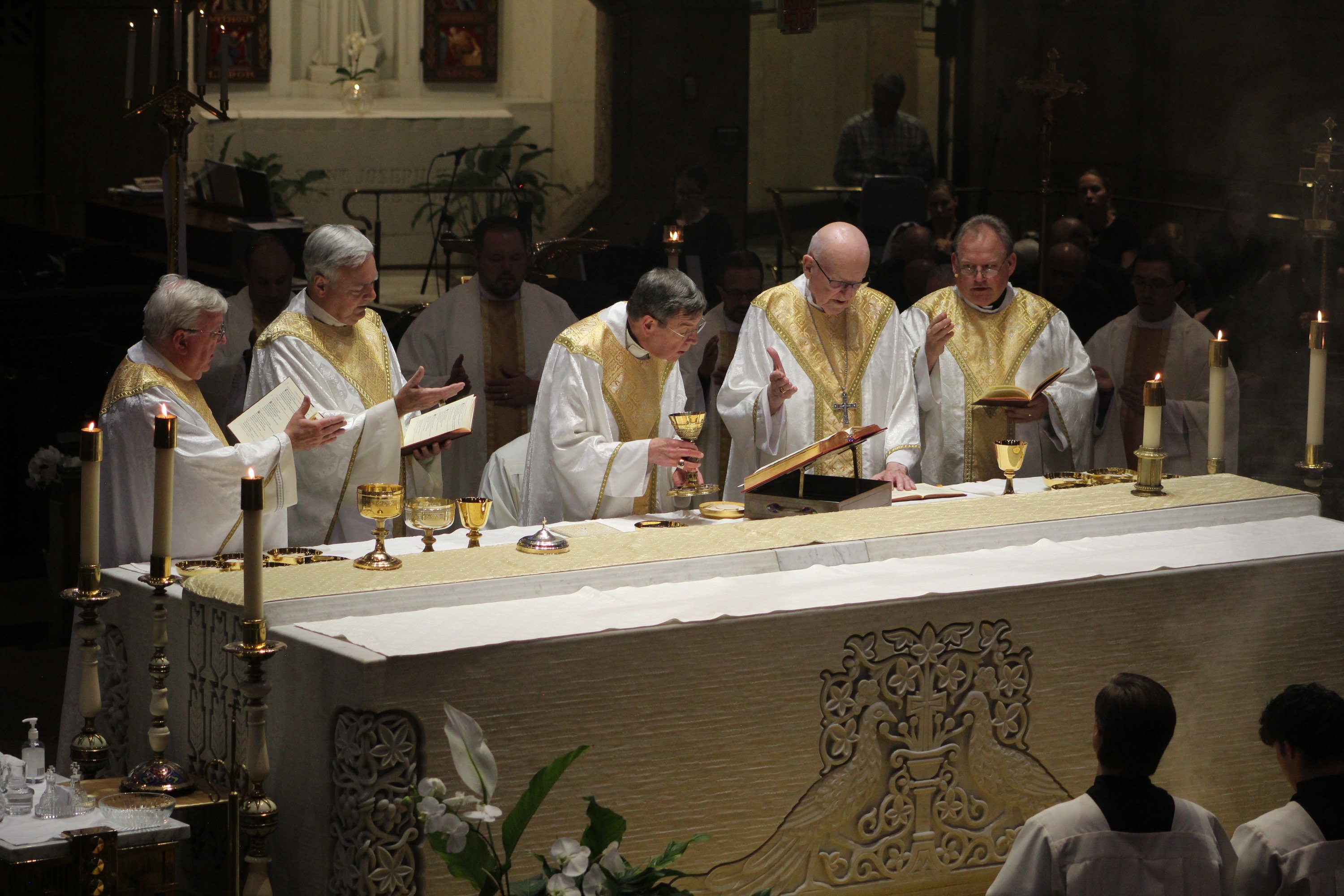
The centennial Mass was concelebrated by former Grand Rapids Bishop Walter A. Hurley (a former Detroit auxiliary bishop and former administrator of National Shrine of the Little Flower Basilica), Detroit Auxiliary Bishop Robert J. Fisher, Fr. John Bettin, the basilica’s outgoing rector, and Msgr. Charles Kosanke, the basilica’s incoming rector.
Following Mass, the parish hosted a dinner reception, where clergy and parishioners past and present gathered to celebrate the remarkable history of the parish.
Judy Maten, chair of the basilica's centennial committee and a volunteer leader of the parish’s adult faith formation, said thousands of visitors have come to the Shrine this year to celebrate the milestone through various special events, such as a pancake breakfast, a "tour of the century" in April, and a "virtual Lourdes pilgrimage" in December.
“People came to experience Lourdes in France for those who couldn’t go there; they came here and had the experience of anointing of the sick and the healing waters of Lourdes," Maten said. "It was a great opportunity for people to come and be healed at the basilica as a place of prayer, mercy and forgiveness.”
Shrine's parish mission, which took place in January, reminded the community of its calling to go out and spread the Gospel, a continuation of its 100-year legacy as a parish, Maten added.
“We are called to share the faith, and we look back to 100 years of people who did just that, from the Great Depression, World War II, the Cold War, COVID — all these tragedies that the world kind of threw at people,” Maten said. “We were a beacon of hope for people all over, offering the message that Christ is all you need.”
The National Shrine of the Little Flower Basilica has used its 100-year anniversary as a chance to share its heritage with the wider world, Maten continued.
“We’re a point of pilgrimage for so many people. It’s a place of prayer and healing, and we take that very seriously, with the charism of St. Therese of Lisieux drawing people in with a vocation of love,” Maten said. “That’s what we’re called to do. When people come here in need, we offer what we can to help them, as Jesus would. It’s a very big responsibility, because it’s an internationally known parish where tourists all over the world come.”
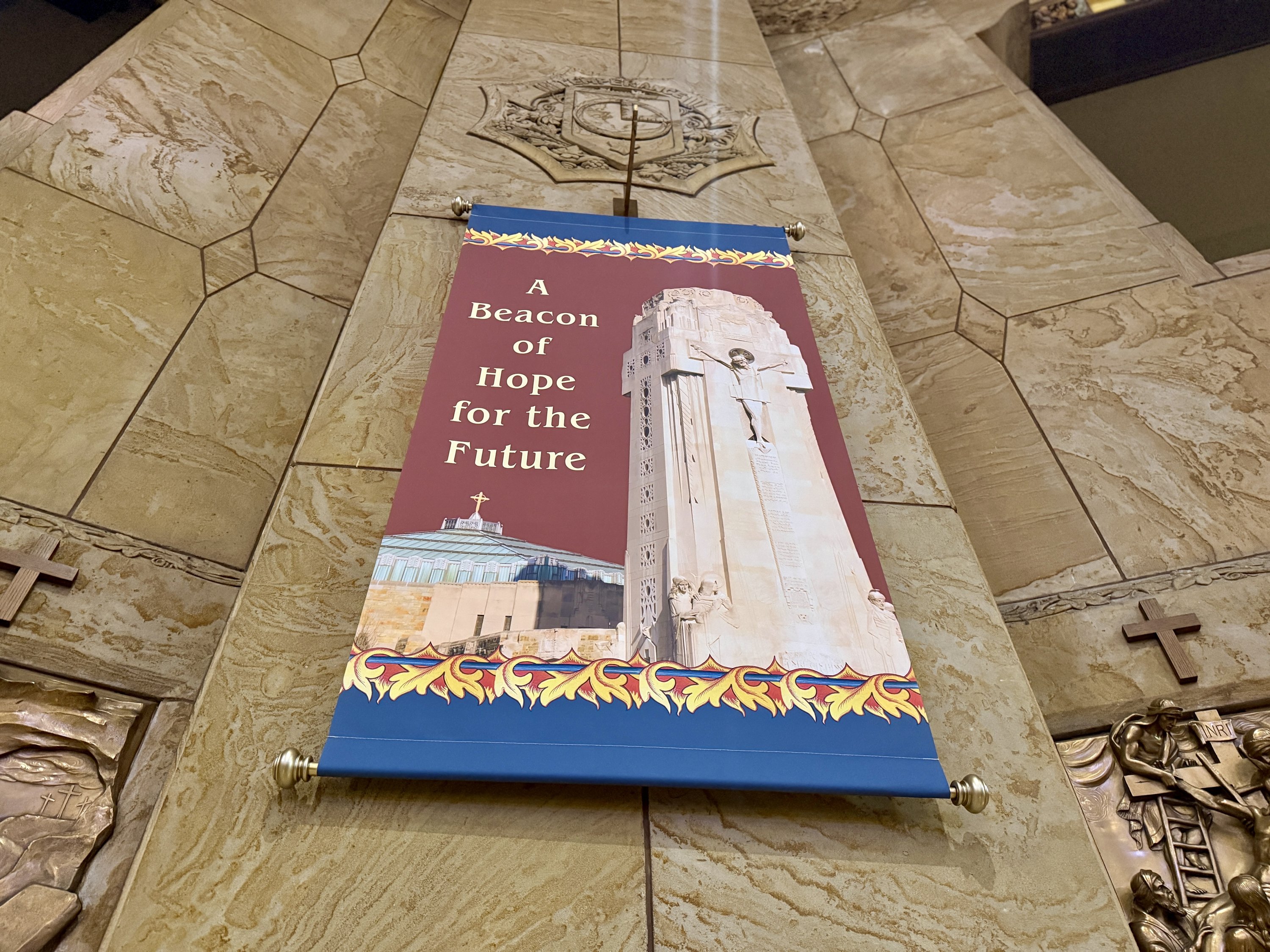
But for all its fame — from its stunning octagonal Art Deco edifice to a rich history and tradition that draws pilgrims from all over the world — the National Shrine of the Little Flower Basilica is a parish, Maten said, a home for the faithful who are drawn to its altar each week.
“Even though we’re a huge parish, it’s home, and we’ve made our friends here; our kids made friends here,” said Maten, herself a parishioner at Shrine for 45 years. “We have made lifelong friends here, and that’s what’s important to me. All the big stuff is really nice, all this history, but for me, when I need consolation, when I’m sad, when I’m joyful, this is the place where I come to feel at home. It’s my everything.”