

Immigration advocacy group outlines five policy proposals rooted in Catholic social doctrine, human dignity and common good
DETROIT — Strangers No Longer, a Detroit-based, statewide network of groups inspired by Catholic social doctrine to educate and advocate for humane immigration policies, released a policy platform it hopes will help guide conversations surrounding immigration heading into this fall's elections.
The platform was released June 29 during the group's “Assembly for Hope: Building a Welcoming Future for Michigan” at the Detroit Union Carpenters and Millwrights Skilled Training Center, where immigrants and immigration advocates testified on the rationale for the platform's five planks.
Bill O'Brien, executive director of Strangers No Longer, said the gathering was a way to introduce "common sense, simple reforms where the state of Michigan could become a more welcoming place to immigrants" and to help candidates and voters better understand and advocate for the rights and dignity of all.
“Basically, we are following in the footsteps of Pope Francis and Pope Leo and their exhortations around receiving immigrants and integrating immigrants in our society,” O'Brien told Detroit Catholic.
The preamble of the policy platform calls upon people of faith to look toward the shared humanity of U.S.-born citizens, foreign-born citizens, and undocumented residents of the country, and to unite in their common identity, rooted in solidarity and the common good.
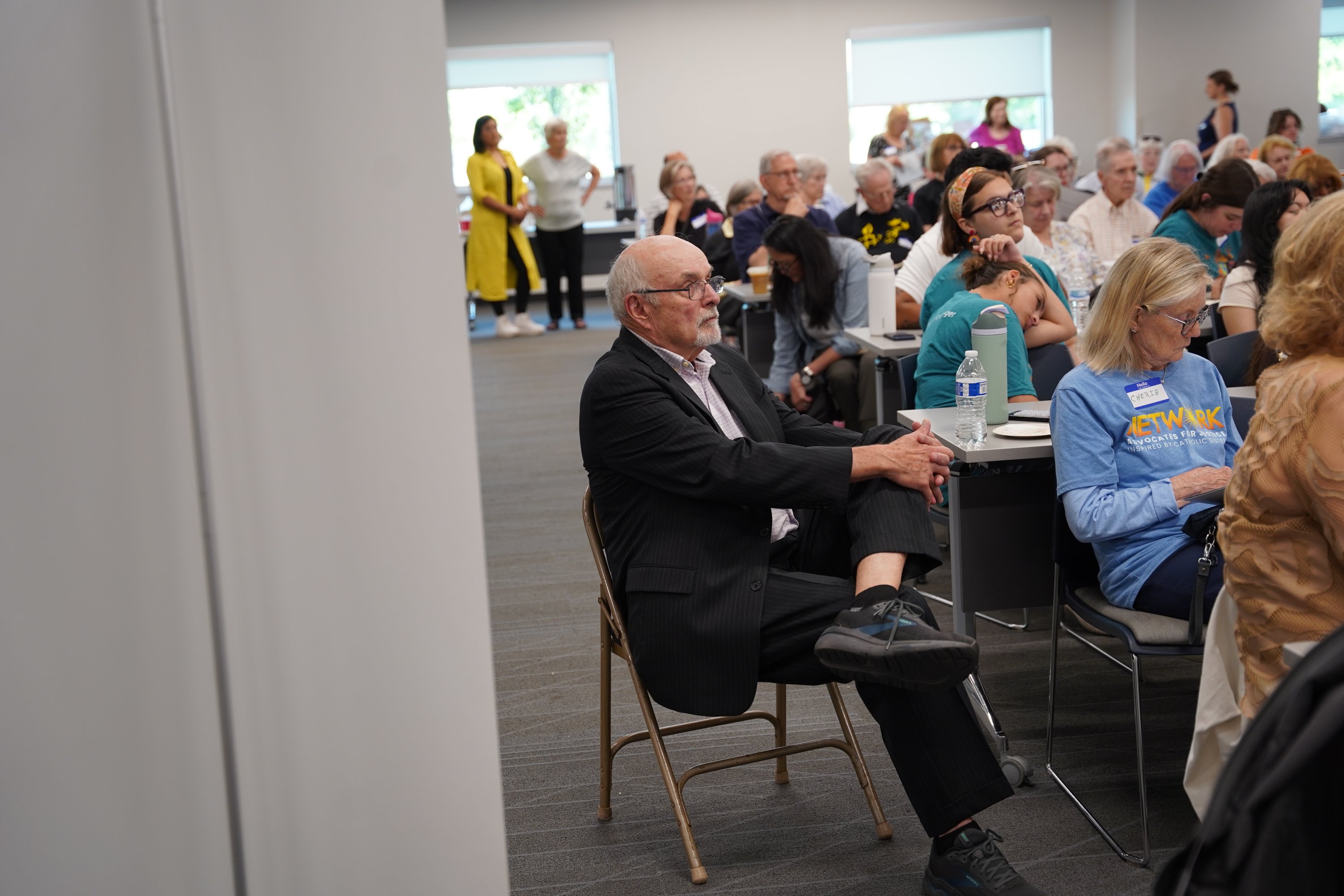
“For Michigan to be a welcoming state, the following should hold for all families and residents: Everyone deserves to live without fear of forcible separation; Everyone deserves safety and protection; Everyone deserves quality community programs and resources; Everyone deserves the opportunity to fully participate in civic and economic life; Everyone deserves the dignity of due process and constitutional protections,” the document reads.
Nick Chuey, a member of Our Lady of the Woods Parish in Woodhaven, introduced the preamble to the policy platform and explained how it will help immigration advocates have informed discussions about immigration reform through "five core principles of belonging."
“To make our individual decisions, we need to be clear about what our values are and what we should be prioritizing," Chuey said. "This preamble grounds our platform within Catholic social doctrine and outlines our principles of belonging.”
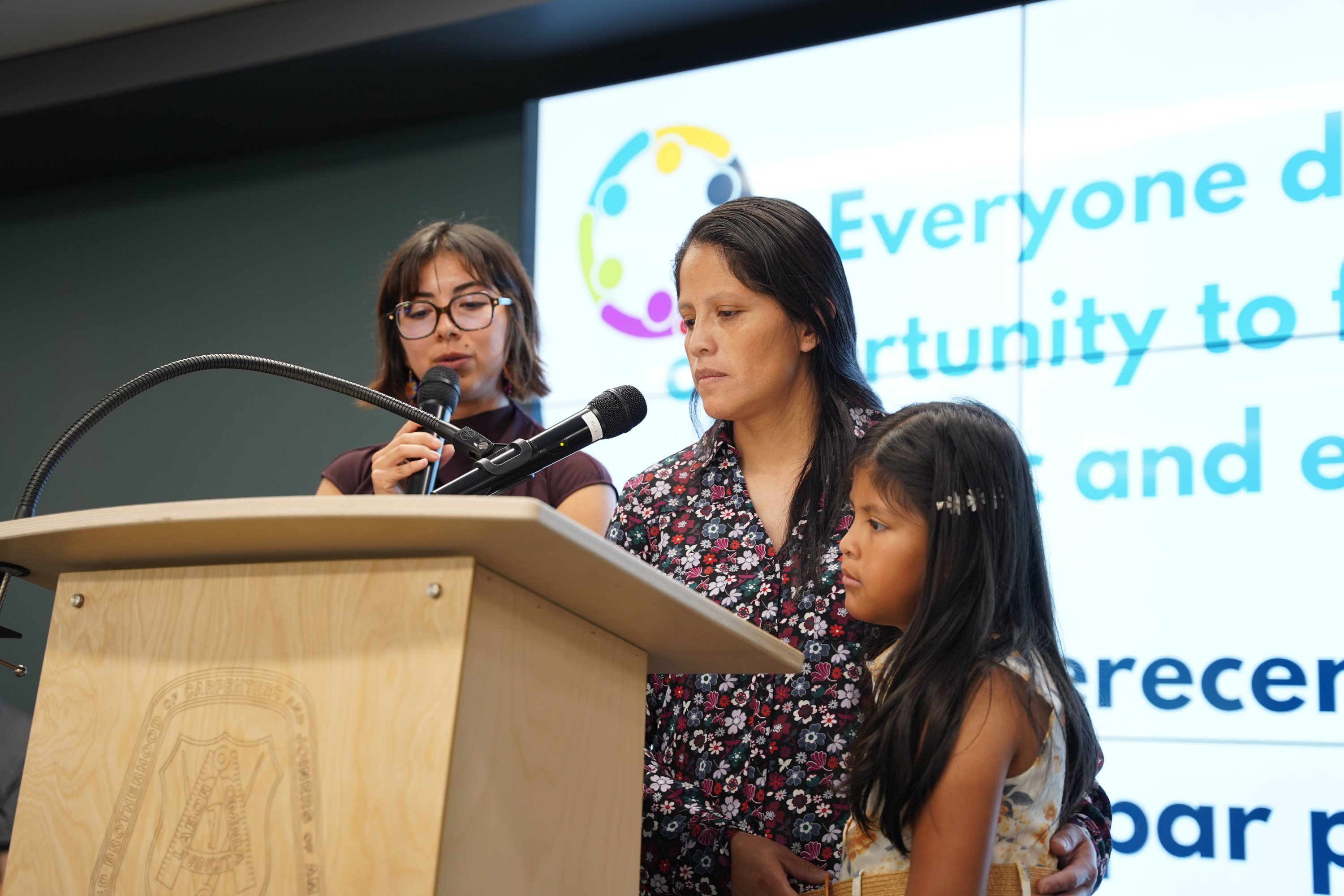
Each of the five platforms was then introduced by a member of Strangers No Longer, who delivered a testimonial about the experiences of immigrants and immigrant advocates, as well as specific talking points for conference attendees to share with friends and neighbors.
One policy proposal asks federal legislators to support immigration reforms that offer a pathway to citizenship for long-term residents, alternative compliance processes in lieu of detention and removal, and humanitarian protections and due process for refugees and asylum seekers.
Another asks Michigan lawmakers to support restoring the ability of undocumented people to get driver's licenses, a policy afforded to all Michigan residents — regardless of legal status — until 2008, after proving competency in understanding Michigan driving laws.
Many spoke about the realities playing out in Michigan communities and around the country, where families have been separated, social support networks have been damaged, and longtime community members have been detained often without warning or due process.
Fr. David Buersmeyer, chaplain to Strangers No Longer, noted the widening coalition supporting and speaking out for the rights and dignity of immigrants in Michigan.
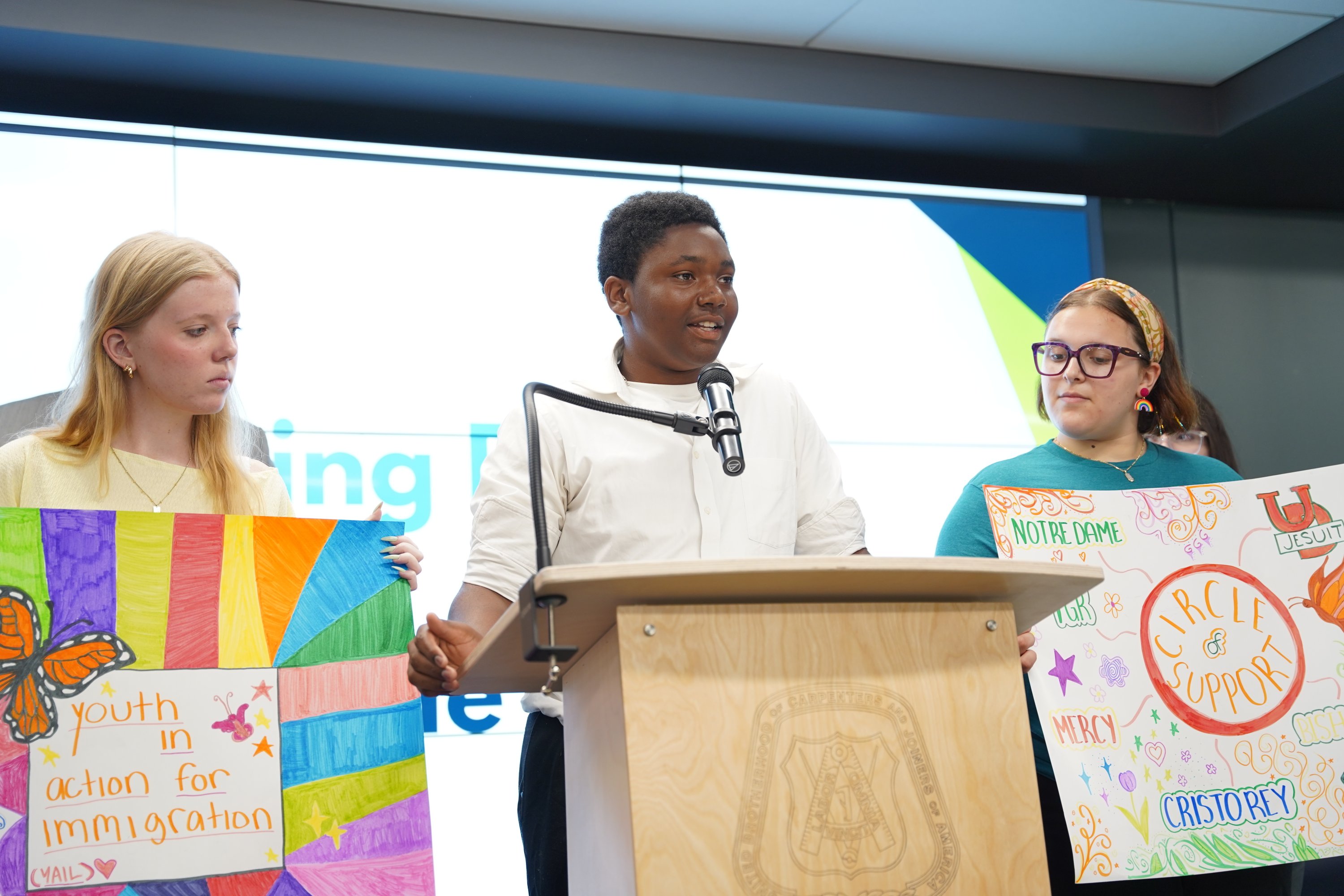
While a majority of Strangers No Longer's "Circles of Support" are rooted at Catholic parishes, members from Episcopalian, Lutheran, Presbyterian and Unitarian communities were also present, along with members of other immigrant-rights groups in the Metro Detroit area.
“We’re based in Catholic social doctrine, but as you all have noticed, the Holy Spirit has expanded Stranger No Longer to include Circles of Support in the Episcopal church, in the Lutheran church, in the Methodist church, and among the youth among us,” Fr. Buersmeyer said. “We’ll always be inspired by Catholic social teaching, because that is based on the dignity of every human person and the true common good that God wants to bring into this world, so thank you all for being part of that.”
Before the conference proposed and approved its policy platform, Michigan Attorney General Dana Nessel was invited to share about the current situation of immigration law enforcement in Michigan.
Nessel spoke of the friction between federal agents in the U.S. Department of Homeland Security’s Immigration and Customs Enforcement (ICE) and local law enforcement, lamenting questionable practices she said have contributed to a culture of fear and have damaged trust and credibility in Michigan communities.
When federal agents fail to cooperate with local law enforcement agencies and immigration judges in carrying out enforcement actions, make arrests without proper identification, or inform the community about their presence, it leaves the entire community feeling unsafe, Nessel said.
In addition, indiscriminate enforcement actions are “separating families with no regard for the well-being of children involved, much less the parents and other members of the family support system,” Nessel said.
Nessel also commended Strangers No Longer for protesting a proposed ICE detention facility in Romulus, which federal authorities have since canceled after pushback from local officials.
Beyond advocating for the rights of immigrants and for humane immigration policy, members of the community can get involved by accompanying immigrants in their communities to court dates, signing letters of support to judges affirming immigrants' value in parishes, schools and communities, and by speaking out for those facing unjust discrimination and harassment, Fr. Buersmeyer said.
“Thank you to all of you who have accompanied a family member or someone to court or to an ICE meeting; it’s so necessary as it provides immediate support just by your presence and support,” Fr. Buersmeyer said. “It’s not that hard to do, and you don’t need any training. You just need to be there physically to show that you care for them and walk with them.”
After hearing from the experiences of immigrants and their advocates, listening to ways to get involved, and considering the perspectives of families, O'Brien said he hopes people will be more willing to have frank and open discussions about immigration policies with friends and neighbors, particularly in their parishes, and particularly with people with whom they may have disagreements.
“In my experience, the parish is the perfect place to have this kind of conversation; it’s a safe place,” O’Brien said. “We have popes and bishops practicing synodality, listening to one another. At the recent consistory in Rome, there were cardinals with totally different, opposing views at the same table. In a parish, you can listen to people who have different opinions, and hopefully come out of it at least understanding one another, because of our common identity in Christ.”