
Sixth annual Strangers No Longer youth conference encourages teens to learn from immigrants' experiences, be voices of hope
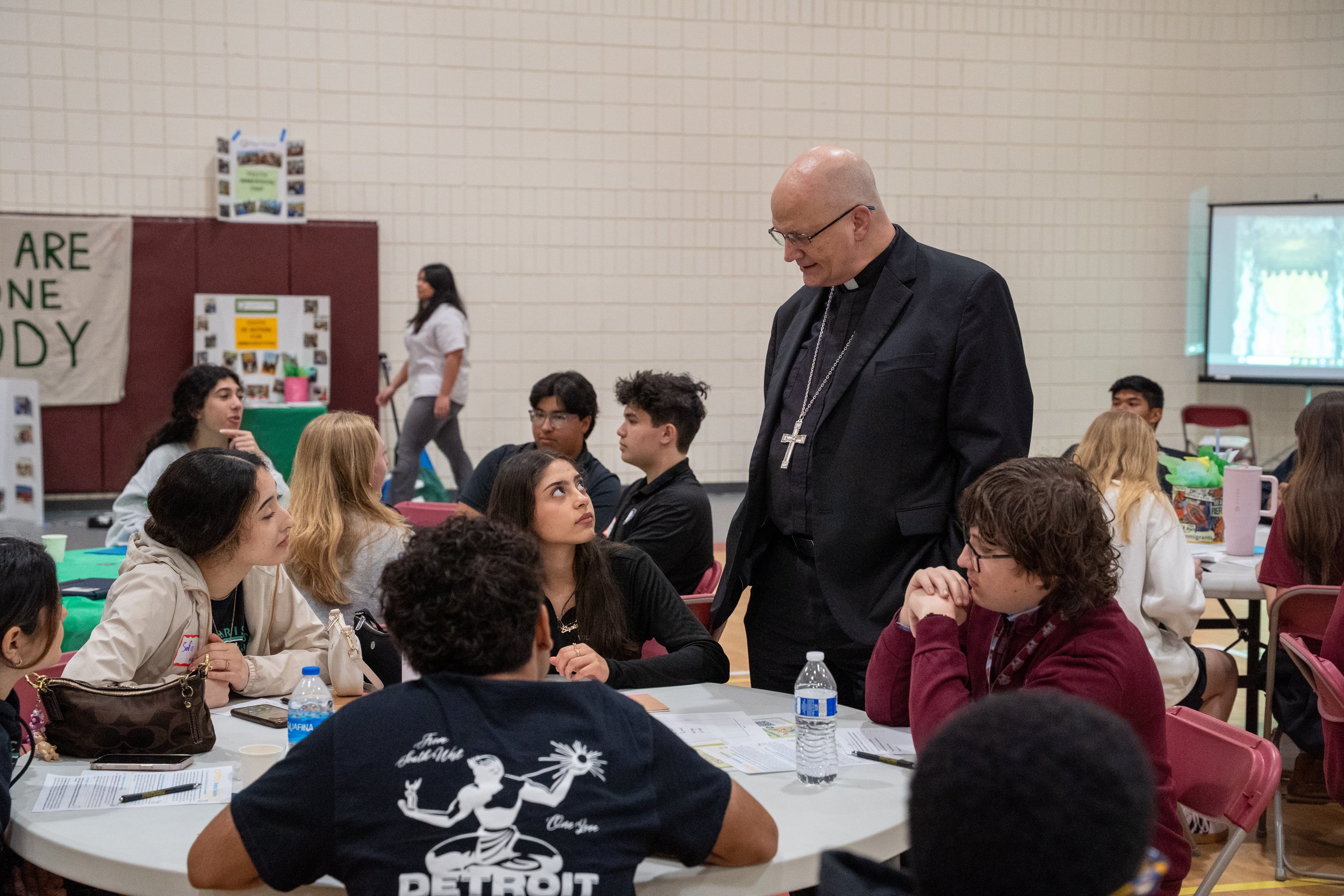
DETROIT — Students from Catholic high schools throughout southeast Michigan gathered April 17 at University of Detroit Jesuit High School's Johnson Recreation Center to learn more about the experiences of immigrants in their communities and how they can be witnesses to the human dignity inherent in every person.
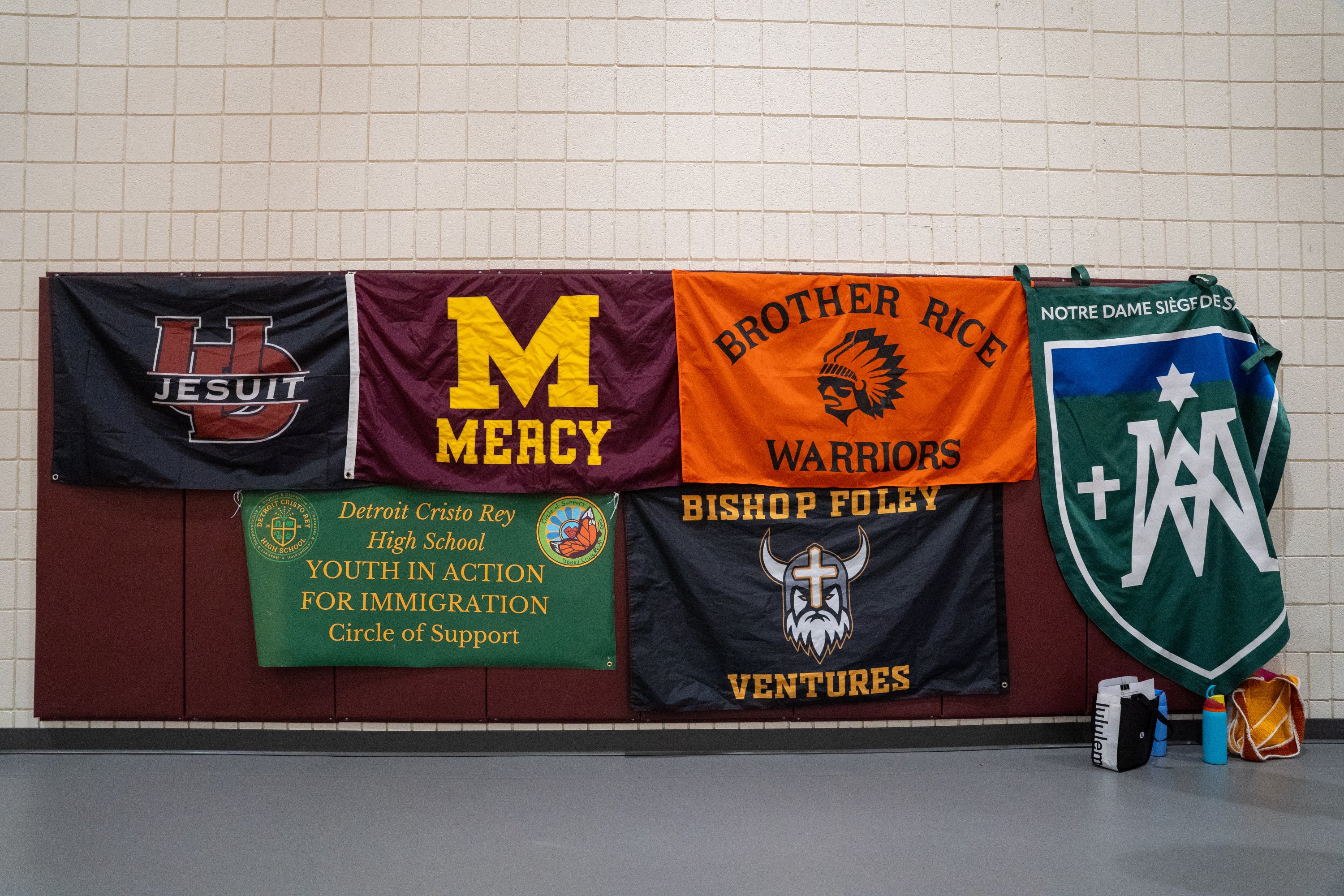
The sixth annual "Missionaries of Hope" Youth in Action for Immigration Conference was organized by Strangers No Longer, a Catholic lay apostolate that accompanies immigrants and advocates for the Church’s teaching regarding immigration.
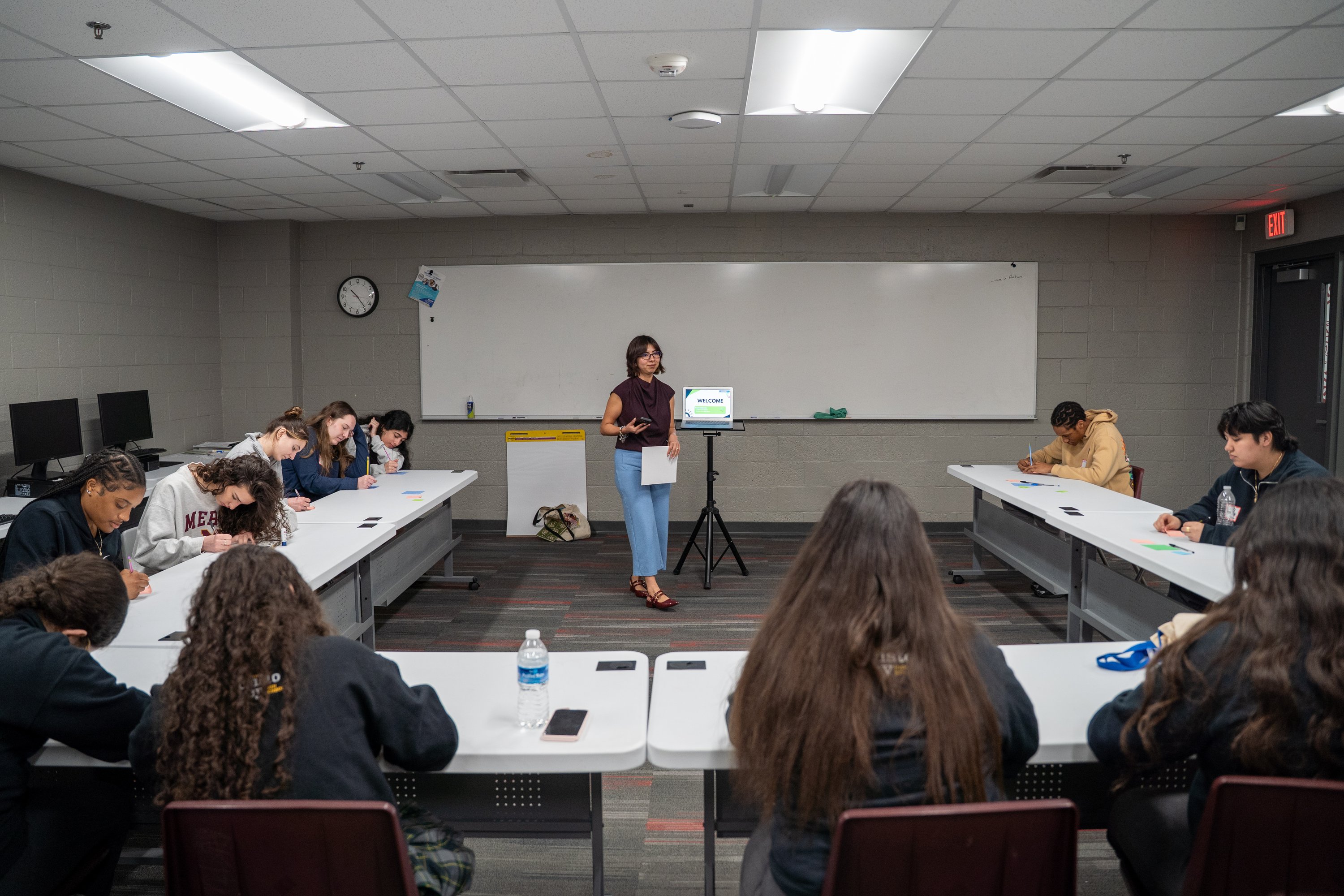
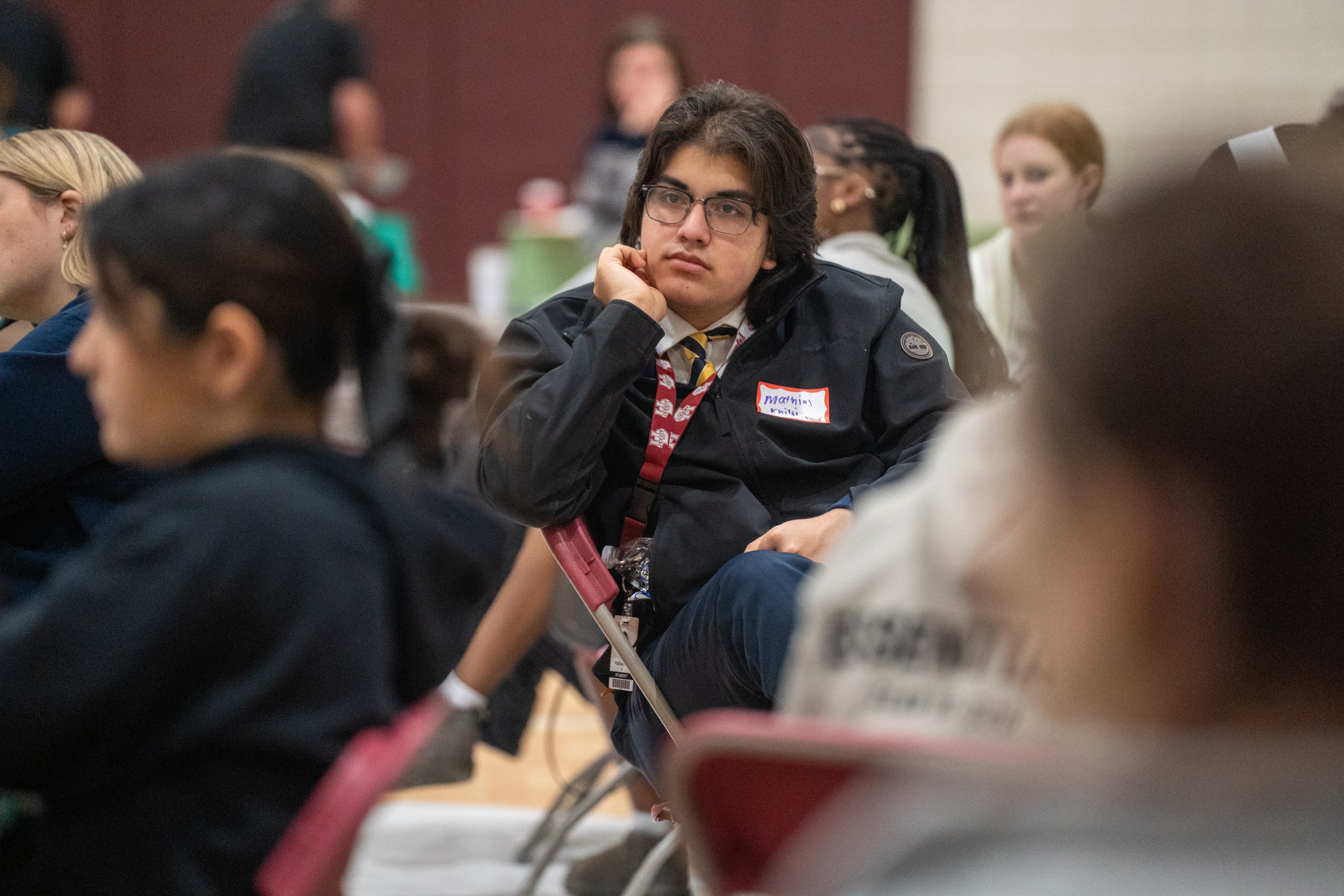
This year’s conference brought together 85 students from eight schools to hear firsthand accounts from immigrants about their experiences coming to this country, insights from experts on immigration law, and hands-on lessons involving real-world scenarios, including de-escalation techniques during tense situations.
The student-organized conference aimed to help students better understand the issues surrounding immigration, and to empathize with migrants and refugees in order to promote clear and compassionate dialogue, organizers said.
“The goal of this conference is to have participants leave with a fresh, clear mindset on who we are, recognizing that we are all human, we are all looking for a safe home to grow and prosper in, and none of us are trying to exclude others,” Sofia Dussan, a junior at Fr. Gabriel Richard High School in Ann Arbor, told Detroit Catholic. “Today is a day where we can celebrate inclusion in our communities and celebrate our differences, while upholding our common love for Jesus, who teaches us to love all, welcome and show we are no longer strangers.”
Dussan became a student leader of the conference, alongside Joseph Davis, a senior at University of Detroit Jesuit, and Katie Fortino, a senior at Notre Dame Prep in Pontiac, after attending the conference last year.
“I've created my own Circle of Support in my school, and I've found volunteering opportunities within my community to help migrants,” Dussan said, referencing Strangers No Longer's parish- and school-based circles. “I hope people at the conference today will see just how many people care about this topic and want to make change and will hopefully want to do the same.”
Detroit Archbishop Edward J. Weisenburger spoke with the students at the beginning of the conference, expressing his joy at seeing so many young people taking up the mantle to uphold human dignity.
The archbishop, who ministered to migrants during his seven years as a border-state bishop in Tucson, Arizona, said many have taken great risks to flee violence and persecution in search of a better life.
“Even archbishops sometimes wonder, ‘Am I in this alone?’” Archbishop Weisenburger said. “And whenever I go somewhere, and I see young adults who are interested in compassion for humanity and making the world truly a better place, recognizing Christ in those who are the most hidden, it kind of recharges my own spirit."
Archbishop Weisenburger spoke about his time in Tucson, where Catholic Charities, the Society of Jesus and others co-sponsored the Kino Border Initiative, which, at its peak, was receiving up to 1,400 people a day from the U.S. Department of Homeland Security.
“When I would stop and check with some of these people, I would discover, most of the time, these people didn’t want to be here,” Archbishop Weisenburger said. “They would like to be at home, but they couldn’t survive at home. So they were caught between (the decision of) a really dangerous journey with the potential of life for themselves and their children, and staying and facing, almost always, death.
“That doesn’t make it in the news very often, or if it does, it gets drowned out by all the political voices,” Archbishop Weisenburger added. “But I saw the humanity over and over, and truly, I saw Jesus.”
Archbishop Weisenburger told the students he was amazed by the army of volunteers who worked at the Kino Border Initiative and their witness to seeing Christ in the poor, the downtrodden and the immigrant.
While it is important for the Church to teach what it believes about the human dignity of every person, the archbishop said, it is just as important to be witnesses to the Christian mission to love.
“I’m incredibly charged up to see so many people in this room caring about something that truly makes a difference in our world and our future,” Archbishop Weisenburger said. “I’m concerned about the world and our future today, but I’m hopeful. There have been witnesses in every age; you are witnesses in this age. May the Lord strengthen and bless you, and always know you have not only my support, but my love and my admiration.”
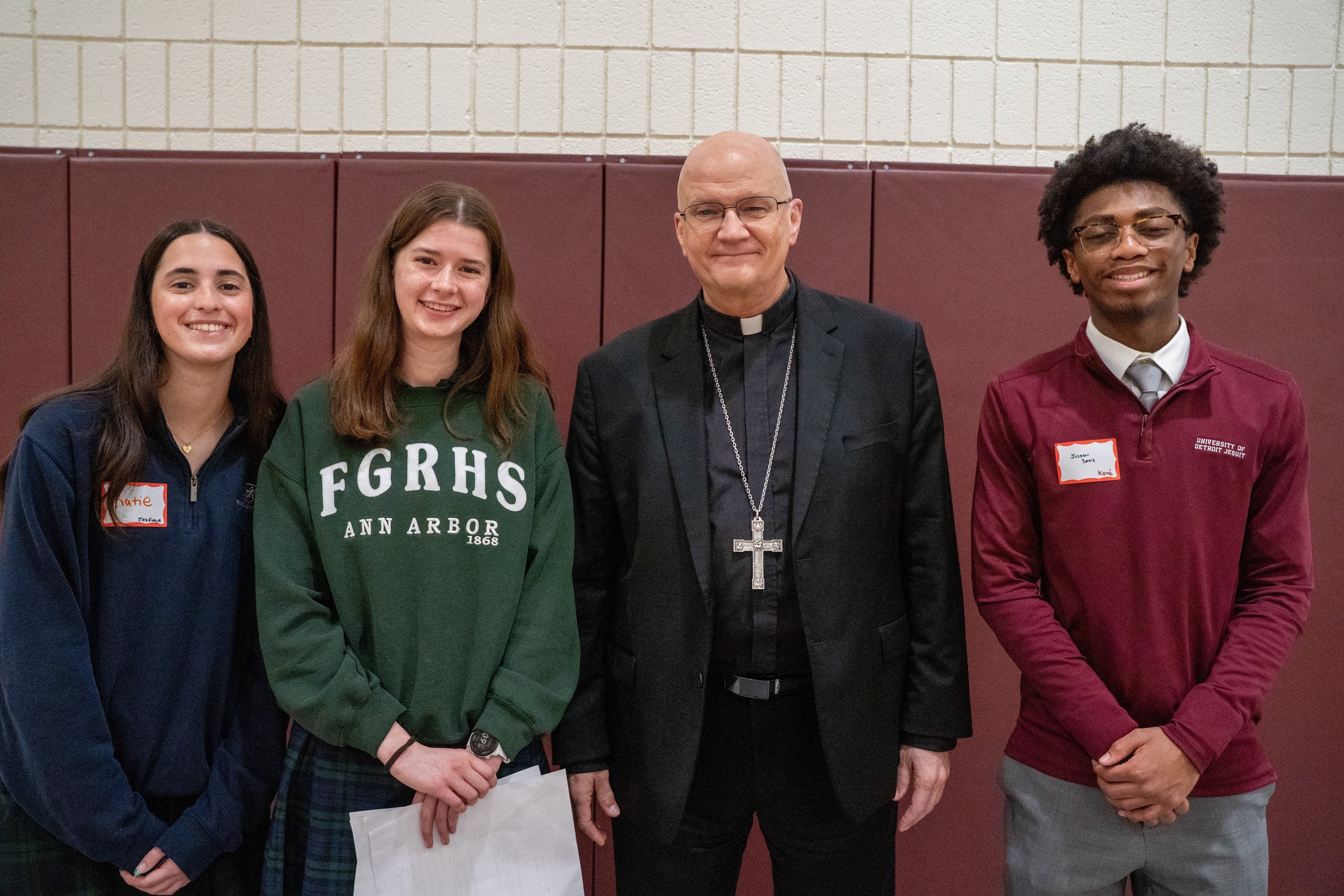
Notre Dame's Fortino, one of the student co-leaders of the conference, said another goal of the conference was to provide students with information and tools to lower the temperature around immigration debates, especially as aggressive immigration enforcement tactics and political rhetoric created a charged atmosphere.
“I really hope that people take from this conference a fresh mindset on the issues in our world, especially revolving around immigration, and can learn to apply their faith to this important topic and continue to spread messages of compassion and hope and awareness,” Fortino said.
Fortino added she hopes other students will be inspired, as she was, to take action and get involved in grassroots organizations at their own schools.
“I first joined my Circle of Support club at my school last year, and it was through that that I was then invited to this conference,” said Fortino, who now leads the club at Notre Dame Prep. “The club really brought me to this topic and also this conference, and really helped open my eyes to this issue and wanting to get involved.”
The conference featured a testimony from Odalis Perales, strategic partnership manager for Strangers No Longer, who spoke about her own experiences growing up in Florida as an immigrant from Mexico.
“Growing up, I wish I'd had a space like this. I’m grateful to be here,” Perales said. “I sometimes still think of myself as a high school senior, even though I’m not. I still have a lot to learn, but as a community organizer in school, I knew I wanted to be like them. As someone with a lot of learning to do, I am learning with you all and learning from you, too.”
Perales was accepted into Dartmouth College, where she secured financial aid, and upon graduating with a degree in medical anthropology and a minor in Hispanic studies, she knew she wanted to help families like hers.
“I wanted to help them not just survive in the United States, but to thrive,” Perales said. “And that’s where I am today, with a law firm, focusing on advocacy. I talk to immigrant community members like me, listen to their stories and find ways to uplift them and their communities. I want to help immigrant families, and I can do that through advocacy and witnessing their stories.”
Elinor Jordan, an attorney with the Michigan Poverty Law Program, spoke to students about how immigration laws often disfavor those most in need.
Reflecting upon the Acts of the Apostles, in which the Christian community was described as a place where "everyone had what they needed," Jordan said that's not often the case for migrant families.
“After college, I had the opportunity to go to El Salvador to work with youth. And more and more, they couldn’t see a safe future for themselves in their community," Jordan said. "No matter what they did through the community development process, from jobs to education, many of the young men thought they would be recruited by gangs early in their life, and if they said no, they would face certain death. Many young women knew someone might push them into relationships with someone who might want to hurt them, and if they said no, they and their families would be at risk.”
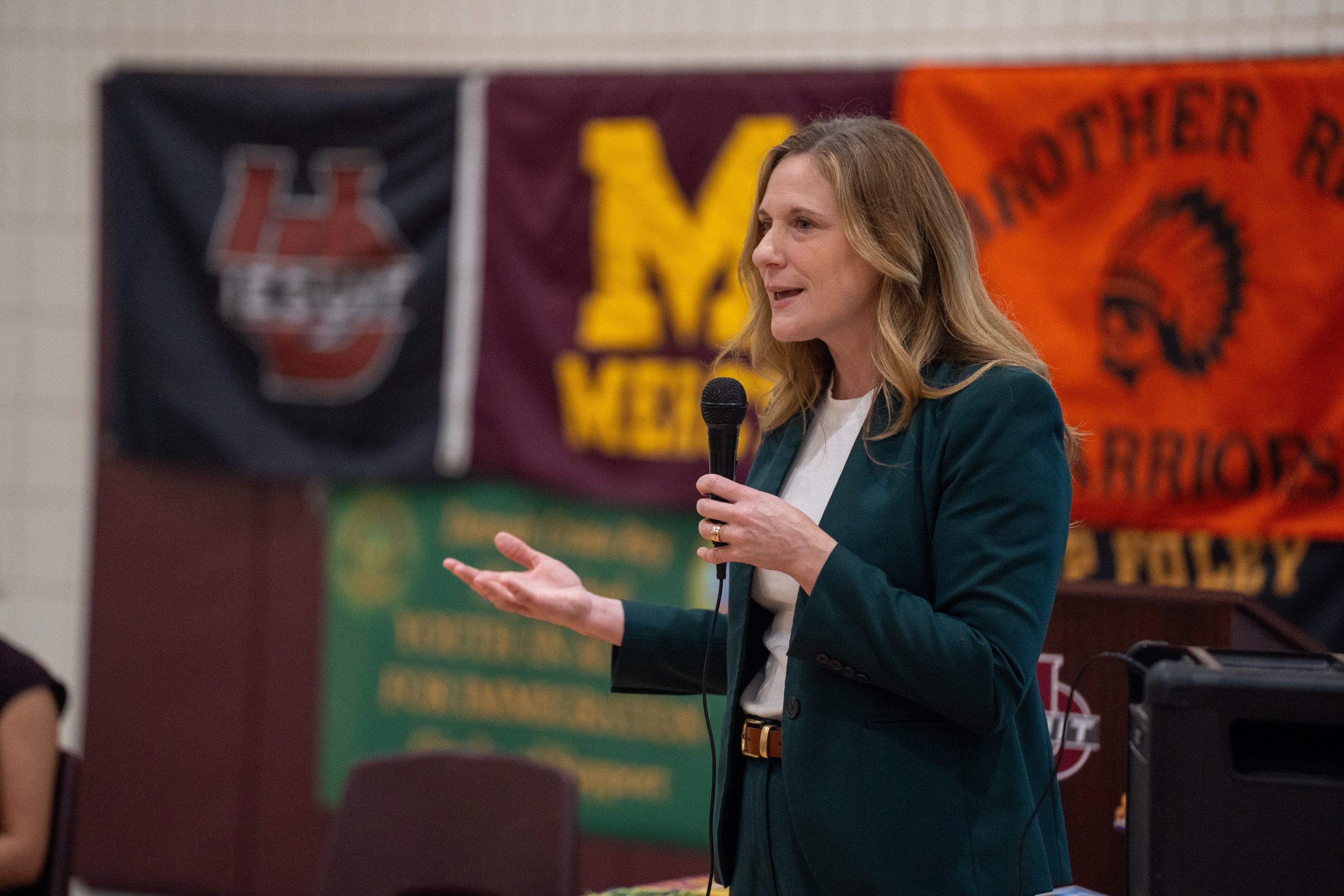
Jordan compared the immigration laws of the United States in the late 1800s, when her family arrived from Germany in Michigan’s Thumb, to today's system, which is much more difficult and stressful for those seeking to enter the country.
In today’s U.S. immigration system, Jordan said, people can come in through one of three ways: blood, sweat and tears.
“You can come through a very close family member, your blood, if you have that close family member, but that process ranges from a year and a half to 40 years, and I’m not kidding,” Jordan said. “However, if you come to the U.S. without authorization, there is almost no way to fix that.”
The second path, sweat, is people arriving through work visas, Jordan said, which typically are secured by immigrants with doctoral degrees and are rarely used by lower-class immigrants, who are the most likely to be subject to persecution and violence in their home countries.
“Then there are tears, where I spent most of my career,” Jordan said. “This is the humanitarian way.”
This third path — entering the U.S. as a refugee — is increasingly difficult as well, Jordan said. Many refugees spend years in refugee camps overseas waiting to come to the U.S., or seeking asylum, and some are never granted permission.
“The legal way to come to the United States as a refugee is to be designated a refugee in a refugee camp," Jordan said. "There are some refugees who I met who spent 15-20 years in refugee camps waiting to come."
“So blood, sweat and tears, those are the narrow doors,” Jordan said.
The University of Detroit Jesuit's Davis, another student co-chair of the conference, said the need to be witnesses to others' stories was prevalent throughout the day. In addition to practical lessons and insights, the conference also emphasized prayer, service and accompaniment, with students making prayer cards for local immigrant families and developing action plans to take back to their schools.
Davis said he hoped students who attended would take what they've learned to their own communities to begin critical conversations with their peers and others in an informed, compassionate way.
“Hopefully, today's conference will open their eyes to the millions of ways that immigration policy affects our country and the conversations that we have,” Davis said. ”I hope people will gain a better understanding of the tribulations and trials a lot of our immigrant community has to go through and see just how many people care about this topic.”