
Archdiocese of Detroit hosts Convocation for Liturgical Ministers, inspired by God's call to St. Francis to 'Rebuild my Church'
DETROIT — The men and women tasked with planning and organizing holy, reverent and engaging liturgies in the Archdiocese of Detroit gathered Aug. 10 for a day of prayer, learning and community.
Organists, choir directors, worship coordinators and others met at Sacred Heart Major Seminary for the Convocation for Liturgical Ministers, a daylong event focused on ways to better lead parishioners into a more perfect worship of God, said Kathy Fech, sacred worship coordinator for the Archdiocese of Detroit.
“Following last year when we had our jubilee for liturgical ministers, the Office of Sacred Worship realized there was a greater need to regularly gather those who serve in liturgical ministries, so we decided this needed to become an annual event,” Fech told Detroit Catholic.


The year’s theme, “Francis, Rebuild my Church,” draws upon the 800th anniversary of St. Francis of Assisi’s death and his calling from God to “rebuild my church.”
The event was part of the Jubilee of St. Francis, which is taking place in dioceses across the world.
“When Francis was told, ‘Rebuild my Church,’ he thought it meant (physical) buildings, and he had to learn that it meant people," Fech said. "I think we’re in a phase in our Church throughout the U.S., not just in Detroit, where we’re trying to figure out how we as individuals are called to rebuild our parishes into the people God is calling us to be.”
The day featured keynote addresses about the beauty and treasures contained in the liturgy and the Church, and how these institutions allow men and women to draw closer to God.
Fr. Stephen Pullis, director of the propaedeutic seminarians for the Archdiocese of Detroit and a member of the college faculty at Sacred Heart Major Seminary, said the main purpose of the liturgy is to draw people into the sanctifying work of God.
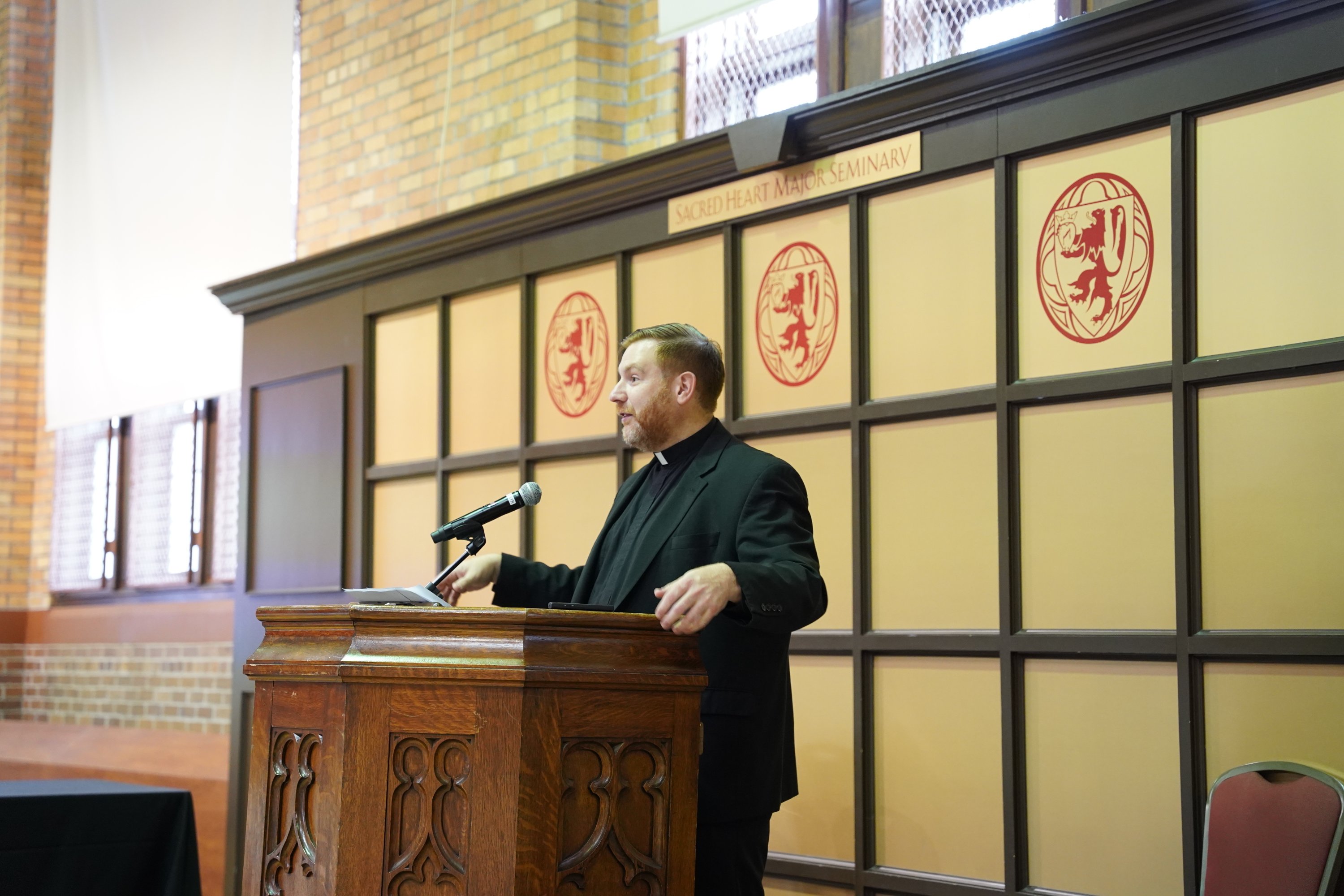
“The Catechism teaches us that it is God doing the sanctifying work in the liturgy, but we’re not passive in this work; we’re participating in it,” Fr. Pullis said. “We’re active in what God is doing, but it is beyond us. We can think of liturgy as the worship of God by the Church, done with and under Christ in the Holy Spirit. This is our mission as disciples: to worship God — not because God demands worship out of a hunger for power, but because it’s right for us to see everything we do in relationship with the God who created us, who redeemed us, and who wants to spend eternity with us.”
The liturgy contains many aspects and gestures that recognize the Trinitarian nature of God, from the Sign of the Cross to the Collect, which always references the Father, Son and Holy Spirit, Fr. Pullis said.
“The liturgy always reminds us that God is three in one,” Fr. Pullis said. “We do Sign of the Cross, and we do this when the priest gives the extended greeting from St. Paul: ‘The grace of our Lord Jeus Christ, the communion the Holy Spirit, the love of God be with you all.’”
While the actions, gestures and prayers of the liturgy remind the faithful of the Trinitarian nature of God, it also is designed to show the oneness of God's people in worship, Fr. Pullis added.
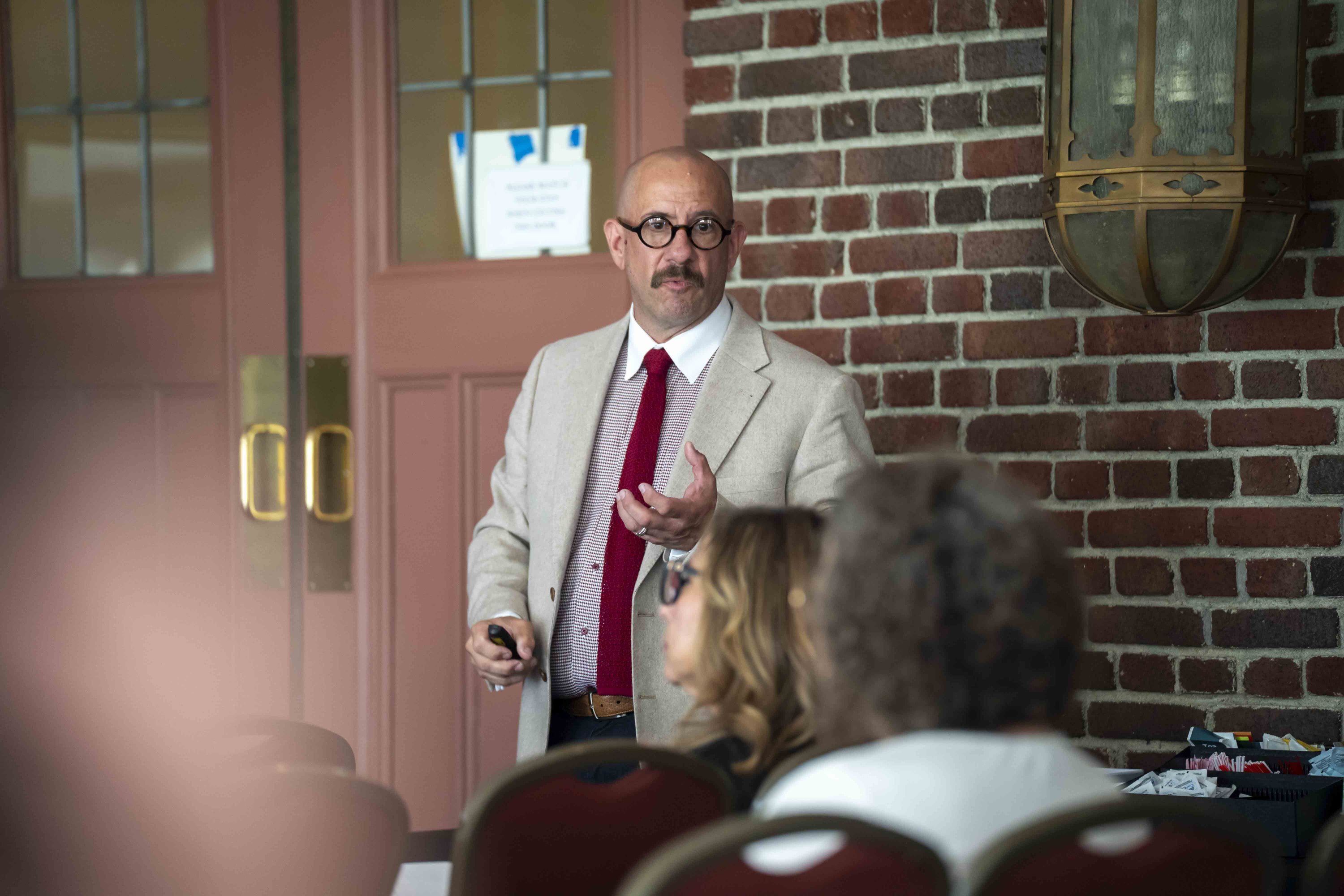
“The liturgy is about what it means for us to come together in the Church to worship God," Fr. Pullis said. "It’s not just about personal preferences or what we like; it’s about letting the Church, the body of Christ, shape and form us. And all of this comes from the great Catholic tradition, this word that comes out of First Corinthians, where St. Paul says to the Corinthians when he tells us about the Eucharistic sacrifice, ‘What I have received, I hand on to you.”
Msgr. Todd Lajiness, pastor of Our Lady of Good Counsel Parish in Plymouth and former rector of Sacred Heart Major Seminary, spoke about the dual nature of the Church established by Christ — the temporal and the transcendent — and the need for liturgies to reflect what he called a “holy tension between the transcendent and the imminent.”
“This tension is not bad, especially when it’s a holy tension, because it means we’re moving back and forth between the two,” Msgr. Lajiness said. “When we celebrate the liturgy, it is never celebrated in a vacuum. The liturgy comes to life in both the ecclesial dimension of the Church and the incarnation of Christ's real, physical presence on earth.”
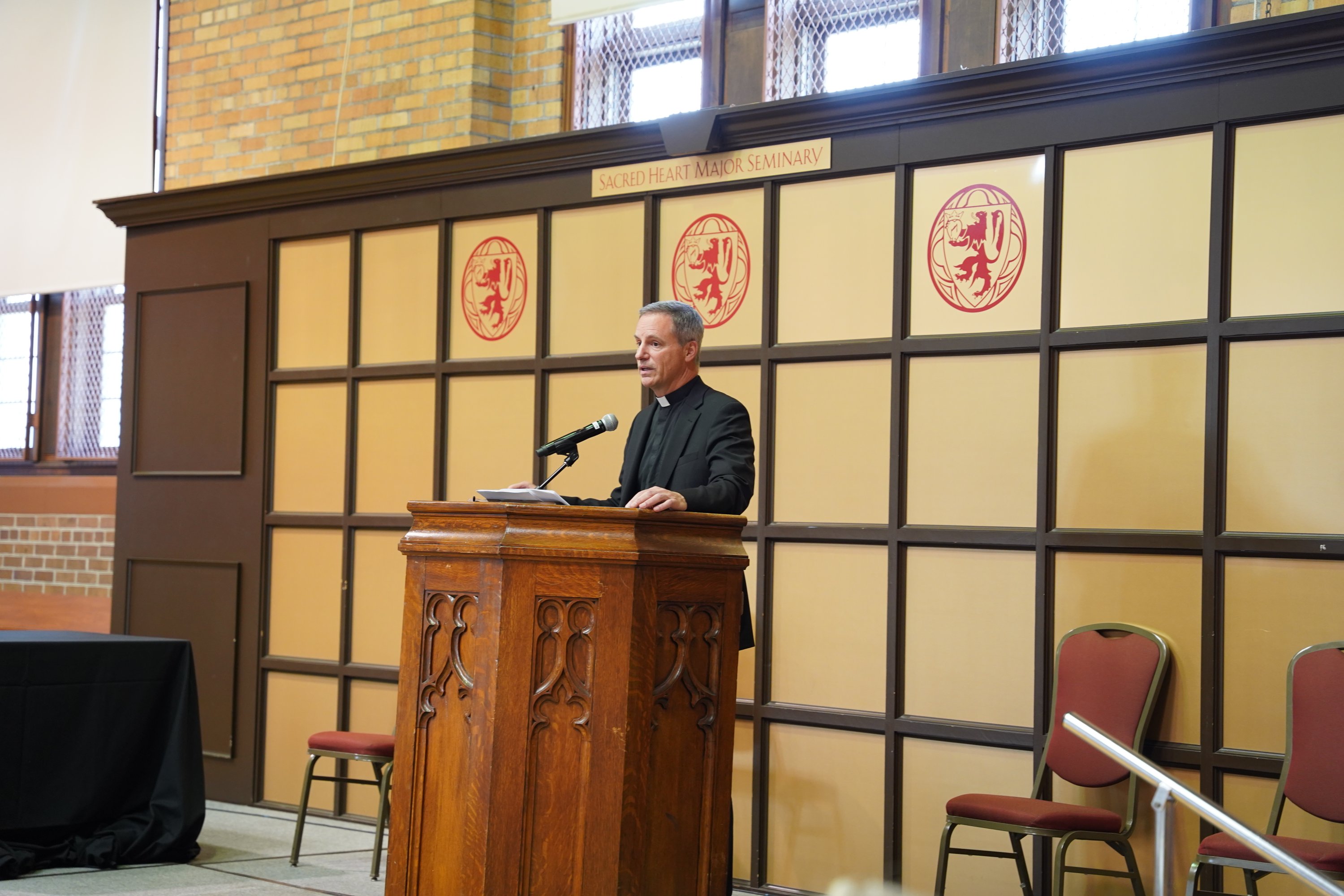
In the liturgy, the faithful see the purpose of the Church, which is to give glory and worship to God, who is transcendent, Msgr. Lajiness said.
“So here’s the question: Why do we have a Church?” Msgr. Laginess said. “Why did Jesus establish the Church by means of the gift of the Holy Spirit? Because when the Father gave the Son to do on earth what was accomplished, the Holy Spirit was sent on the day of Pentecost so that He might continually sanctify the Church. And this is so all those who believe in Christ, might have access to the Father through Christ.”