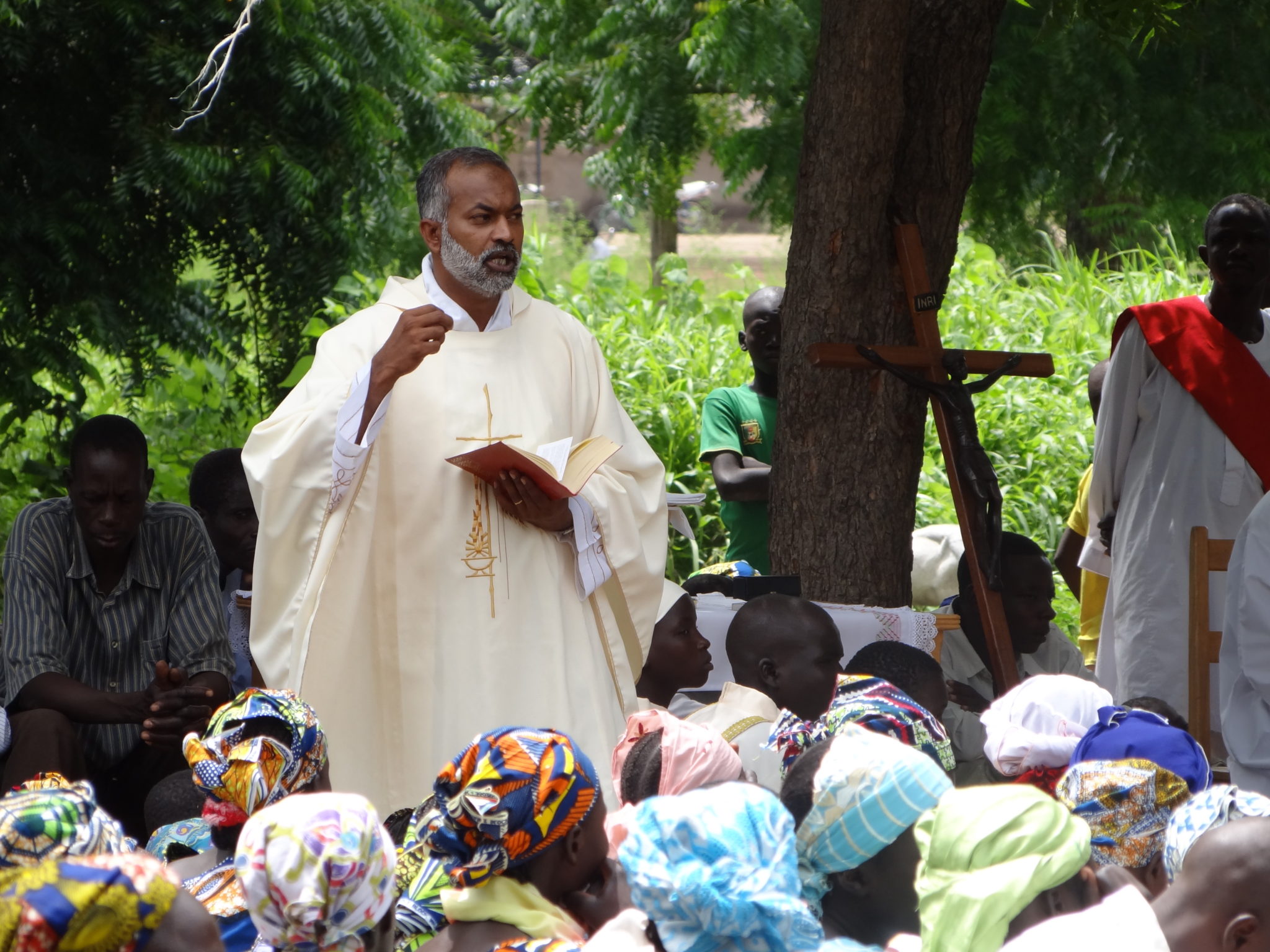
 Fr. George Palliparambil, PIME, preaches during a Mass in Cameroon.
 Missionaries learn much from the people they serve
DETROIT — Ministering in many different countries, Fr. George Palliparambil, PIME, discovered something extraordinary: despite cultural differences, all human beings are the same.
“It is the same human beings, [but] living in different conditions,” said Fr. Palliparambil, who recently came to the United States to serve as the Detroit mission center director for PIME, which stands for “Pontifical Institute for Foreign Missions” in Latin. The society, whose U.S. headquarters are in Detroit, consists of 500 priests and brothers serving in 18 countries around the world.
Before arriving in the United States this February, Fr. Palliparambil spent 10 years serving the people of poverty-stricken Cameroon, Africa. He served a parish, baptized nearly 1,500, and taught social education to help the people improve their lives.
“Evangelization is sharing with others what you’ve experienced yourself — what you have experienced from God,” he said. “When you have something, you have to share it with others.”
He explained that many of the problems of the land came from the people needing support with practical aspects of daily living and prospering.
As a result, besides building churches and providing spiritual instruction, Fr. Palliparambil found himself working to form teachers, construct schools, build wells and offer guidance for families.
He also took care of the sick — which spanned from tuberculosis, AIDS and HIV cases, to nutritional habits — and when necessary, would make sure people got to the hospital 35 miles away.
Providing physical care for the people was just as important as spiritual care, explained Fr. Palliparambil, but one thing he didn’t want was for the people to “become beggars” in depending on outside assistance to solve their problems.
“I was educating them to be able to face difficulties or problems as those who live the dignity of the children of God,” he said. “Some might say that we should let the people just live as they are, but we’re educating them to live differently.”
Life as a missionary priest in Cameroon was constantly busy, said Fr. Palliparambil, who was ordained to the priesthood in India in 2003.
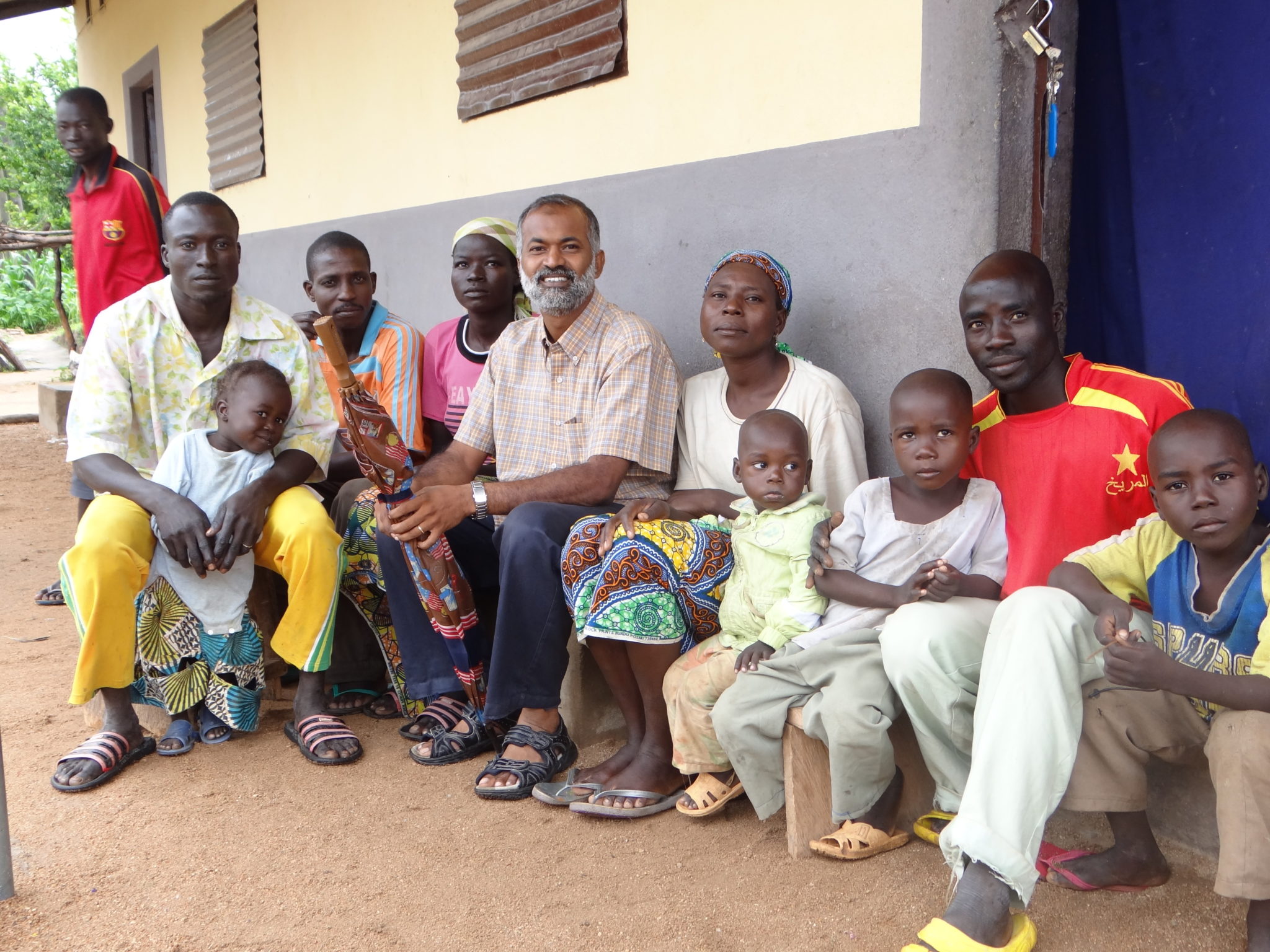 Fr. Palliparambil worked with and served the people of Cameroon for 10 years.
 Despite the relatively young existence of Christianity in that region of Cameroon — it has only been a presence in the far northern part of the country for about 60 years — Fr. Palliparambil knew he was living among saints.
“There are already many that are living as saints in their own way,” he said.
He felt as though he was always learning from the Cameroonian people, but said he was struck especially by one constant question: “Father, are there people poorer than us?”
Fr. Palliparambil recalled annual World Mission Sundays in Cameroon, when the people who lived in mud huts and whose livelihood consisted in growing millet put their offering in the Mass collection.
“On Mission Sunday they collected double of what they give normally,” he said. “They were giving more than they could give,” but that did not stop the people from helping those poorer than themselves.
Was there possibly a certain formula Fr. Palliparambil used to guide the people of Cameroon?
No, he said, he went without any particular plans or project, “to realize what the Holy Spirit would suggest to me.”
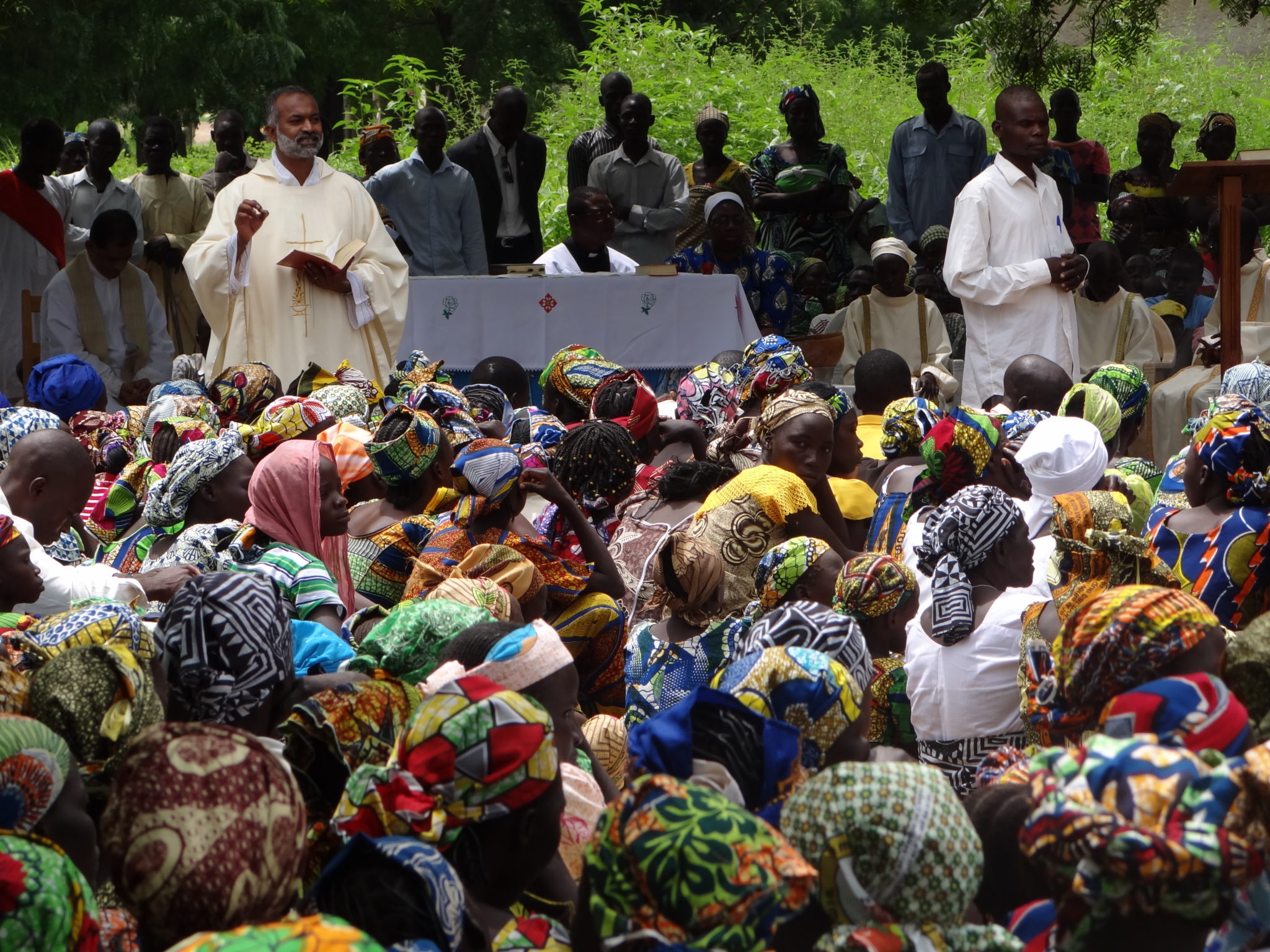 Fr. George Palliparambil, PIME, celebrates Mass during his time in Cameroon.
Despite all of these successes, Fr. Palliparambil does not view himself as having done anything spectacular; instead explaining that it was God who worked through him.
He said that being a missionary is a vocation for every baptized person, whether they cross the sea to serve the missions, or pray for the missions from a distance, like St. Therese of Lisieux, who never left her cloister but is co-patroness of mission work.
“I did not do great things, only small things,” Fr. Palliparambil said. “God has done great things, not me. We are just instruments in his hands.”
Celebrating World Mission Sunday
The Archdiocese of Detroit will celebrate World Mission Sunday on Oct. 20 at a 3 p.m. Mass at the Cathedral of the Most Blessed Sacrament in Detroit. Grand Rapids Bishop Emeritus Walter Hurley will be the celebrant and homilist at the liturgy, which will be sponsored by the Society for the Propagation of the Faith and hosted by the PIME Missionaries. Refreshments will be served following the Mass, and an informational session on mission work will be held afterward in the basement of the cathedral, 9844 Woodward Ave. World Mission Sunday helps Catholics across the globe publically renew their commitment to the missionary movement. For more information, visit pimeusa.org, call (313) 342-4066 or email [email protected] or [email protected].