Inspired by Franciscan model, Capuchin friars partner with ecological nonprofits to promote 'regenerative land care'
WASHINGTON TOWNSHIP — The Franciscan ethic of care for creation is flourishing at the Capuchin Retreat Center in Washington Township.
Situated on 95 acres of meadow and wooded land, the center is home to turkeys, deer, groundhogs — and now, goats.
In partnership with MichiGoat and the Cooperative Invasive Species Management Area (CISMA), the friars of the Capuchin Franciscan Province of St. Joseph have launched a new regenerative land stewardship effort at the Washington retreat center, with a focus on restoring the landscape to its natural state.
Bro. Igor DeBliquy, OFM Cap., director of the Capuchin Retreat Center, said the goal is to replace current land management systems with ones that are more sustainable, both from a financial and an environmental standpoint.
"There are economic impacts, which is the more practical side of it," Bro. DeBliquy told Detroit Catholic, "but beyond that, Pope Francis called us to take care of our ecology, and St. Francis calls us to take care of our brother and sister earth. So, we are looking to translate that into something that's not just spiritual, but is also at the forefront of our thinking."
Bro. DeBliquy shared three key components to this type of land stewardship: taking away what man has forced a landscape to be, bringing it back to where nature has intended it to be, and removing things that are threatening the natural process.
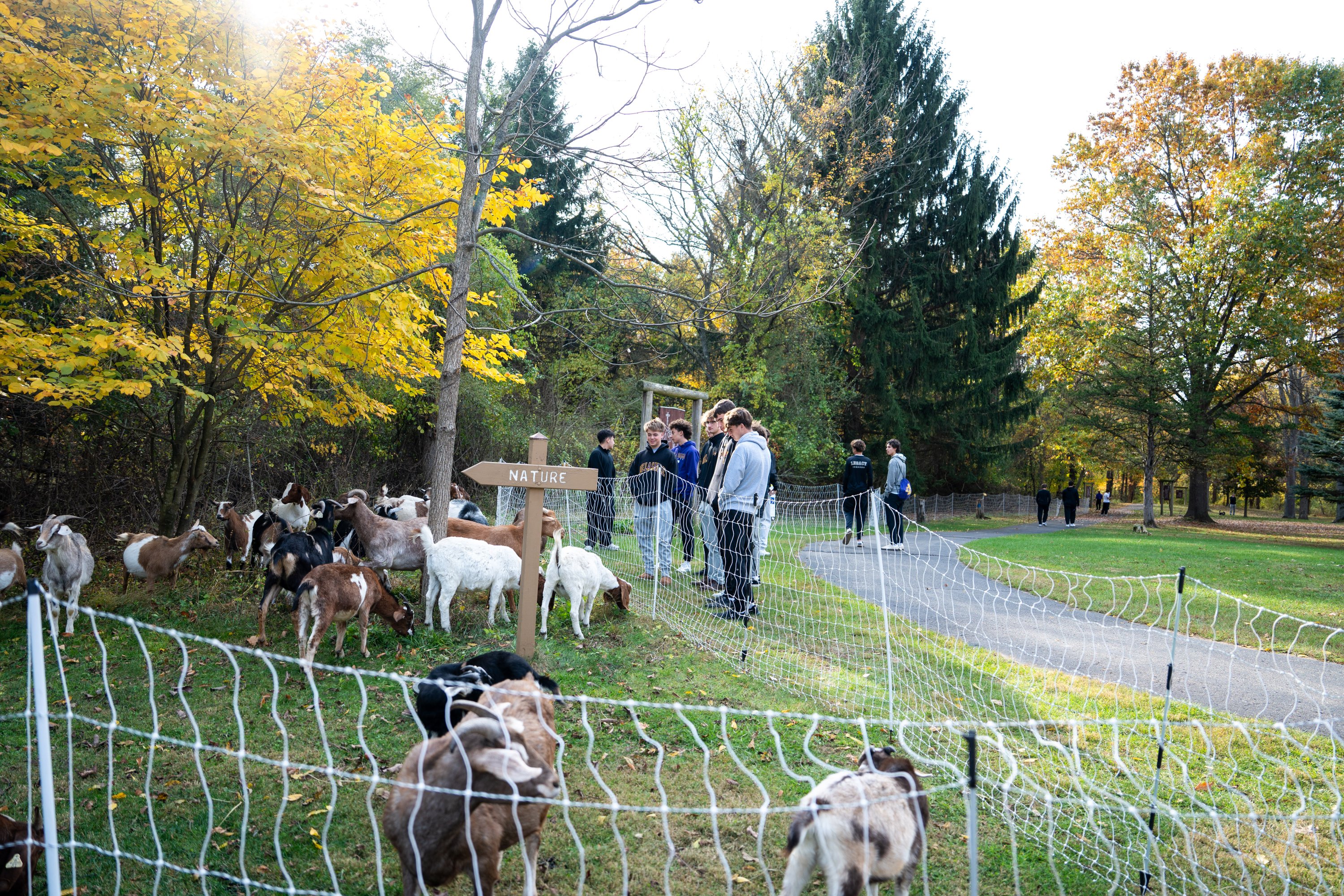
As part of this new effort, much of the care for the wooded areas on the Capuchin Retreat Center's grounds has been entrusted not to the friars, but to a maintenance crew of four-legged friends.


"We'd been talking about bringing goats in, but it was more theoretical and not a concrete plan," Bro. DeBliquy mused. "But it turned out we already had a contact to MichiGoat through one of our donors, and we were able to really get the ball rolling."
MichiGoat is a local land management business that focuses on clearing up brush and invasive species using goats and natural remedies, rather than relying on pesticides and chemicals.
The herd of 32 goats was on site for one week in late October, and more than 200 people visited the retreat center just to see them, Bro. DeBliquy said.
"They are definitely a draw," he continued. "People are so amazed and joyful to see them. They're relaxing to look at, and they look like they're right at home. This is the stuff the goats want to eat and want to take care of, so it was a very good fit."
The grazing goats joined an already vibrant community of wildlife on the grounds.
"People come on a retreat and they look out their window and see a deer walk by, and a whole gaggle of turkeys," said Bro. DeBliquy. "It's very peaceful, and that's what we want to improve."
While the goats tackled the woods, additional work is being done in the meadows.
In the past two years, the friars have run a test field in which they have removed autumn olive — an aggressively spreading invasive shrub — and replanted with native meadow foliage. According to the Michigan Invasive Species Program, autumn olive fixes nitrogen in soil, which puts native plants at risk. It spreads very rapidly, and also shades out more desirable native plant communities.
Successful trials in the test environment have nurtured larger-scale plans for the eight acres of meadow. Section by section, the friars will plant pollinators and native species like black-eyed Susans, wild bergamot and milkweed. In addition to being friendly to wildlife, these plants also have longer root systems that will encourage water table growth and require minimal maintenance.
As future plans begin to take shape, the partnerships with MichiGoat and CISMA will continue to grow, as well. While much is still being developed — and will be more fully considered as the new plantings and current initiatives continue to germinate — Bro. DeBliquy foresees great educational and service opportunities in collaboration with local schools and volunteer groups.
"This gets to the heart of what we want to do, which is to see Christ in our brothers and sisters, yes, but also to see Christ revealed through nature," Bro. DeBliquy said.