

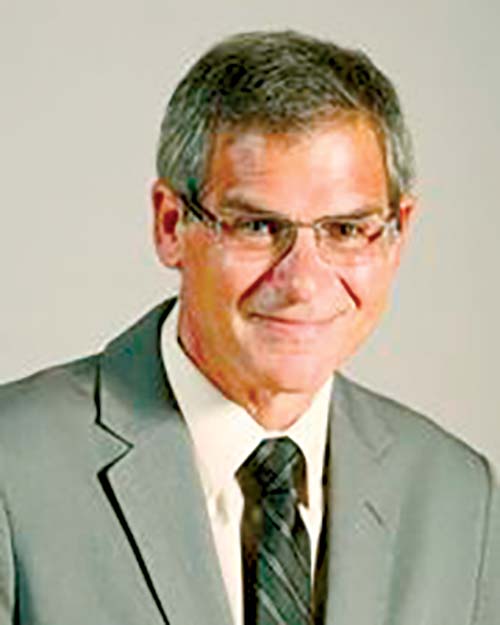
 Fastiggi
Detroit — Does the New Evangelization start with the confessional?
In his most recent book, professor Robert Fastiggi of Sacred Heart Major Seminary says emphatically, “yes.”
Inspired by Pope Francis’ declaration of a Year of Mercy in 2015-16, Fastiggi, professor of systematic theology at the seminary since 1999, highlights in a new book how the sacrament of reconciliation is directly linked to evangelization.
“I’ve always had this great devotion to the sacrament of reconciliation and was honored to write the book during the Jubilee of Mercy,” Fastiggi told The Michigan Catholic. “Reconciliation and mercy have been hallmarks of the pontificate of Pope Francis.”
Fastiggi’s book details the history of the sacrament in the Church, and why Catholics need to go to confession. The book compares reconciliation to the concept of asceticism or atonement for one’s faults that’s prevalent in eastern religions and ancient philosophy.
“To be honest, I was surprised Hillenbrand Books (the book’s publisher) didn’t have a book like this already,” Fastiggi said. “They had books on reconciliation, but more on a preparatory position of the rite itself. But not really from the Scripture or the cultural background.”
“The Sacrament of Reconciliation: An Anthropological and Scriptural Understanding” delves into the sacrament’s origins, detailing references in Scripture the early Church fathers used to promote the practice.
“Both the Old Testament and the Gospel had calls for repentance,” Fastiggi said. “In Mark 1:4, John the Baptist claims a penance for the forgiveness of sins. When Jesus initiated his ministry, he said, ‘This is the time of fulfillment, the Kingdom of God is at hand.’ He said ‘repent and believe in the Gospel.’”
According to Fastiggi, repentance in the form of the sacrament of reconciliation is directly linked to Archbishop Allen H. Vigneron’s call to evangelize in his pastoral letter Unleash the Gospel.
“I was so pleased with Unleash the Gospel, how frequently (the archbishop) refers to the importance of the sacrament of reconciliation as a key marker,” Fastiggi said. “How in all dimensions of church life, parish life, family life, archdiocesan Central Services, the archbishop has it right: the proper focus on how reconciliation is tied to the Church’s mission. You can’t separate the Gospel from a call for repentance.”
Fastiggi said the archbishop’s emphasis on the sacrament is in line with the themes of the last three pontiffs: St. John Paul II, Benedict XVI and Francis, all of whom have emphasized confession as an effective way of encountering Jesus.
“During Pope Benedict XVI’s address on March 9, 2012, he told the audience reconciliation itself is a proclamation of the Gospel and a path to take for the New Evangelization,” Fastiggi said. “He said the New Evangelization begins in the confessional. The work of the New Evangelization depends on the holiness of the members of the Church.”
Fastiggi’s book details the history of reconciliation in the Church, including how Pope Leo the Great in the fifth century emphasized private individual confessions, as opposed to communal acts of repentance that were common in the early Middle Ages.
“It was interesting to lay out the way the sacrament of reconciliation has been developed,” Fastiggi said. “I also looked into the tremendous abuses of the de-emphasis of individual confession. In some places, including the United States, there were communal penance services of general absolution and people were denied personal confessions. Pope John Paul II intervened to stop these abuses.”
Besides a great history and scriptural lesson, Fastiggi wants readers to see reconciliation as a gift from God.
“I want readers to learn that the sacrament of reconciliation is a great gift,” Fastiggi said. “If one is serious about their Catholic faith and drawing closer to God, they have to recognize their sinfulness and need for forgiveness. It is one of the ways the Incarnate Word encounters us directly.
“Confession is a beautiful way we receive direct forgiveness from our Lord Jesus,” Fastiggi continued. “When we realize we are sinners, but God loves us, it is deeply moving. Jesus came to reconcile all sinners. In the New Testament, Jesus rails against sins, but he is there to reconcile us, to relieve us from our sins.”
‘The Sacrament of Reconciliation: An Anthropological and Scriptural Understanding’
By Robert Fastiggi, Ph.D
$24 (Kindle) and $68 (paperback)
Hillenbrand Books (2017)
Available on Amazon.com