
Annual liturgy and conference for health care workers focuses on recognizing the God-given dignity found in all patients
DETROIT — Health care workers were encouraged to bear witness to the God-given dignity found in every person as they fulfill their vocation during the annual White Mass at Sacred Heart Major Seminary in Detroit on Sept. 26.
The Mass for Healthcare Workers — traditionally known as a “White Mass,” named for the traditional uniforms for doctors and medical professionals — began in 1932 by the National Catholic Medical Association. In 2022, the Blessed Solanus Casey Guild of the NCMA was established for Detroit-area Catholic doctors, nurses, therapists and others working in health care.
“Typically, these Masses are held around the Feast of St. Luke the Physician (Oct. 18), so the national office for the National Catholic Medical Association encourages us to take the time to come together and encourage one another in our respective fields,” said Dr. Bradford Merrelli, MD, a member of the Detroit Catholic Medical Association, who opened the conference.
This year’s conference, “Called to Care: Building a Culture of Life Through Accompaniment,” focused on the need for health care workers to walk with their patients as they are navigating sickness and pain, recognizing the intrinsic value each life has, regardless of age, diagnosis or medical condition.
Sr. Mary Rebecca Koterba, RSM, MD, delegate for consecrated life in the Office of Clergy and Consecrated Life in the Archdiocese of Detroit, who is also a board-certified physician and surgeon with more than three decades of medical practice, spoke about how Catholics in the health care industry are called to a ministry of accompaniment, focusing not just on the disease or ailment that hinders their patients, but rather on the patients themselves.
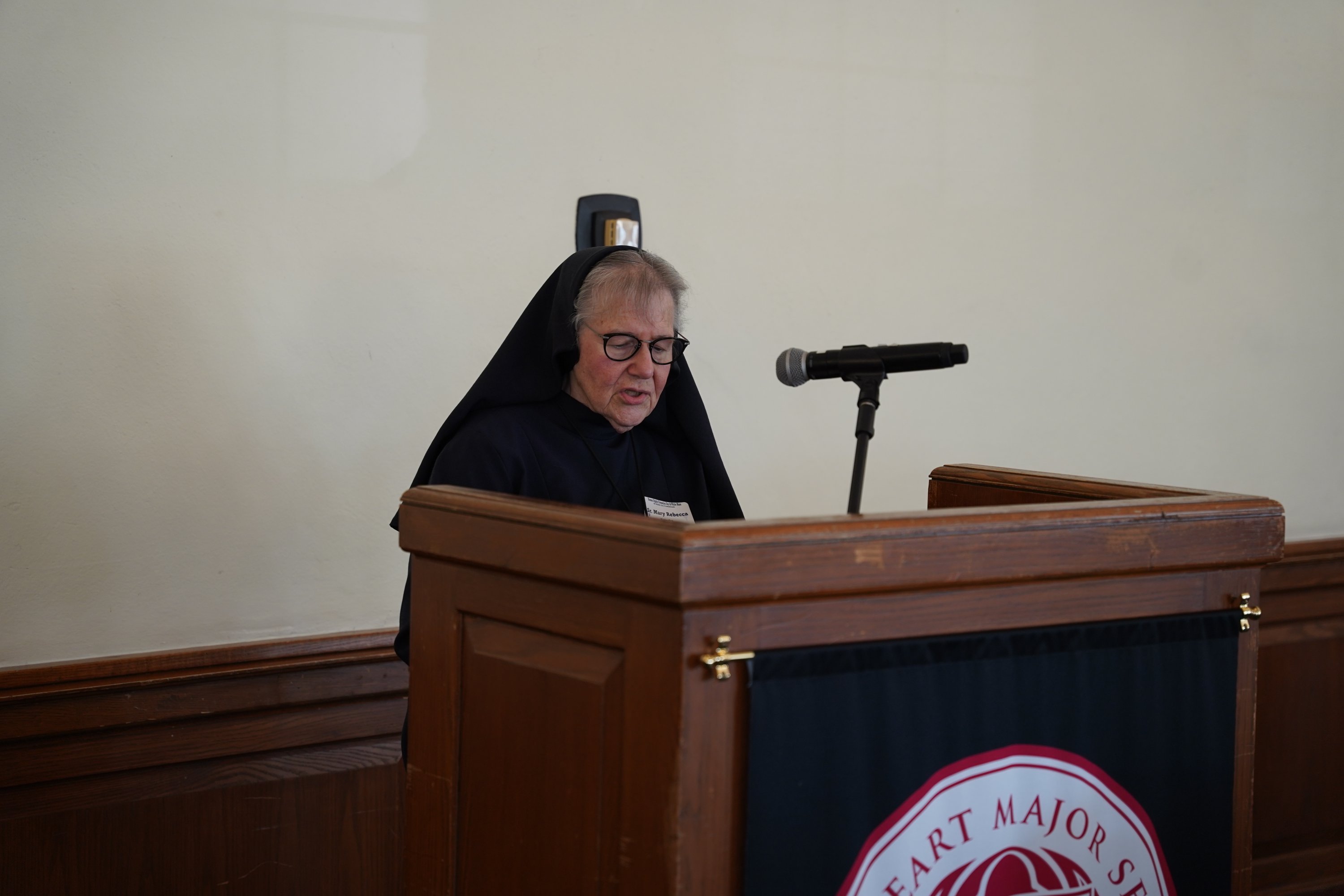
“Accompaniment is not a merging or meshing with someone where their burdens or crosses become your own, and the burdens become something to be overcome,” Sr. Koterba said. “Accompaniment is when we walk with the person; we help them shoulder the burden through some of the most dramatic and dire circumstances in their lives, where people require our assistance. No one is exempt from illness or trauma at some time in their lives, and as a surgeon, it was not uncommon for me to experience and walk with people in their greatest time of need.”
Sr. Koterba pointed to Simon of Cyrene as an example of accompaniment; he didn’t remove the burden of Jesus carrying to the cross to Calvary, but he assisted him on the journey.
“Simon's accompaniment of Jesus fully engaged him in supporting Christ’s mission,” Sr. Koterba said. “Simon helped Our Lord to complete his journey, even if he was reluctant at first. Likewise, when we accompany our patients, there may be reluctance due to their health, background or station in life. It’s not for us to remove the burden, but to walk with them to make it easier.”
Louis Brown, executive director of the Michigan-based Christ Medicus Foundation, spoke to the conference about the organization’s mission to promote the dignity of every human being in crafting legislation and regulations in health care.
“As nurses, doctors, medical technicians, first responders, therapists, hospital administrators, chaplains and caregivers, we have a particular role in building the civilization of love and justice, providing protection for a culture of life,” Brown said.
Brown discussed his role as an attorney advocating for cases where families and individuals have experienced mistreatment in medical decisions, particularly around end-of-life care, with hospice systems not providing adequate food and drink for patients.
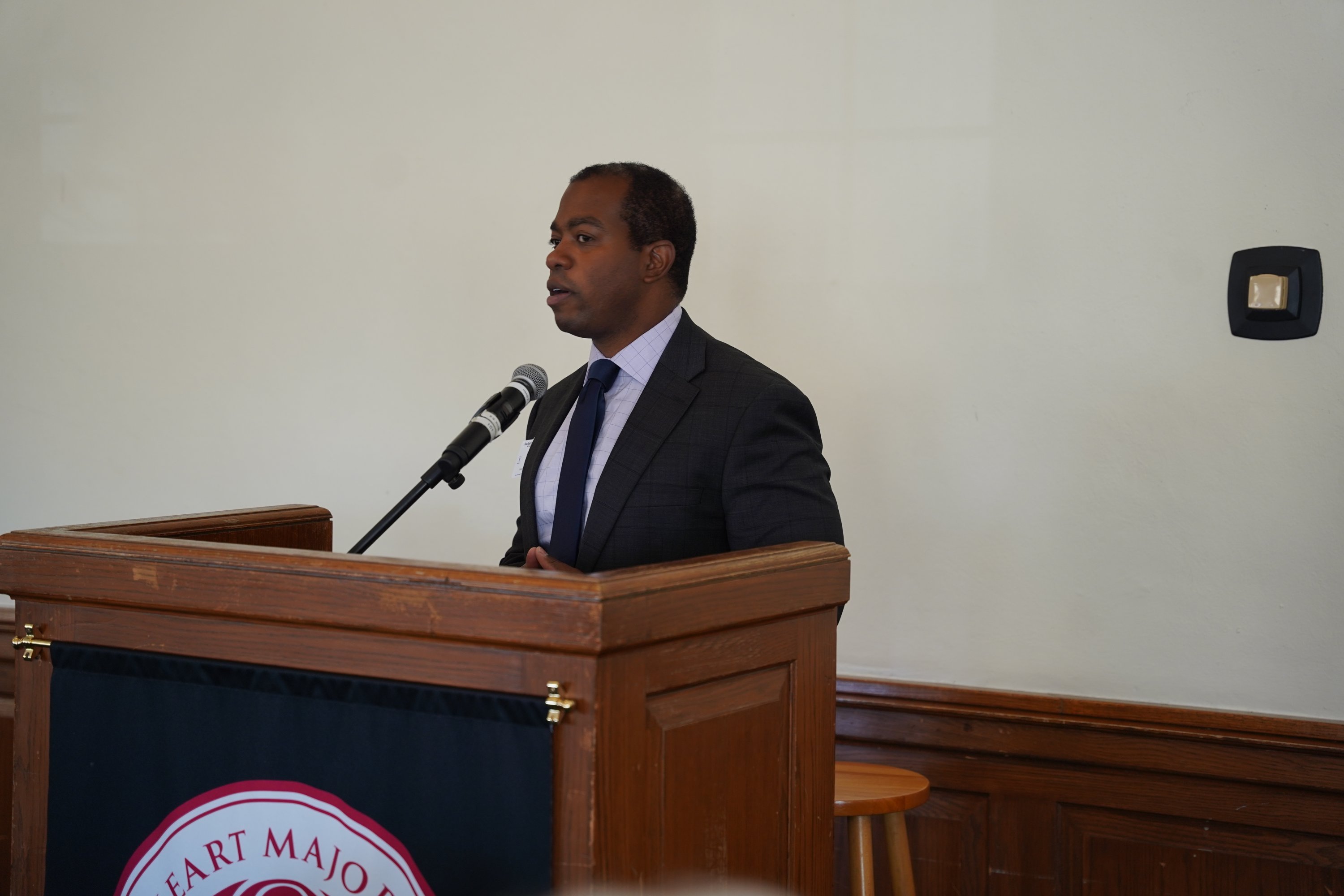
“Every person has a right to life, regardless of their state of development, their medical conditions, cognitive ability or their productivity,” Brown said. “A person’s dignity is inherent in their existence. However, today, we have a culture of flesh that says there are people who do not have a value, they have no productivity, so we may discard them.”
Brown encouraged health care workers to look to St. John Paul II’s Evangelium Vitae and Pope Leo XIV’s Magnifica Humanitas to advocate for patients in every stage of life.
“Every individual, precisely by reason of the mystery of the word of God who was made flesh, is entrusted to the maternal care of the Church, which means we have a moral duty as Catholics to care for everybody,” Brown said. “Every person is created equal because they have been given a life and a dignity and rights that come from God, and therefore no government or state can take them away.”
Michael Vacca, director of ministry, bioethics and membership experience for CMF CURO, said recent efforts to introduce physician-assisted suicide in Michigan are a misguided understanding of “compassion.”
“We all know that it's human and compassionate to try to alleviate suffering, to try to accompany people,” Vacca said. “We’re called to accompany people, to alleviate suffering, but even when we can’t heal the illness, we can’t relieve the pain, we are called to suffer with that person, to be ‘co-passionists.’ It’s about being the hands and feet of Christ in their hour of need. To show them they are not alone.”
Vacca warned that even if physician-assisted suicide doesn’t come to Michigan, there are still other worrying examples of the withholding of food and water from terminally ill patients.
“The legal definition of euthanasia and the Catholic definition diverge,” Vacca said. “If you take away food and water, the law in this country does not consider that euthanasia. They call it withholding care. That's legal in every single state in this country. It's also gravely immoral, and an offense to our Creator who created us in love. It's also a terrible way to die, because when you are deprived of hydration, that is a huge suffering. That is not the way to die. So it's ironic because the people who are going around advocating this are proclaiming their compassion.”
Vacca said building a culture of true compassion means starting with reclaiming what is God’s creation: the human dignity of every person.
“We need to reclaim God's sovereignty,” Vacca said. “The human person belongs to God and God alone. No one has the right to take away that dignity. No one has the right to say, 'You are mine.' That's theft. God says, ‘No, I'm the protector of that person. I'm the one who decides what happens to that person.’ Our mission as Catholics, as disciples of Christ, is to help our Lord Jesus Christ reclaim the world, which means recognizing who we are as human persons.”
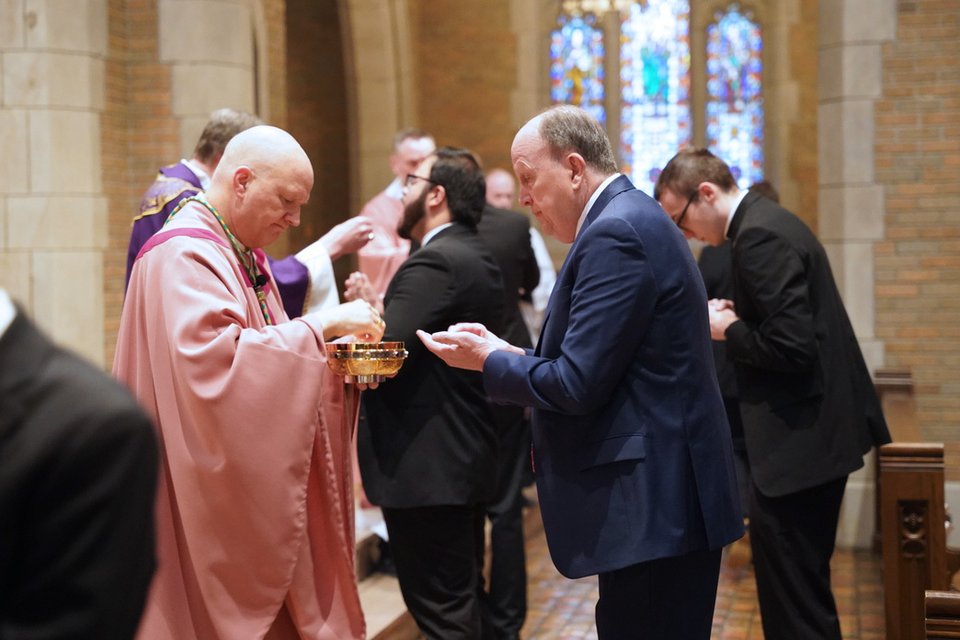
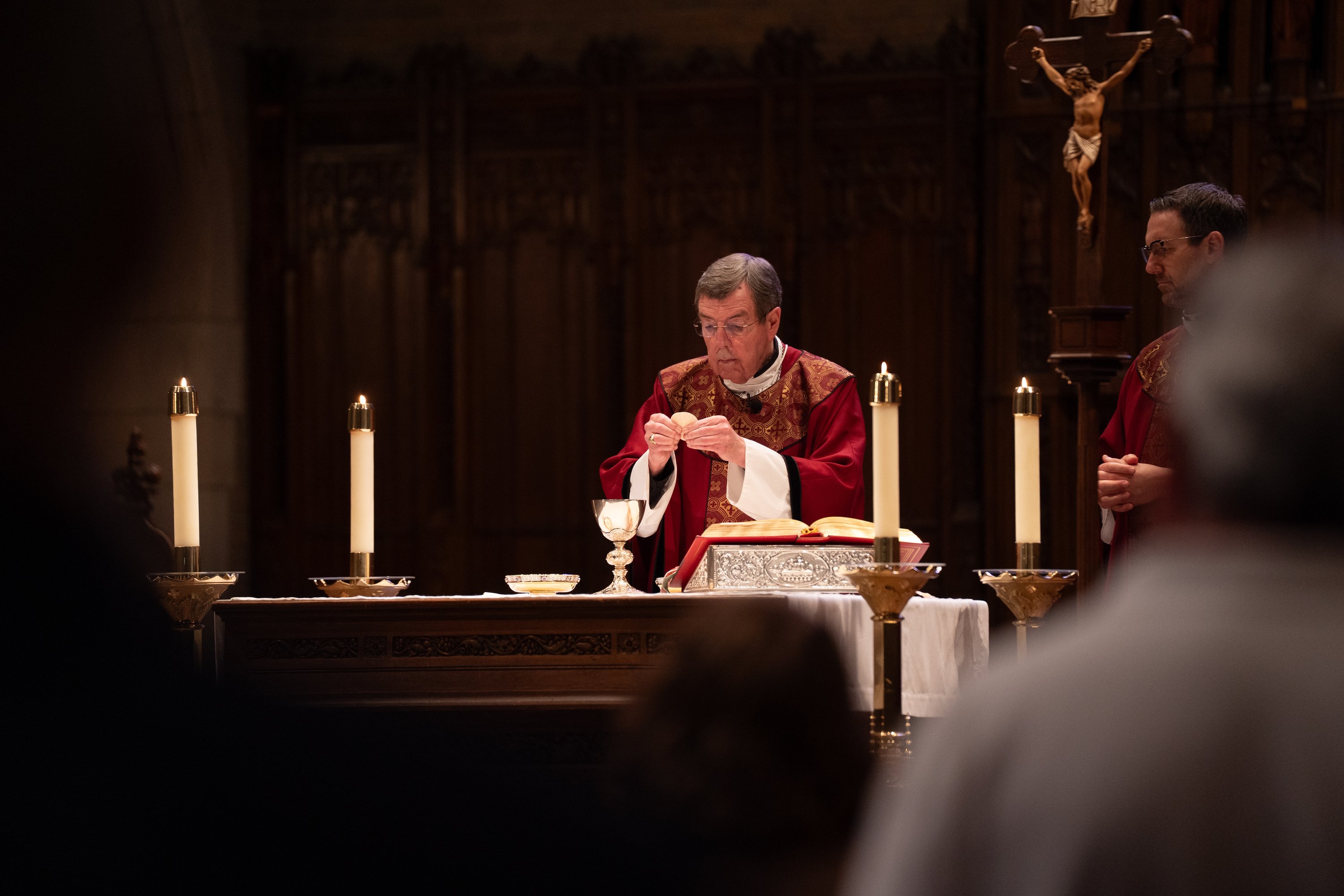
After the morning presentations, the conference attendees gathered in Sacred Heart’s chapel for Mass celebrated by Detroit Archbishop-emeritus Allen H. Vigneron, where Fr. Jason Brooks, LC, chaplain of the Blessed Solanus Casey Guild of the Catholic Medical Association, delivered the homily.
“As we celebrate this White Mass today, I couldn’t help but find it ironic that we are wearing red,” Fr. Brooks said, recognizing the liturgical colors for the Feast of SS. Cosmas and Damian. “Then I thought, we are honoring these martyrs, and these martyrs bore great witness, great testimony to Jesus and to the life Jesus wants for us through his death and resurrection from death. Our faith is full of so many paradoxes: you have to die in order to have life, you have to lose your life if you want to find it.”
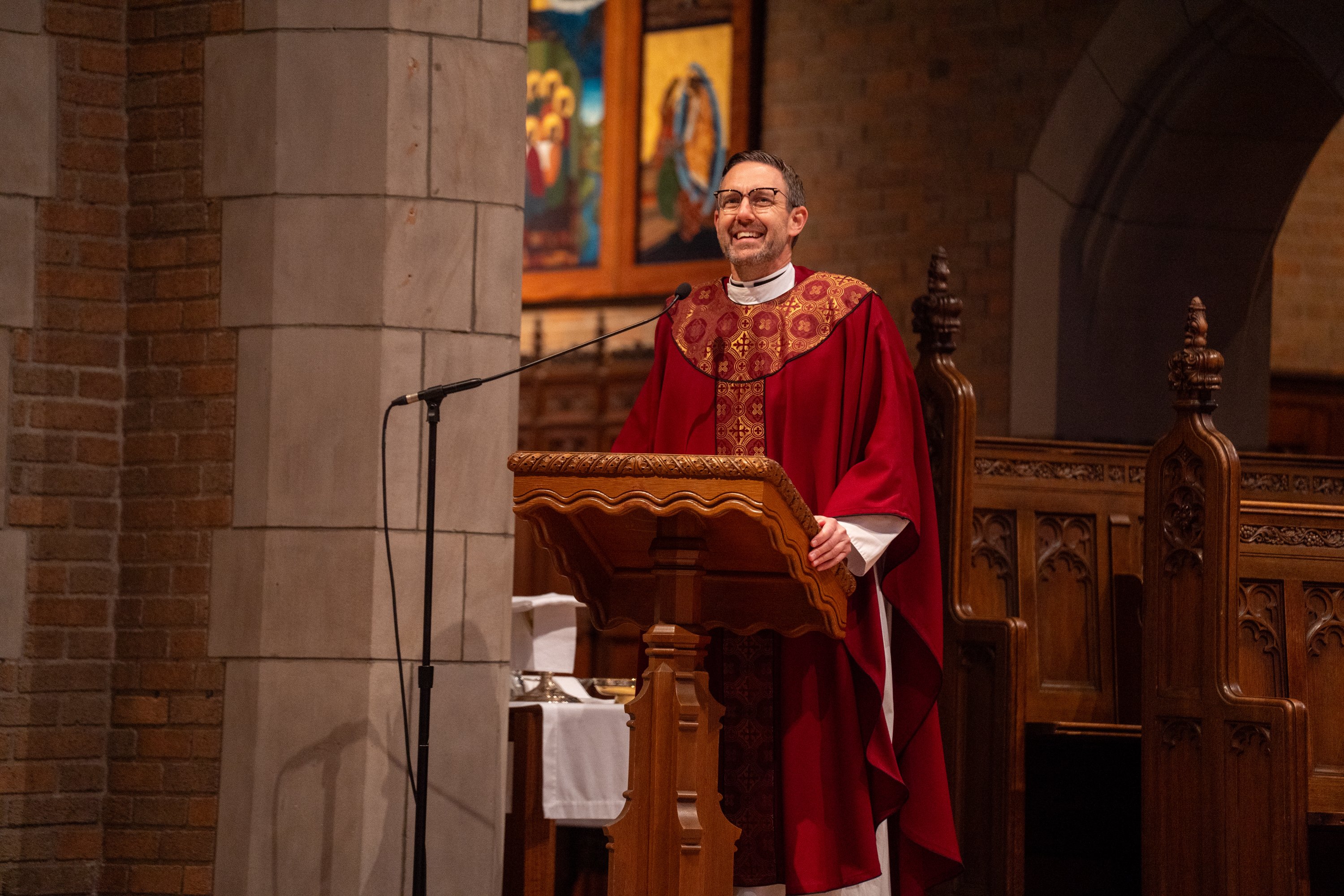
Fr. Brooks said that while doctors and nurses' professions are rightly centered on the health and well-being of their patients, they must always take the time to care for themselves and their relationship with God.
“I want to applaud you and encourage you to keep doing what you are doing,” Fr. Brooks said. “Remember, you, too, need to keep nourishing your faith. So thanks be to God that you are here. We know how important it is to nourish ourselves and take care of ourselves (physically) in our profession. As we take the time to grow in faith and our friendship with God, we nourish ourselves so we can treat the people whom we come across. The Lord doesn’t want you to burn out; he wants you to offer yourself, but doesn’t want you to burn out, so please allow the Lord to minister to yourself first and foremost.”