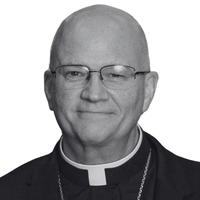

Editor's note: The following column by Detroit Archbishop Edward J. Weisenburger was first published May 25, 2026, in the Detroit Free Press.
Pope Leo XIV is head of the 2,000-year-old Catholic church, but he just released a major teaching on artificial intelligence earlier today. Yes, you read that right. And when you know the context and background, I promise it will make perfect sense.
As society and technology advance, the Church’s teaching has consistently served as a moral compass, guiding human flourishing in every age. One example of this occurred 135 years ago, when Pope Leo’s predecessor, Pope Leo XIII, released a major teaching, “Rerum Novarum” (Latin for “New Things”), to address the human costs of the Industrial Revolution. It is firmly in that tradition that Pope Leo XIV today addresses the dangers, hopes, and responsibilities of today’s revolution: a technological advancement known as “artificial intelligence” or AI.
In this formal Vatican document, Magnifica Humanitas (Latin for “Magnificent Humanity”), Pope Leo XIV grounds his teaching in our firm belief that each and every one of us is sacred, made in God’s image, and possesses intrinsic dignity. Any technology with the potential to harm our conscience, consciousness, or community must be used with the greatest care.
Pope Leo's warning: AI could diminish human dignity
Pope Leo writes, “never before has humanity had so much power over itself.” We wield technology that can create enormous new efficiencies and serve humanity, but the same technology also can efficiently eliminate jobs or execute a person on the other side of the world via drones. As the world witnessed 135 years ago during the Industrial Revolution, technology can tempt the world’s powerful to reduce human beings to mere consumers or to workers whose only value is in producing a maximum profit.

Artificial intelligence presents the same potential danger today. There are specific questions we might ask to guide AI to its highest use. Can we use AI to aid life-saving cancer surgery, while protecting our health data from bad actors? Can AI help a priest learn a foreign language so he can better connect with parishioners, while keeping the data center it uses from devastating the water supply or increasing the electric bills of a small town in another state? Can AI create new jobs with fair pay and decent benefits, while not creating an unemployment crisis as older jobs disappear?
Even with these weighted concerns, Pope Leo does not reject this new technology. He points out that advances in technology arise from our God-given creativity and free will. The choice is not between accepting or rejecting advancements. Rather, the choice is between uses of technology that undermine human dignity or safeguard it. We are not necessarily advancing the human race just because we do things once thought impossible, wildly increase efficiency, or make a small group of people extremely rich. Rather, we advance the human race by serving the common good and the integrity of God’s creation.
The Church says AI must serve people, not profit
We can embrace technology that enhances life without allowing that technology—or the corporations that profit from it—to dominate life. Toward that end, Magnifica Humanitas offers “criteria for discernment and guidelines for action” to orient technology toward the common good and shared prosperity.
Pope Leo urges each of us to stay informed, involved, and self-aware of our choices and their costs. We must advocate for AI laws and guidelines that enhance humanity not just productivity or profits. In all these ways, and mirroring the warnings of his predecessor facing the degradations of the Industrial Revolution, Pope Leo today speaks of his hopes and his careful concerns. He makes clear that AI sets before us a critical choice: the potential for a deep wounding of humanity, or the possibility of enhancing the lives of those created in God’s own image. The power is immense, it is in our hands, and he urges us to choose well.
As we stand at this crossroads, let us call upon the Holy Spirit for wisdom and courage to commit ourselves to using every innovation in service of human dignity and the common good. In doing so, we heed Pope Leo’s call to ensure that all progress remains rooted in the truth of who we are, made in God’s image, and in the beauty of our shared humanity, always directed toward the good of every person.