
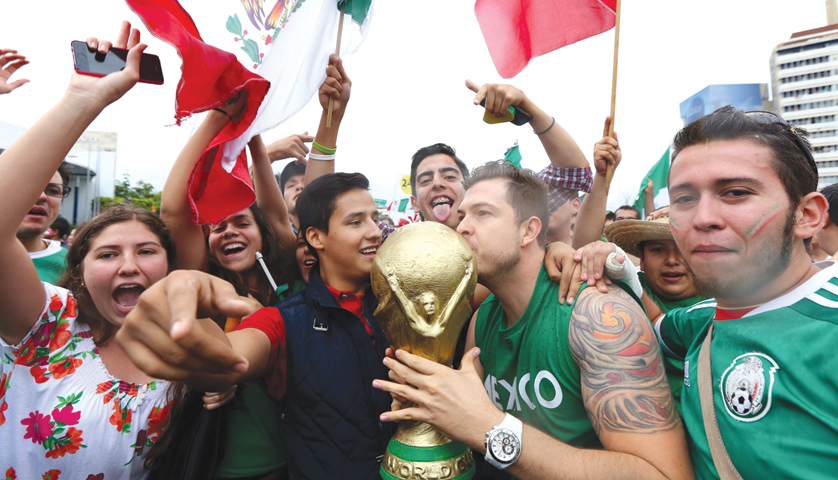
 Fans in Guadalajara, Mexico, celebrate June 23 after Mexico beat Croatia, 3-1, in FIFA World Cup play. Mexico qualified for the knockout stage of play and will face the Netherlands June 29. (CNS photo/Ulises Ruiz Basurto, EPA) (June 24, 2014)
The Holy Father’s prayer intention for July is “that sports may always be occasions of fraternity and growth.” Before we assume that Papa Francisco is giving us a window into his recent distractions in prayer — dreams of an Argentinian World Cup trophy? — let’s recognize the countercultural force of his intention. Today’s athletic world is a brutal one, not only physically but spiritually. Our Holy Father, with characteristic hope, wants us to pray not just that these wrongs can be neutralized, but that sporting events can actually be transformed into positive opportunities for the exercise of virtue.
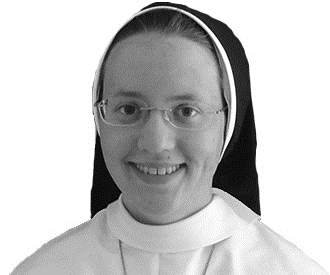
 Sr. Maria Veritas Marks, OP
This is a valuable lesson for the summer, which hopefully includes extra time for relaxation. Games, sporting events, parties and family vacations are not about winning at any cost, looking good, or getting one’s own way, not even so much about having fun oneself, as about creating a restful and enjoyable atmosphere for others. You will find that, if you focus on others’ happiness, your own will increase exponentially.
Blessed Pier Giorgio Frassati (1901-1925), whose feast day is July 4, is an ideal intercessor and model in this area. A third-order Dominican, Pier Giorgio so perfectly fulfilled the blueprints for Christian happiness laid out by Christ in the Sermon on the Mount that St. John Paul the Great called him the “man of the beatitudes.” Two virtues at which Frassati particularly excelled can be fruitful ones for us to pursue this summer: kindness and self-forgetfulness.
Pier Giorgio loved sports, especially skiing. The alpine trips he organized were opportunities for fun and, at the same time, for apostolic work, as he invited fellow skiers very naturally to prayer, Scripture reading and Mass. He embraced small sacrifices to make these outings more pleasant for others, carrying the packs of those who were tired or saying he needed to rest, so as not to humiliate those who really needed to do so. This kindness won others’ trust and lent credibility to his invitations to them to deepen their spiritual life.
Pier Giorgio consistently focused on others’ needs rather than his own, spending hours each week serving the sick and destitute. What little pocket money he had, he gave away, even using his bus fare for charity and then running home to be on time for meals. At 25, he contracted polio, probably from the poor he so lovingly attended; after six days of incredible suffering, which he was largely able to hide from a family distracted by his grandmother’s death, he died.
Pier Giorgio’s funeral could have been a somber one. Instead, it was a triumph. The streets were lined with thousands of mourners unknown to his family — the poor to whose lives he had imparted some of the joy that filled his own. If we infuse some of Pier Giorgio’s sacrificial love into our travels and leisure this summer, we will be able to say with his 14th-century sister in the Dominican Order, St. Catherine of Siena, “All the way to beatitude is beatitude.”
Sr. Maria Veritas Marks is a member of the Dominican Sisters of Mary, Mother of the Eucharist, based in Ann Arbor.