
Orchard Lake Schools celebrates its historic Polish roots, honoring the revered saint and pope known as world's 'witness to hope'
The Archdiocese of Detroit has designated 12 local pilgrimage sites for Catholics to visit during the 2025 Jubilee Year of Hope. Each month during 2025, Detroit Catholic will highlight one of these sites to encourage Catholics to take advantage of the extraordinary graces offered during the jubilee.
ORCHARD LAKE — Since 1909, the banks of Orchard Lake have served as a refuge and home for Catholic Polish immigrants in southeast Michigan. What began as the Polish seminary, SS. Cyril and Methodius, which closed in 2022, has since evolved into a thriving school, cultural center, and shrine dedicated to Our Lady of Orchard Lake and St. John Paul II.
During the 2025 Jubilee Year of Hope, the Archdiocesan Shrine of St. John Paul II was designated as one of 12 pilgrimage sites in the Archdiocese of Detroit where the faithful can visit and receive special graces.
Among other treasures, the campus boasts one of the largest collections of Polish art outside of Poland, a kayak used by St. John Paul II — then Cardinal Karol Wojtyla — during a visit to campus in 1976, relics of St. John Paul II, St. Maximilian Kolbe and St. Faustina, and many other items of significance to the Church and Polish heritage.
All of this and more is available to be studied and taken in by jubilee pilgrims; however, it is from the life and example of St. John Paul II that pilgrims can best learn about the power of hope, explained John Radzilowski, Ph.D., director of Polish Institute of Culture and Research at the Orchard Lake Schools.


“The best biography of St. John Paul II, by George Weigel, is titled ‘Witness to Hope,’ and I think that in a way sums up his pontificate and his life of ministry,” Radzilowski told Detroit Catholic. “He came from very difficult circumstances — this totalitarian country that was under communist rule. A lot of people looked at that situation (at the time) and said, ‘This is never going to change, and if it does change, it is going to be terrible, it is going to be violent, it is going to be World War III, nuclear war.
“But he saw a different way, and it was more than just optimism for the future. He had a strong vision of hope that things could change with prayer, with the working of God in the world, and we just had to prepare ourselves for that to happen,” Radzilowski continued. “That was a very consistent message not only in Europe, but really wherever he went around the world.”
St. John Paul II’s message of hope goes beyond political influence, Radzilowski added.
“His message went so much deeper than that,” Radzilowski said. “We have to place ourselves in God’s hands. We have to trust in God, and that is our source of hope. I think that’s the message that he preached throughout his pontificate, and hopefully, that is the message pilgrims get when they come here or are reading about St. John Paul II or studying his writing.”
The 140-year existence of the Catholic Polish community in southeast Michigan is itself “a monument to hope,” Radzilowski added.


First founded in 1885 in Detroit, SS. Cyril and Methodius Seminary moved northwest of the city to Orchard Lake in 1909 under the supervision of Fr. Witold Buchaczkowski. In 1962, the Shrine Chapel was built and then dedicated to Our Lady of Orchard Lake.
Before the historic papal election in 1978, which made Cardinal Wojtyla the first non-Italian pope in 455 years, he served as archbishop and then cardinal of Krakow. During that time, he visited the seminary at Orchard Lake and spent time with the Polish seminarians studying there, including a kayaking adventure on the lake.
The relic is on display in the Shrine chapel, along with the life preserver and paddle used by the future pope, Radzilowski said.
Devotion to the Polish pope and saint on campus has continued to this day and was cemented in 2016, when the Archdiocesan Shrine to St. John Paul II was dedicated inside the chapel.
“It has always been a very special place for devotion to John Paul II after he passed (in 2005),” Radzilowski said. “He is very loved on campus, and every month in our campus newsletter, we have a whole page with a quote from JPII and some explanation, and that goes out to everyone in the community. From the administrators to the students, their parents, I think there is a very strong devotion to John Paul II.”


In addition to the shrine, cultural institute, galleria and schools, the campus community remains committed to preserving Polish heritage and Polish Catholic faith with the St. John Paul II Liturgical Center.
The center publishes a bilingual Polish-English missalette called “Pan Z Wami,” which is used by Polish parishes across North America.
The Polish campus has undergone many changes over the years and would not be where it is today without the hope inspired by St. John Paul II, Radzilowski said, and John Paul’s message of hope remains relevant during 2025, in the Jubilee Year of Hope.
“One huge mistake is confining St. John Paul II or other saints to the past,” Radzilowski said. “In a lot of ways, he was the original pilgrim of hope. Wherever he went in the world, he spread that message to people, whether they were facing economic deprivation or political repression. There was a great hope — the hope is in Jesus Christ, and the key is that we must place ourselves in his presence, trust him, and once we do, God will take care of the rest.”
Things to do and see at the Shrine of St. John Paul II
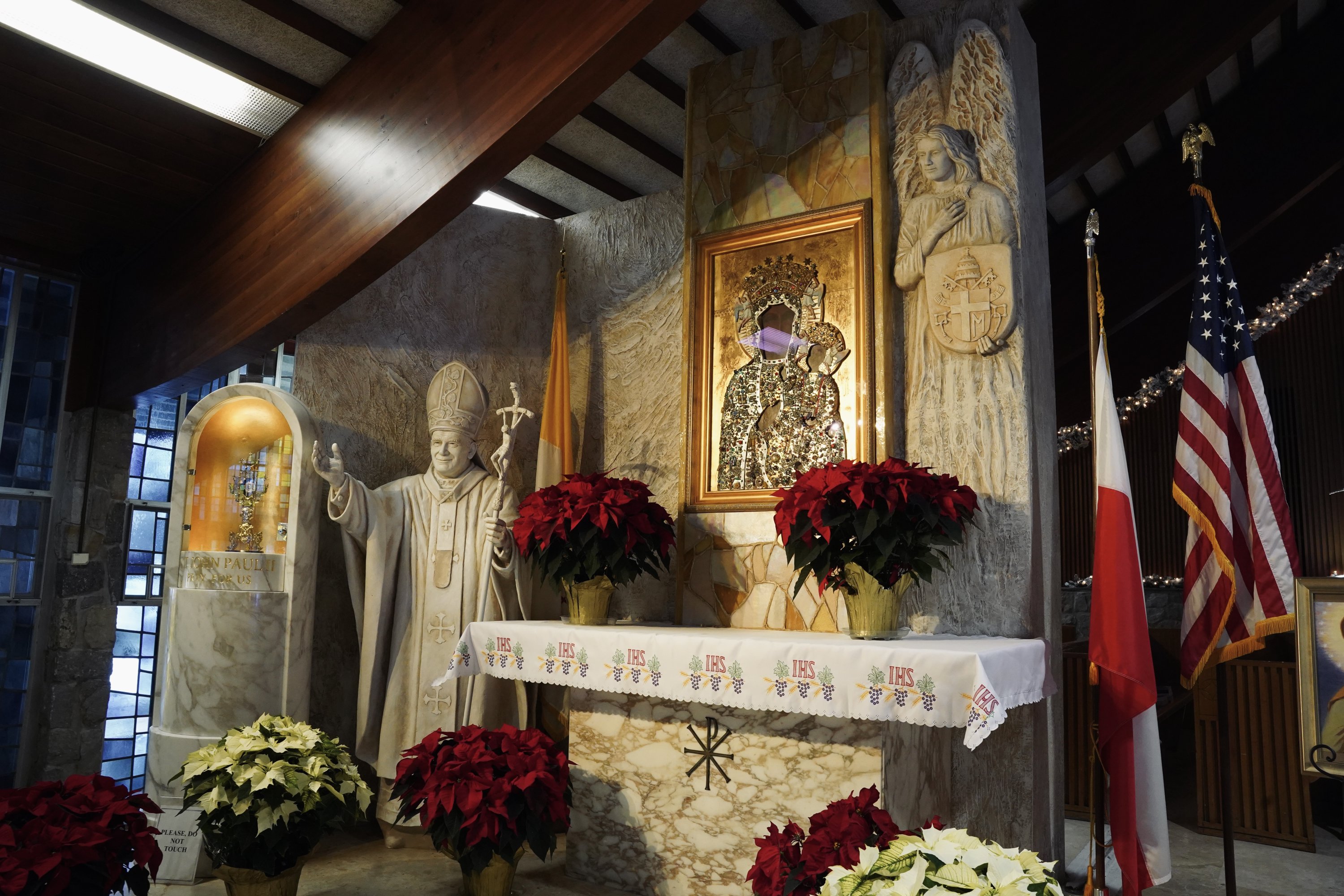
1. Pray with the relics of St. John Paul II and other holy men and women
In the Shrine Chapel, pilgrims have the opportunity to pray with a first-class relic of the Polish saint, located at the side altar, as well as the relics of St. Faustina and St. Maximilian Kolbe. The kayak and other items used by St. John Paul II are also relics and are on display in the chapel.

2. Visit the Our Lady of Lourdes Grotto
Walk the grounds of campus and pray at the outdoor Marian Grotto of Our Lady of Lourdes, overlooking the lake, built in 1941. Keep an eye out for the life-size bronze statue of St. John Paul II, located outside on campus.
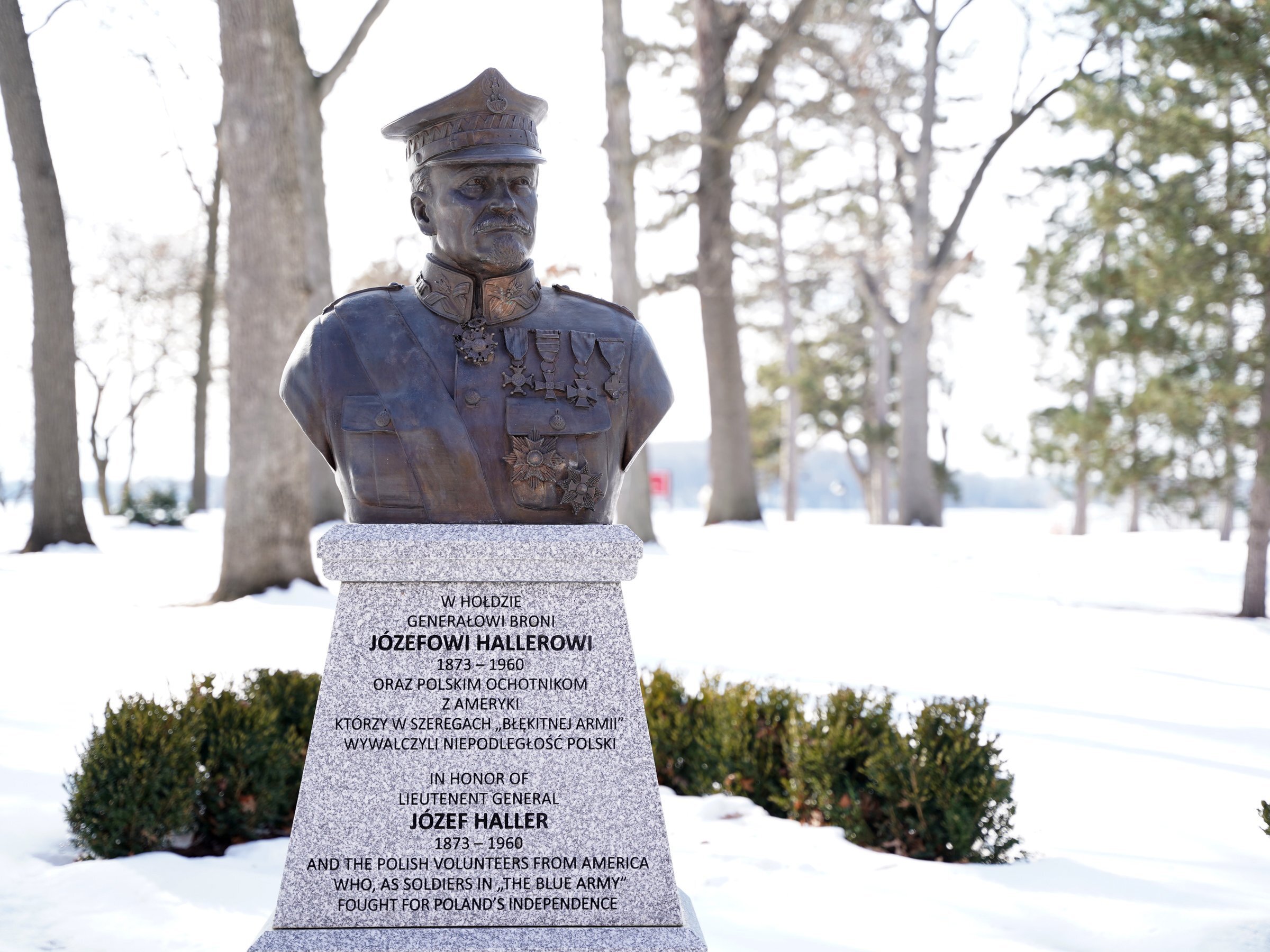
3. Take in the Polish Institute of Culture and Research
Located on campus grounds, the Polish Institute is dedicated to promoting and preserving Polish culture through a series of events, programs and archives, including art galleries, fashion shows, musical performances and publications for research and study. The galeria is open during Polish First Sundays as well as by appointment. The museum, archives and rare book room are available by appointment only.
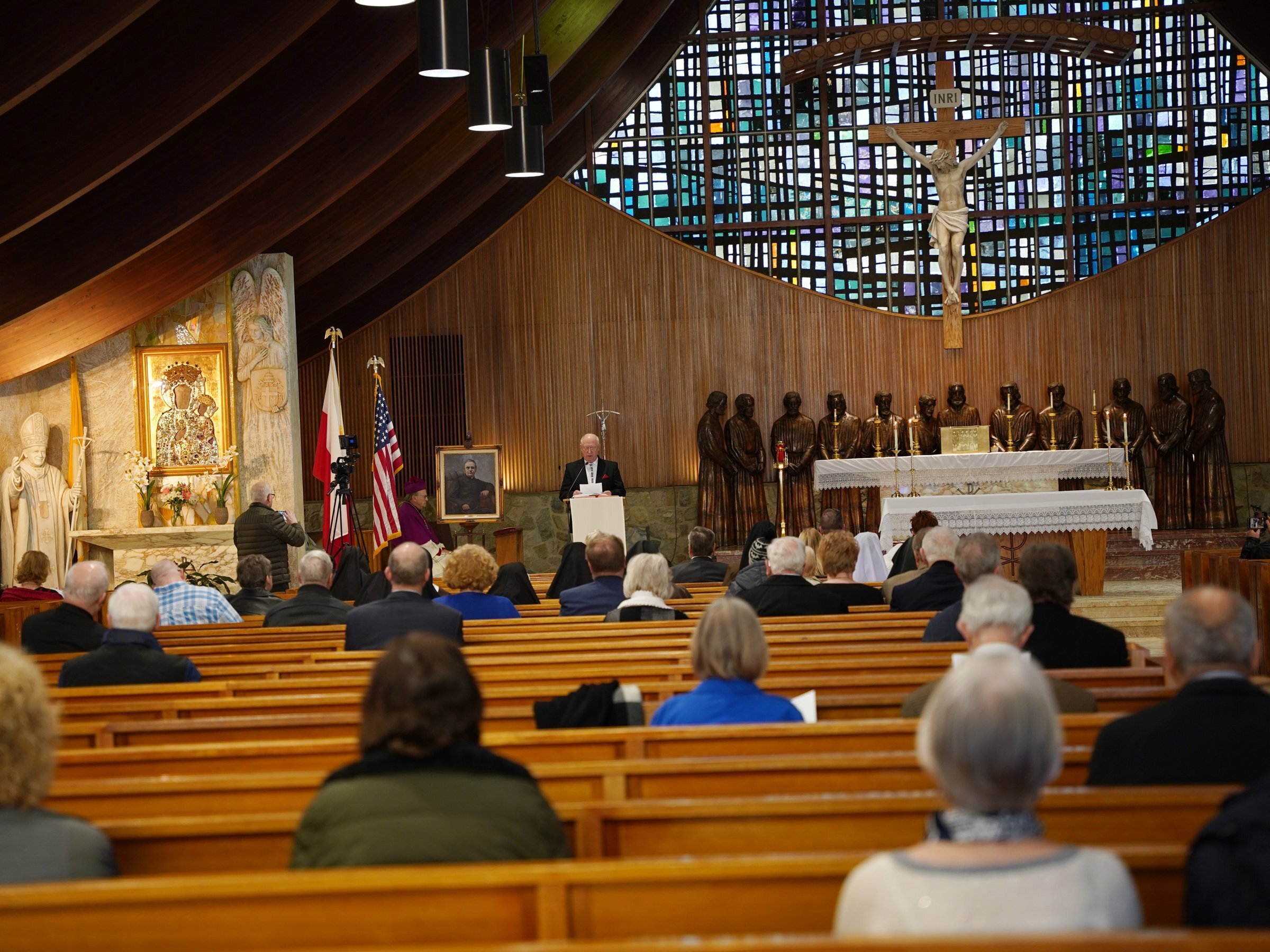
4. Attend Mass in English, Polish and Latin in the Shrine Chapel
Mass is celebrated in all three languages every Sunday, with English Masses celebrated throughout the week. Check the schedule online for Mass times, hours and special services.
Pilgrimage sites in the Archdiocese of Detroit
The following 12 Catholic sites were designated as pilgrimage sites for Detroit-area Catholics during the 2025 Jubilee Year of Hope. To learn more, visit www.aod.org/jubilee.
- Basilica of Ste. Anne, Detroit
- Blessed Solanus Casey Center, Detroit
- Cathedral of the Most Blessed Sacrament, Detroit
- Holy Sepulchre Cemetery, Southfield
- National Shrine of the Little Flower Basilica, Royal Oak
- Our Lady of Fatima Shrine, Riverview
- Our Lady of Hope Cemetery, Brownstown Township
- Presentation of the Blessed Virgin Mary Chapel (Madonna University), Livonia
- Shrine of Jesus the Divine Mercy, Clinton Township
- Shrine of St. John Paul II, Orchard Lake
- St. Joseph Shrine, Detroit
- Shrine of the Immaculate Heart of Mary, Pontiac