

Most Holy Trinity Parish hosts first Labor Day Mass in 45 years, reflecting on Church’s teaching on dignity and rights of workers
DETROIT — Archbishop Edward J. Weisenburger joined workers for Detroit’s annual Labor Day Parade on Sept. 7 in Corktown following Mass at Most Holy Trinity Parish, where the faithful gave thanks to God for the dignity of work.
Archbishop Weisenburger spoke about the Church’s teachings on the dignity of workers in two particular papal encyclicals, Pope Leo XIII’s Rerum Novarum and Pope Leo XIV’s Magnifica Humanitas, which outline Catholic social teaching on the rights of human labor in the 19th and 21st centuries, respectively.
The archbishop also cited the U.S. Conference of Catholic Bishops' Labor Day message this year, penned by Archbishop Shelton J. Fabre of Louisville, chairman of the bishops' Committee on Domestic Justice and Human Development and one of Archbishop Weisenburger's seminary classmates.
“In his statement this year on behalf of all the nation's bishops, Archbishop Fabre points out that Labor Day is an opportunity to celebrate workers and honor the dignity in work,” Archbishop Weisenburger said. “He then stresses, of course, work is far more than simply a way to make a living, but rather as the Catholic teaching of recent centuries has stressed, work and labor are a form of participation in God's ongoing act of creation.”
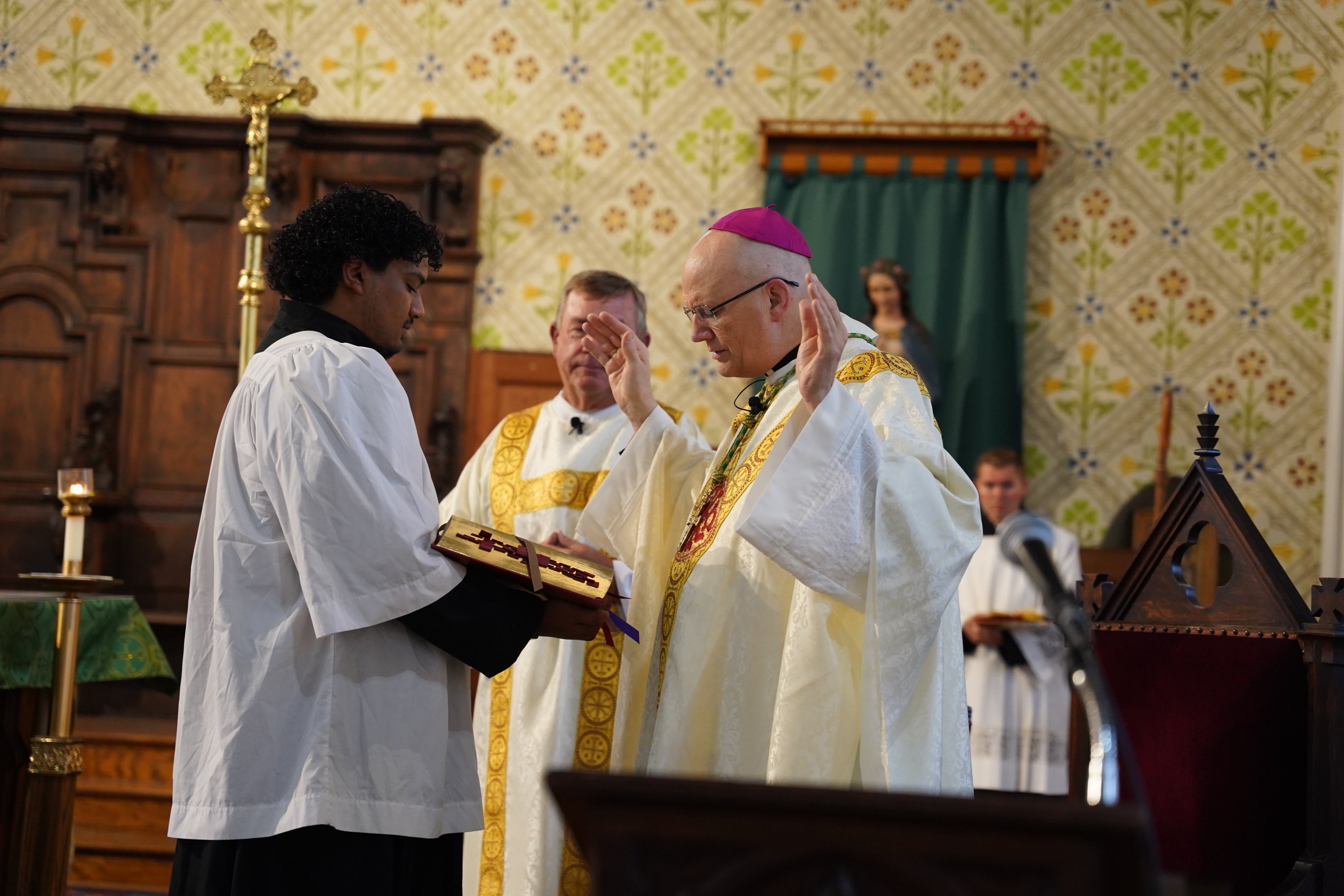
Archbishop Weisenburger said this year's message draws particular attention to young people and vulnerable communities who face uncertainty.
The report notes rising anxiety among young people about the future of work, the archbishop said, with 70% of Americans saying it is no longer financially feasible for working families to have children, and many worrying about the impact of artificial intelligence on the workforce and unemployment.
In response to these challenges, Pope Leo XIV's 2026 encyclical, Magnifica Humanitas, "affirmed the long-standing papal teachings on labor and the common good," Archbishop Weisenburger said, pointing out that "AI presents tremendous new opportunities, but it runs the risk of normalizing a vision that is anti-worker."
In the USCCB's statement, Archbishop Fabre observed that "we've been here before," he continued.
“Archbishop Fabre calls to mind Pope Leo XIII’s 1891 encyclical Rerum Novarum, written in response to the industrial age, the great challenge of his day. The document remains the foundational work in helping the Church to bring the sacredness of the human person to the questions of work and labor,” the archbishop said.
Archbishop Weisenburger reflected on the day's Gospel passage from St. Matthew, in which Christ tells his followers not to care for what they would eat or wear, for the Father will provide, relating it to what it means for the value and dignity of work.
“I think in this case our Lord is giving us a very clear message, although one we can never have repeated enough," Archbishop Weisenburger said. “When he says, 'Do not be concerned about these toils of the day,' he's not saying, ‘It's OK to be lazy.’ He certainly knew his crowd; they were fishers, farmers, industrial men and women involved in business ventures, farming, and other production tasks.”
Rather, the archbishop said, “He is reminding them that life's deepest meaning and purpose are not found in the surface level of those endeavors or the day's wages. Life is greater than what I do. Life is a gift from God, and human work and accomplishment, as with all things, has its proper meaning only when understood through the lens of faith.”
When viewing one's job or career through the lens of faith — recognizing the Father will provide all the needs for His creation — one can see his or her labor as cooperation in the work of God, and “we find our human minds motivated by a higher calling,” Archbishop Weisenburger said.
“Work is no longer an empty chasing after temporal things when the sacred dignity of our labor is revealed,” Archbishop Weisenburger said. ”And as our nation pauses today to consider the dignity of labor, of workers, and the manner in which together we serve the common good, may our example be a holy one.”
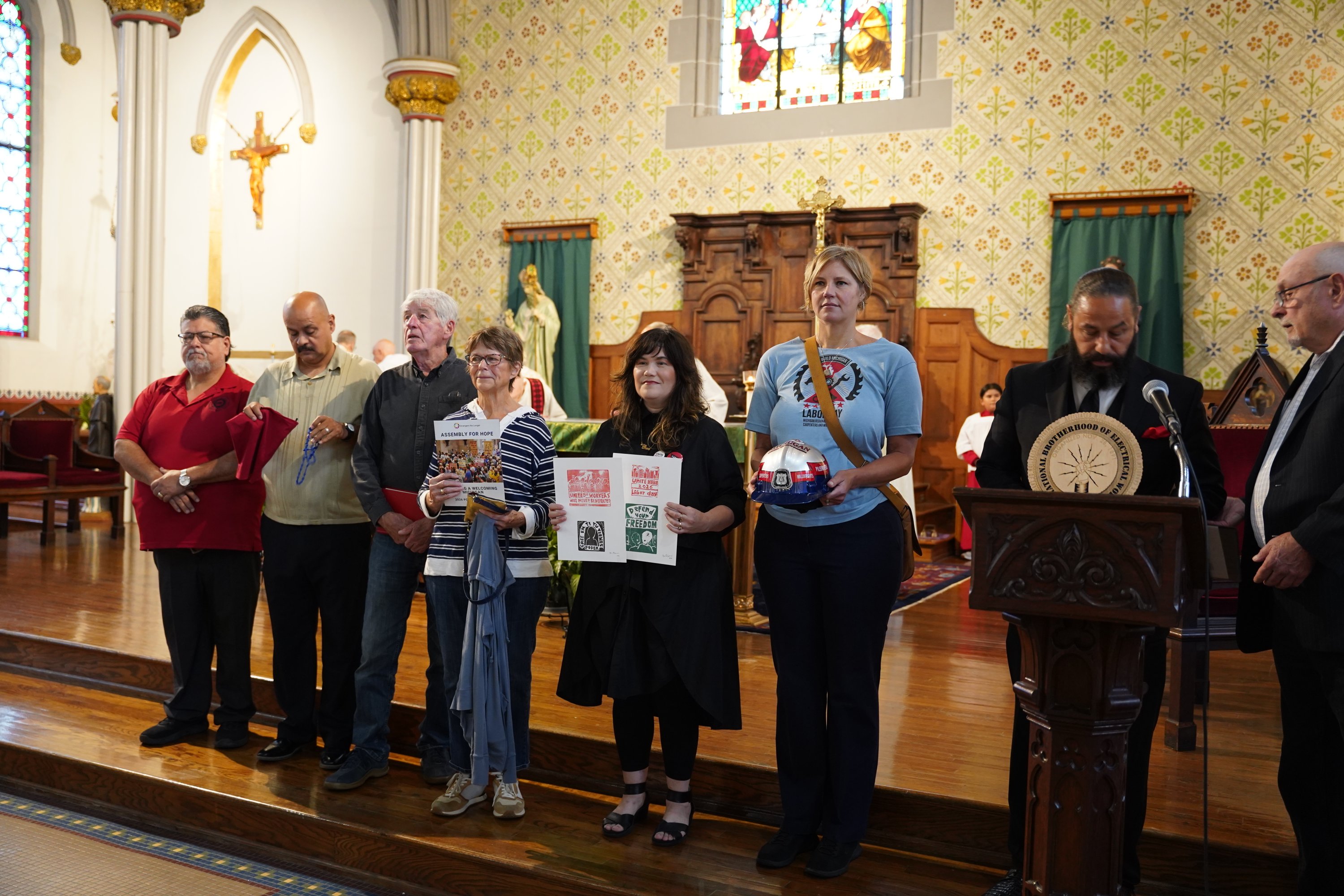
The archbishop thanked the organizers for planning the liturgy, which included representatives from UNITE HERE, the Union of Carpenters and Millwrights, the International Brotherhood of Electrical Workers, and Strangers No Longer, who carried items representing their unions and solidarity of workers and migrants in the opening procession.
Archbishop Weisenburger spoke about the history of Labor Day in 19th-century New York City and how, to this day, the Church stands in solidarity with workers and their inherent dignity in the workplace as sons and daughters of God.
“I feel incredibly blessed to be here to celebrate this day and to acknowledge the incredible blessings of labor, how they have built this great country and contributed to the fabric of life that is the kingdom of God,” Archbishop Weisenburger said.
After Mass, the archbishop and other clergy joined workers for the annual Labor Day Parade in Corktown, which parade organizers estimate was one of the biggest in recent memory.
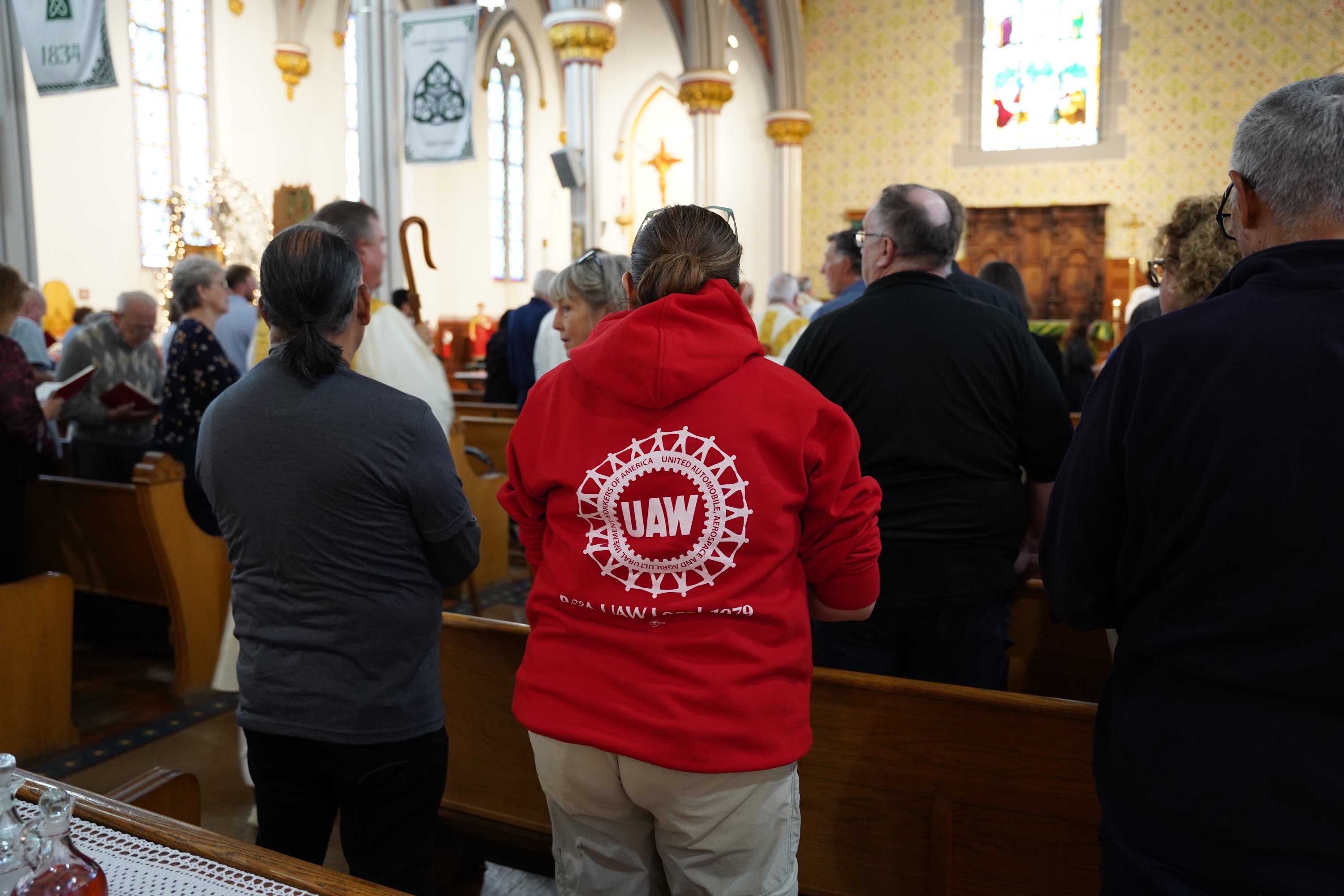
Along the parade route, Archbishop Weisenburger met with representatives of various labor unions, stopping to pray with them and hear their stories.
Theresa McGuire of Strangers No Longer and UNITE Local No. 24, which organizes workers in the hospitality industry, particularly from a migrant background, said it meant a lot to see Church leadership stand in solidarity with workers.
“I think it sets the tone for the day," McGuire said. "(Labor Day) is about the dignity of work, the dignity of life, and the Church is always building that up, especially this archbishop.”
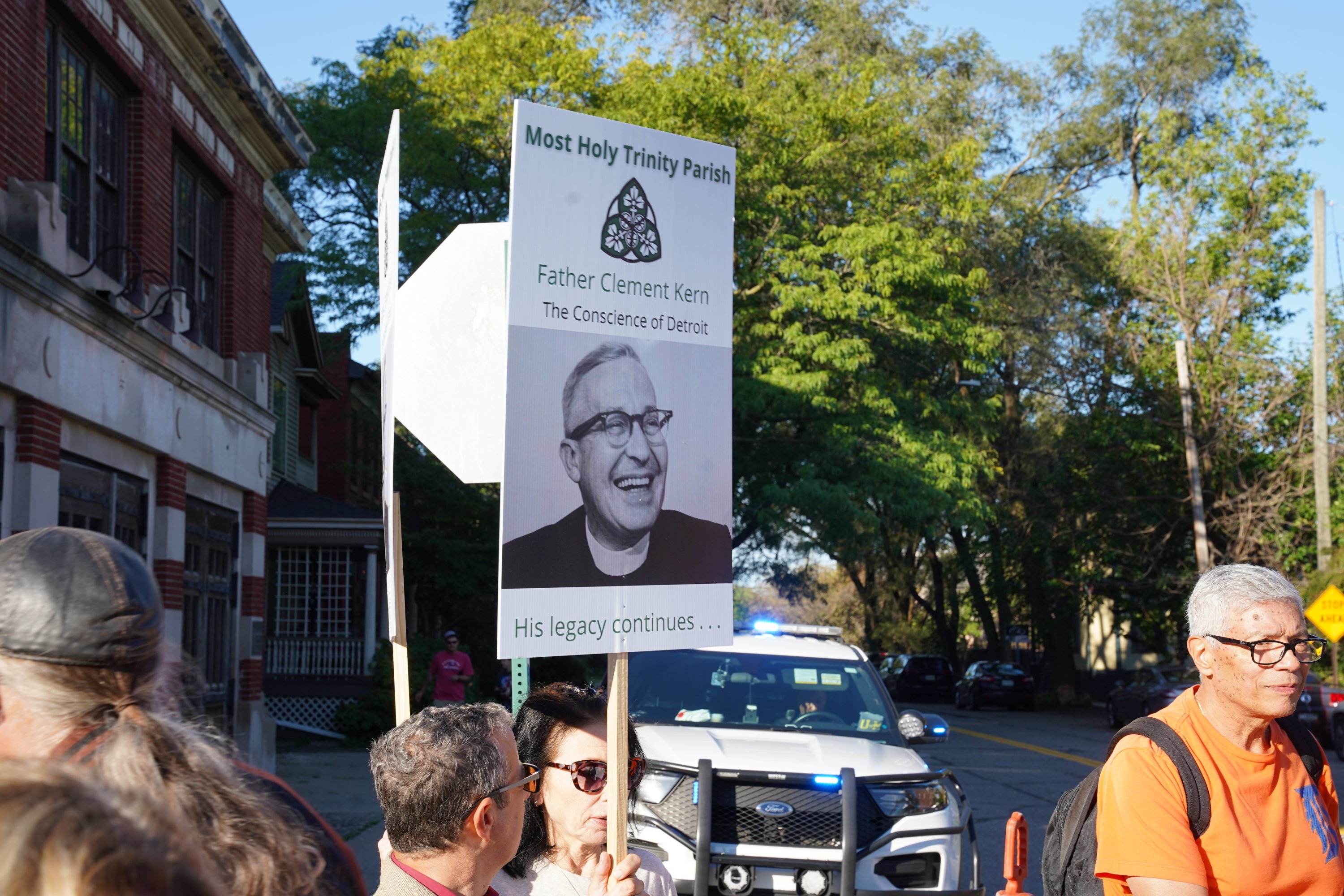
McGuire said it was particularly meaningful for Archbishop Weisenburger to celebrate the first Labor Day Mass at Most Holy Trinity in 45 years, reminding the faithful of the impact of papal teaching such as Rerum Novarum and Magnifica Humanitas.
“When I used to do a lot of work in other towns, we always referred back to the earlier encyclical,” McGuire said. “I think it's great that we have a pope and an archbishop in Detroit who is willing to stand with workers, stand with the immigrant community and move us all forward.”