
Synodal listening session hosted by the Catholic Climate Covenant gathers input, perspectives on environmental challenges
DETROIT — Students, parishioners and pastors in the Archdiocese of Detroit gathered Sept. 30 at Sacred Heart Major Seminary to discuss the Catholic Church’s role in caring for the environment, and how best to implement its lessons and teachings.
Fifty-seven people participated in the “Cry of the Earth, Cry of the Poor” Synodal Listening Session hosted by the Catholic Climate Covenant, a Washington, D.C.-based nonprofit inspired by the U.S. Conference of Catholic Bishops’ commitment to ecological awareness and Catholic social teaching on ecology.
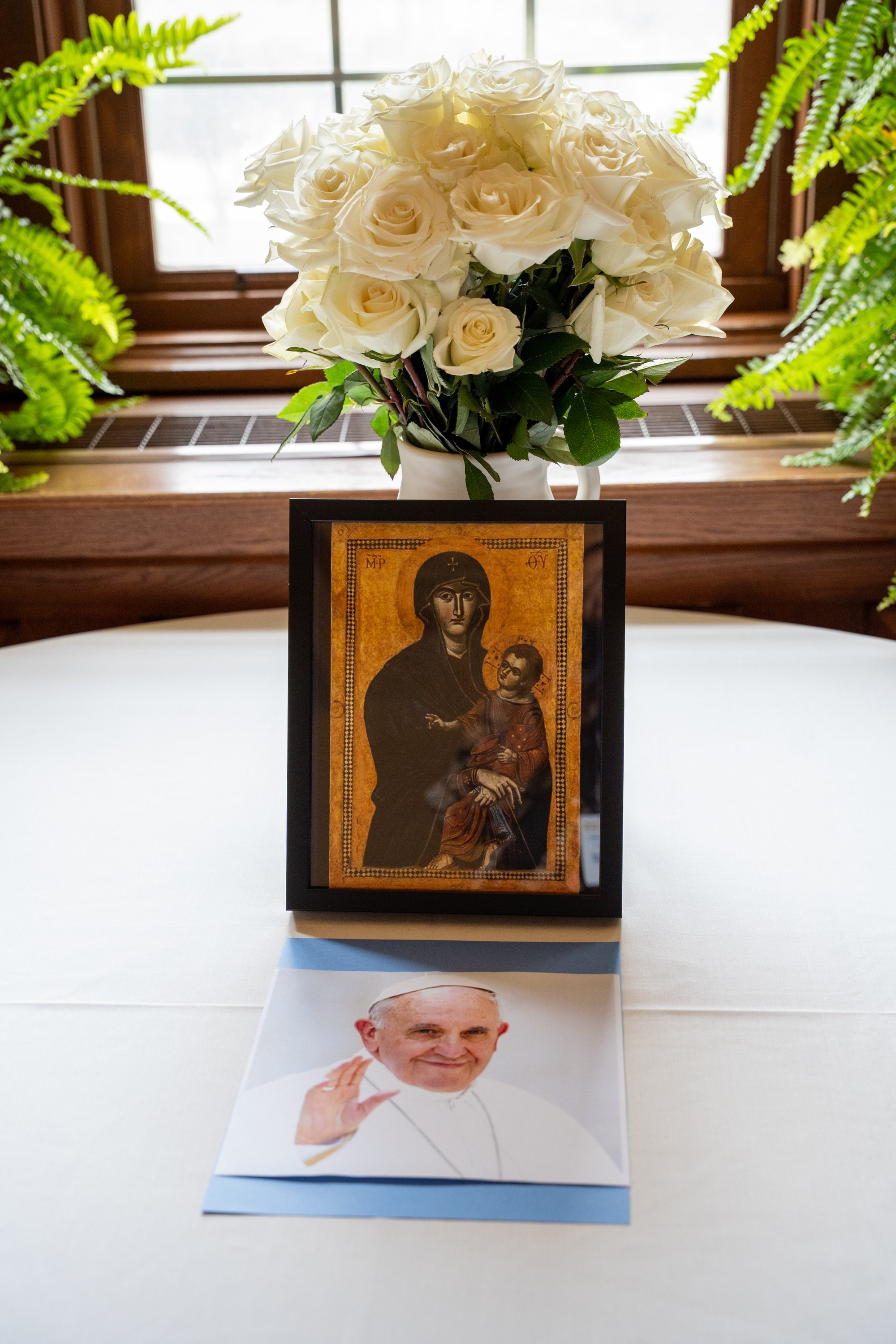
The listening session invited participants from across the Archdiocese of Detroit to pray, discern and discuss how parishes and schools can implement practices grounded in Pope Francis’ landmark 2015 encyclical Laudato Si'.
Terry Gonda, co-chair of the synodal listening session, moderated the event, which was held in response to the global Synod on Synodality process, which encourages the laity to take an active role in the Catholic Church's saving mission.
More photos: Catholic Climate Covenant's Synodal Listening Session
The event was intended to bring together people of various backgrounds and demographics, listening to them and discussing how the Church can help address ecological challenges such as climate change, Gonda told Detroit Catholic.
“We reached out to certain people in the archdiocese, particularly the youth and high school students, because they are going to inherit the planet, along with people on the margins, the poor, the immigrants, and pastors, to discuss what we can do as a Church,” Gonda said.
The Catholic Climate Covenant is cooperating with the U.S. bishops in hosting listening sessions across the country related to an April 2026 report from the 2021-24 Synod on Synodality focused on care for creation.
The Sept. 30 listening session sought input from parishioners and students on how the local Church can better implement the principles of Laudato Si' in their communities, with their input being compiled into a report that will be sent to the national Catholic Climate Covenant, which in turn will prepare a North American continental report that will be sent to the Vatican.
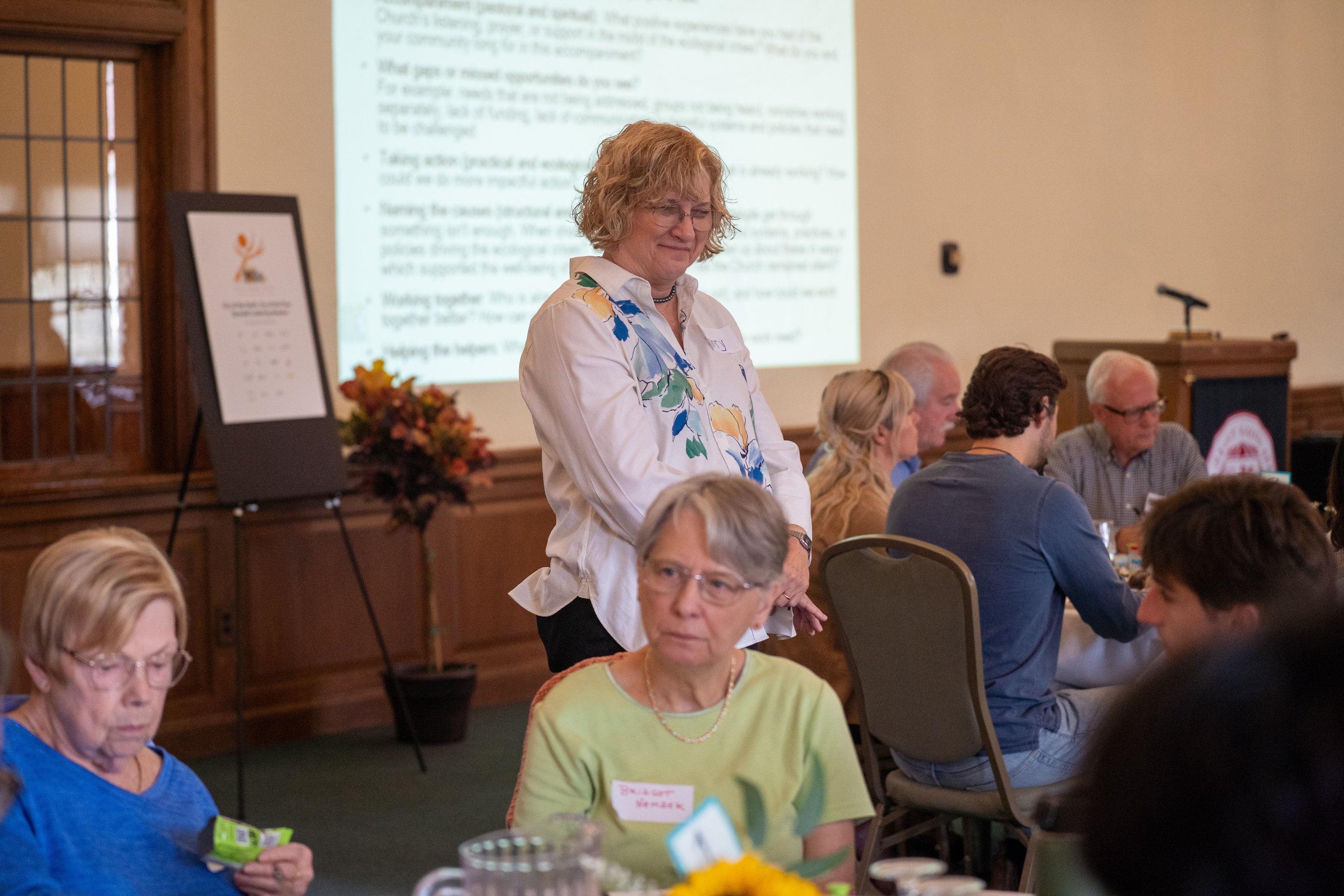
Detroit Archbishop Edward J. Weisenburger delivered the opening remarks of the listening session, thanking those present for taking the Church’s role in protecting the environment seriously.
“What struck me in the prayer we read to open this session was the unity in the midst of diversity,” Archbishop Weisenburger said. “The way we will make change in the world is by coming together ever more, which is the whole concept of synodality, that walking together. The more we walk together, the more we make an impact.”
Archbishop Weisenburger — who travels throughout southeast Michigan in an electric-powered Chevrolet — lamented recent federal policy that removed tax incentives for U.S.-built electric vehicles, saying it is incumbent on priests, parishioners and school leaders to follow the lead of Pope Francis and Pope Leo XIV in caring for God’s creation.
“We have an obligation, as our current pope, Pope Leo, has pointed out, that sins against creation are among the very serious sins,” Archbishop Weisenburger said. “We have an obligation to cooperate with creation. We have an obligation to hand the generation that comes along after us a healthy, livable planet where everyone can thrive and live. Our coming together means a lot to me, and I’m so glad we’re able to host this event here in our seminary.”
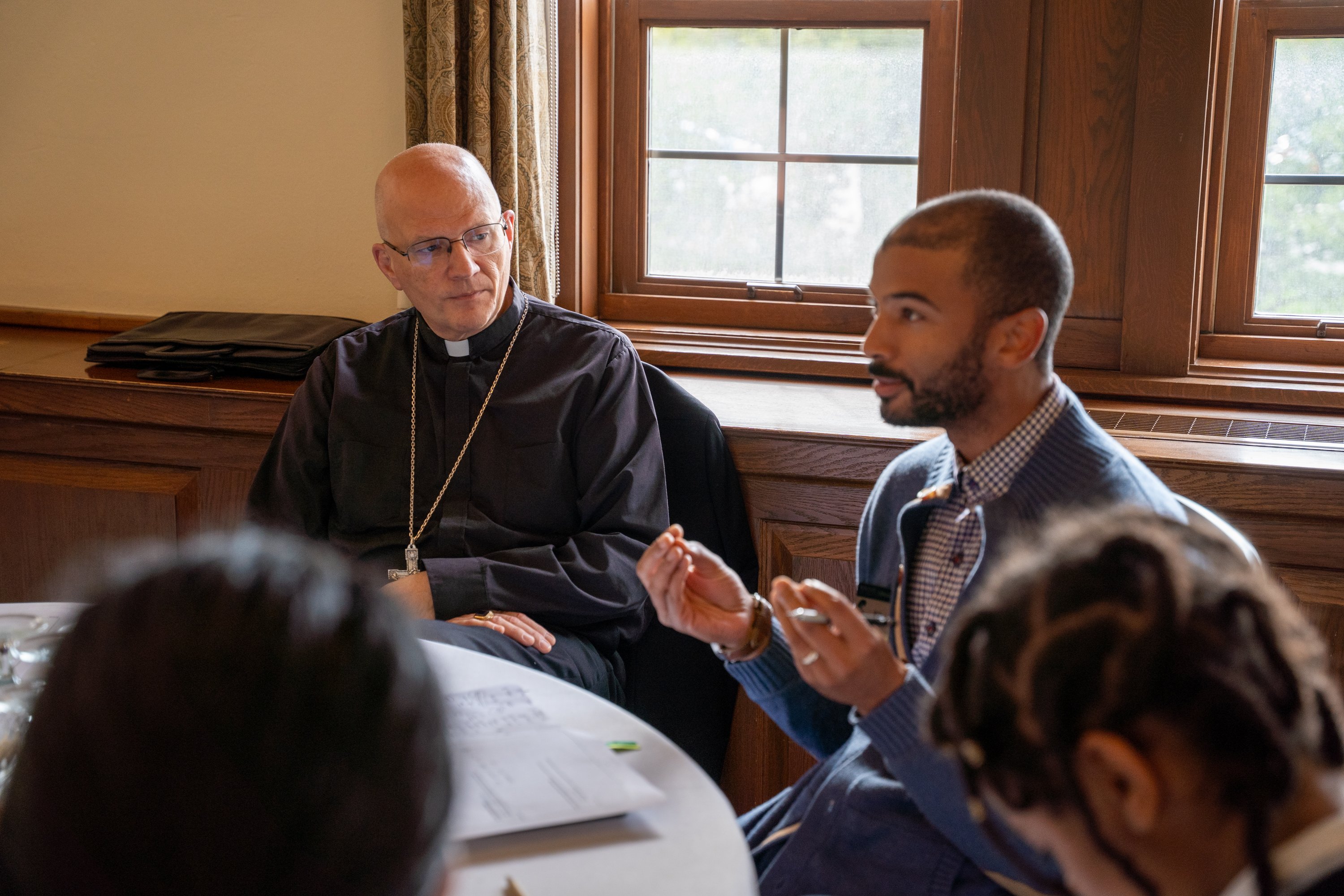
The synodal listening session focused on two main themes: How participants and communities experience the impact of ecological crises, and how the Church can best accompany those facing hardships as a result.
The prayerful dimension of synodality was critical to the Holy Spirit-led conversations and discernment, Gonda told participants.
“All of you are part of the history of this new movement — which is not so new,” Gonda said. “This is following from what the Second Vatican Council said we should do to engage the laity and to move together as a Church with this type of radical participation.”
After two rounds of discussion, the participants divided into seven groups sitting at roundtables, each with a diverse mix of ages, parishes, religious and laity.
Nick Leonard of the Great Lakes Environmental Law Center reported from his table that “there is a lot of acceptance around environmental problems, but also a lot of hope that things can change.”
“I think that’s particularly true from the community that is most impacted by environmental issues,” Leonard told the group. “We talked a lot about how low-income communities are the most impacted by a lot of these issues. But oftentimes, they are doing the most work and are the most hopeful that their community can become beautiful, livable places.”
Other groups reported a desire for more coordination between the archdiocesan and parish and school levels on sustainability projects, drawing upon the experience of ongoing environmental projects and their relation to Catholic social doctrine.
John DuBay, a student at Brother Rice High School in Bloomfield Hills, reported that the perspectives of so many people from different backgrounds contributed richly to the discussions.
“We discussed environmental risks and the intersectionality with class and race, and the built-in places we find challenging to change,” DuBay said. “We see that the Church and its members transcend the left-right, black-and-white paradigm and embrace Gospel radicality.”
DuBay's Brother Rice peer, Jonah Dashnaw, reported that his table felt the Church needed to use its prophetic witness to speak out about human needs amidst social and technological change.
“We need the Church to be pastoral in urging society to slow down in this time of rapid industrialization, with the AI race, the tech race, as we are hurtling toward something that we do not know what the results will be,” Dashnaw said. “This industrial race is going to lead to devastation if we, as humanity, do not slow down and make the necessary changes to prevent its destruction.”
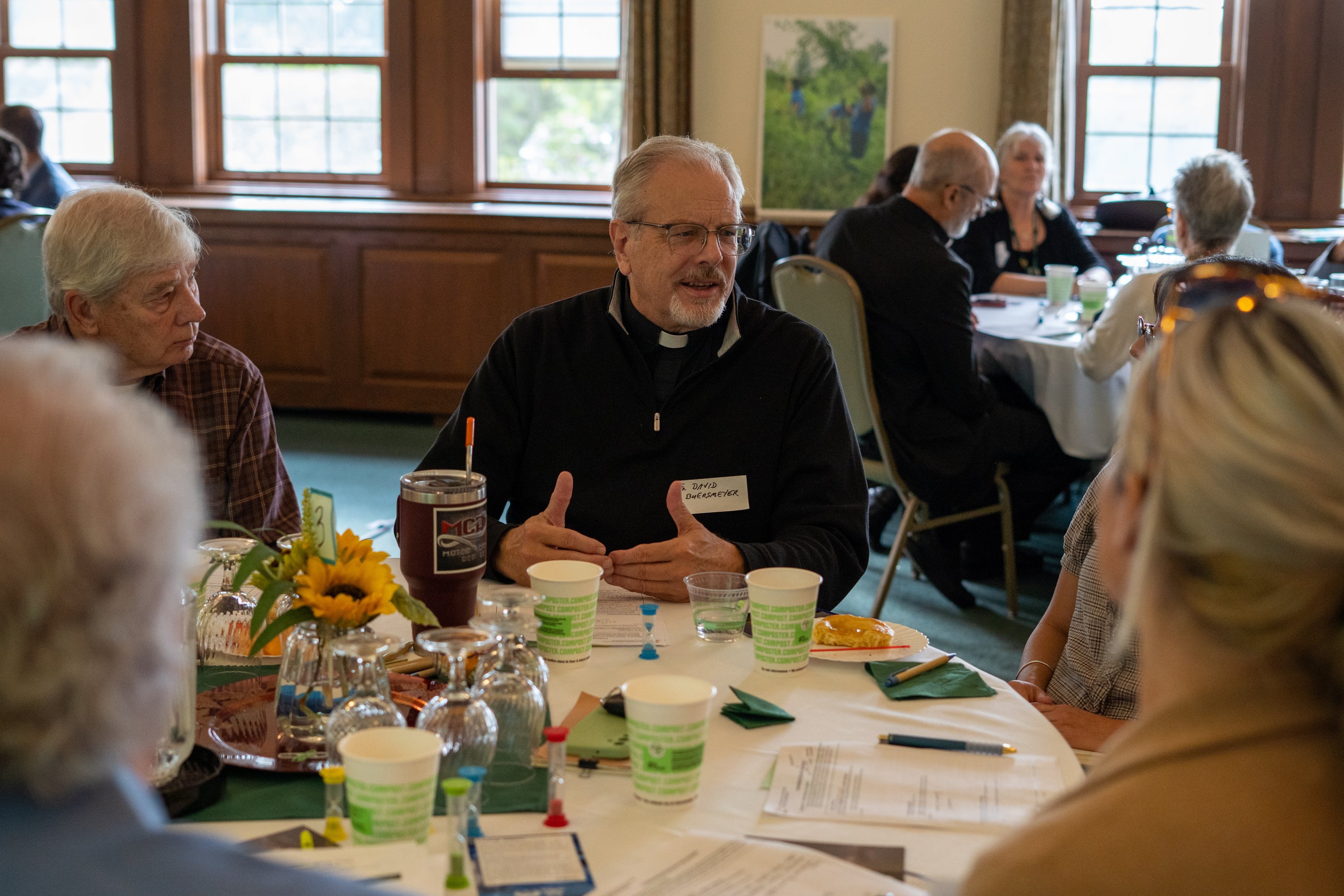
Rebecca MacMaster, director of parish life at SS. Peter and Paul (Jesuit) Parish in Detroit, expressed gratitude for the discussion she heard at her table and called on Church leaders to heed the call of the faithful to advocate for environmental justice.
“We call for the Church to be brave, for the priests to be brave in their homilies, for the laity to be brave as staff members of churches, as parishioners at churches, that this is not a moment to shrink from; it is an opportunity to rise to,” MacMaster said. “We call on the Church to be prophetic and practical.”
Other groups spoke of community-led initiatives to make a difference by planting trees, standing in solidarity with immigrant communities, and promoting positive social change.
It was important for the faithful to come together to pray, discuss and discern, Gonda said, following the lead of Pope Francis and Pope Leo.
“If you look at the papacy of Pope Francis and moving into Pope Leo, they’ve been trying to look holistically at these issues,” Gonda said. “Pope Francis in Laudato Si' didn’t just say we have a climate problem; it was very much about economics and the poor who are being affected.”
“As Catholics, we know everything is embedded in creation,” Gonda continued. “We sing about the skies and the earth. We love that God is incarnated. That’s being Catholic. And so when we see creation being destroyed, when we see the poor being the most affected, we speak up. That’s why we are here, to report and bear witness to the intersection of the cry of the earth and cry of the poor.”