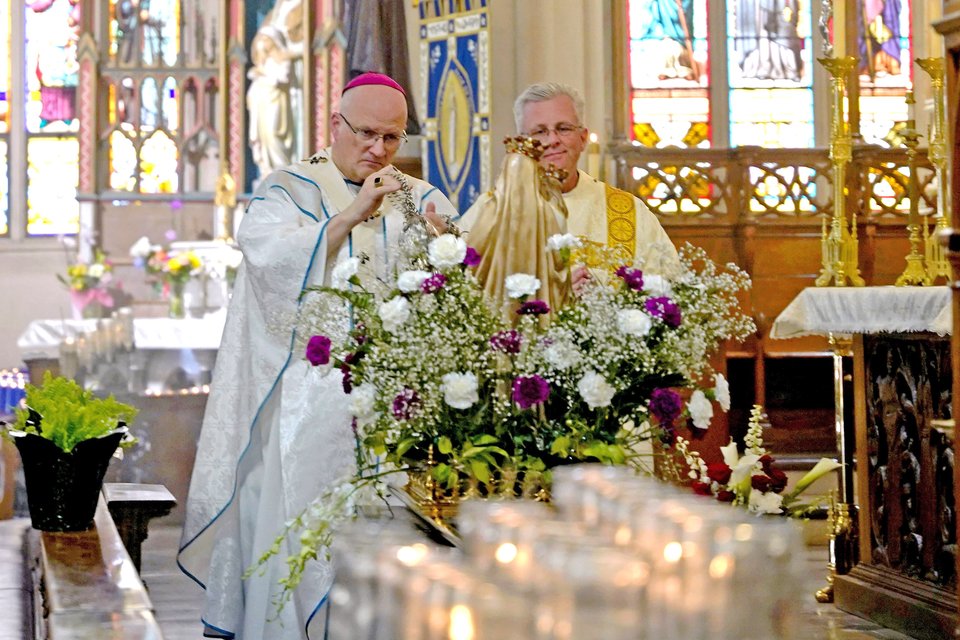

St. Anne, mother of the Blessed Virgin Mary, has been Detroit’s patroness since the city was established in 1701
DETROIT ─ The Solemnity of SS. Joachim and Anne is a time for the faithful to give thanks for the church's rich history and to praise God for the examples of great fortitude and patience He has given His people throughout history in discerning His divine will.
When French explorer Antoine de la Mothe Cadillac and his party landed on the banks of the Detroit River on July 24, 1701, they brought with them a faith in God – and in particular a devotion to St. Anne, the mother of the Blessed Virgin Mary – as they were exploring what was then unexplored territory in Quebec.
Two days after Detroit’s founding, the explorers and missionaries in the party built a church – Ste. Anne de Detroit – on her feast, establishing her patronage over the city that continues to this day.
This year, the annual novena and Mass for St. Anne were celebrated at nearby Most Holy Trinity Parish in Detroit’s Corktown neighborhood, as the historic Basilica of Ste. Anne de Detroit undergoes major renovations.
Still, Archbishop Edward J. Weisenburger said it was wondrous to give thanks to God for the faith of those first European Detroiters and for the veneration of St. Anne that continues throughout the archdiocese.
“What a blessing it is to celebrate a patroness’ feast day in this revered church, one of the earliest churches of our archdiocese,” Archbishop Weisenburger said, referencing Most Holy Trinity, which was built in 1834 to serve as Detroit’s first parish for English-speaking Catholics.
“It would be nice if we were at Ste. Anne’s, I must admit, but what a blessing for us to be here in this beautiful church, calling to mind our archdiocesan patroness,” Archbishop Weisenburger said.
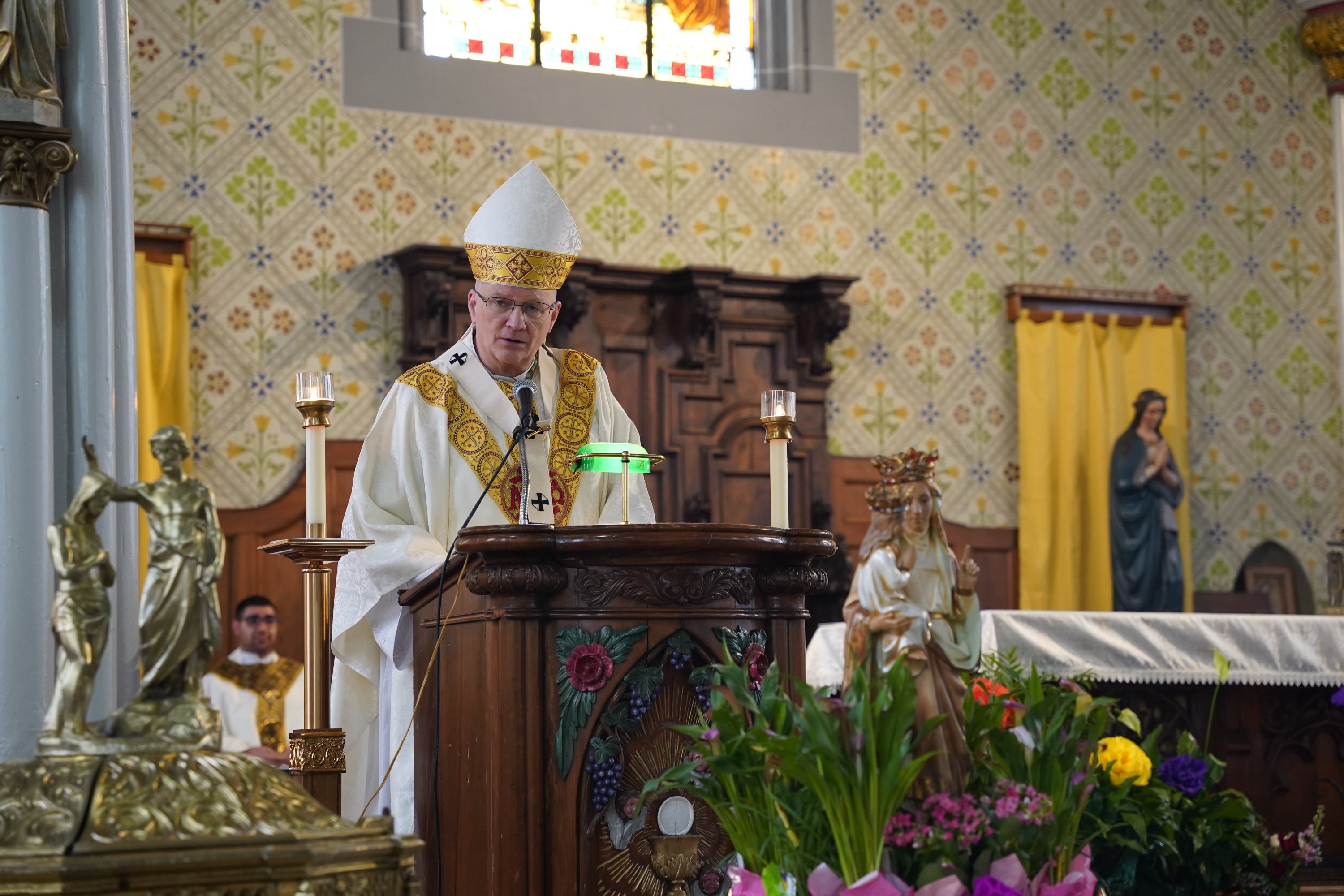
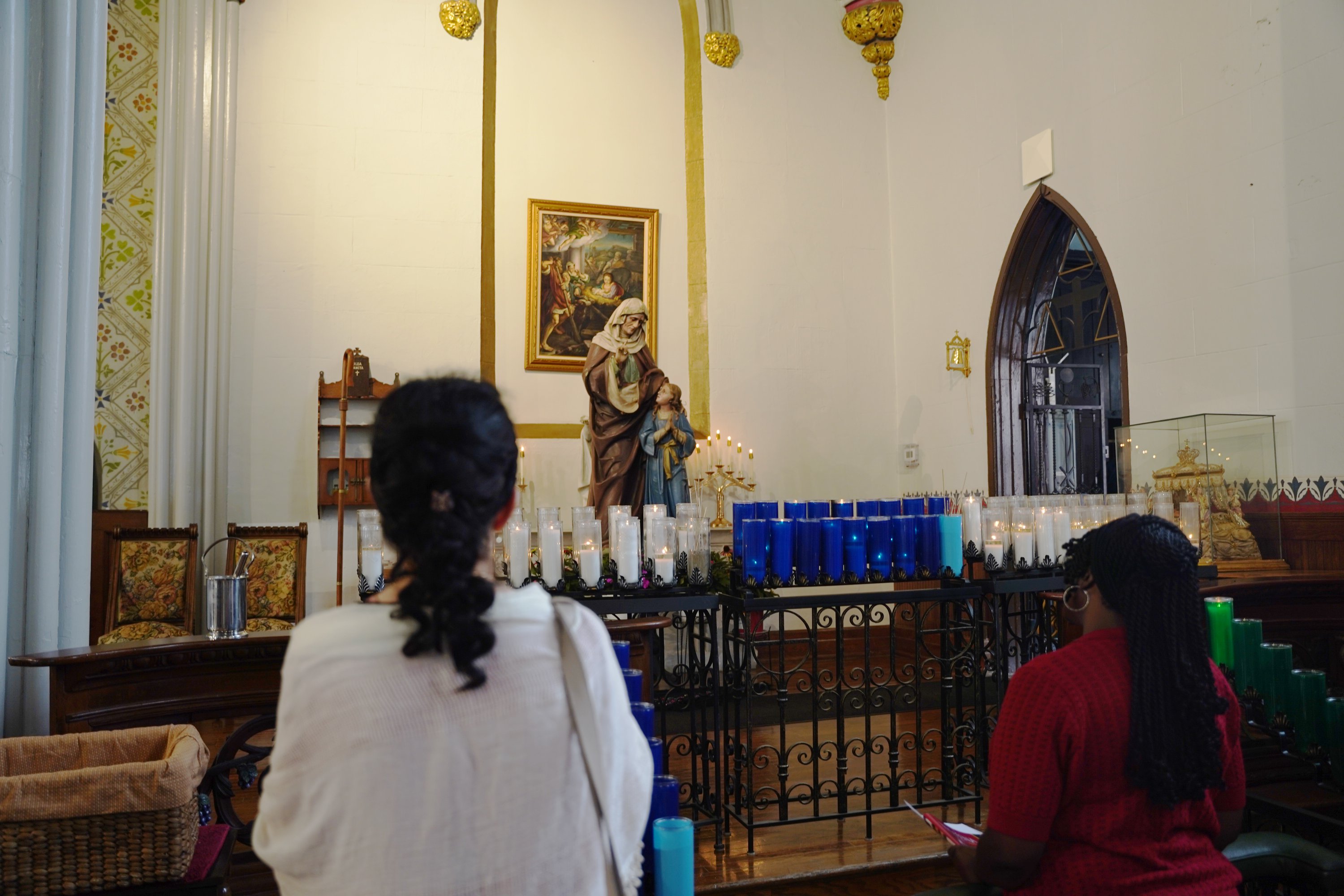
The solemnity celebrations included a procession of a statue of St. Anne throughout Most Holy Trinity and the opportunity to venerate relics of St. Anne.
Archbishop Weisenburger said in his homily that what the church knows about St. Anne comes from the Proto-Evangelium of St. James, which details how saints Joachim and Anne were advanced in years and childless in a time and society when being childless was considered a curse sent by God.
“While others in St. Anne’s situation might have been bitter, she is remembered for having remained completely devoted to God, even in the midst of not understanding why she was childless,” Archbishop Weisenburger said. “She remained trusting in His promise, regardless of how others might view her situation.”
Archbishop Weisenburger said St. Anne remains an example of understanding that all things happen in God’s timing and of enduring life’s hardships with tremendous faith.
“There are two quotes attributed to St. Anne that I’m very fond of,” Archbishop Weisenburger said. “The first, ‘God’s timing is perfect, even if it differs from our own.’ It’s a good one to remember. The second one, perhaps of greater significance, is ‘The greatest miracle in life is not the absence of hardship, but the grace to endure it with faith.’ Those two words, ‘with faith,’ make all the difference.”
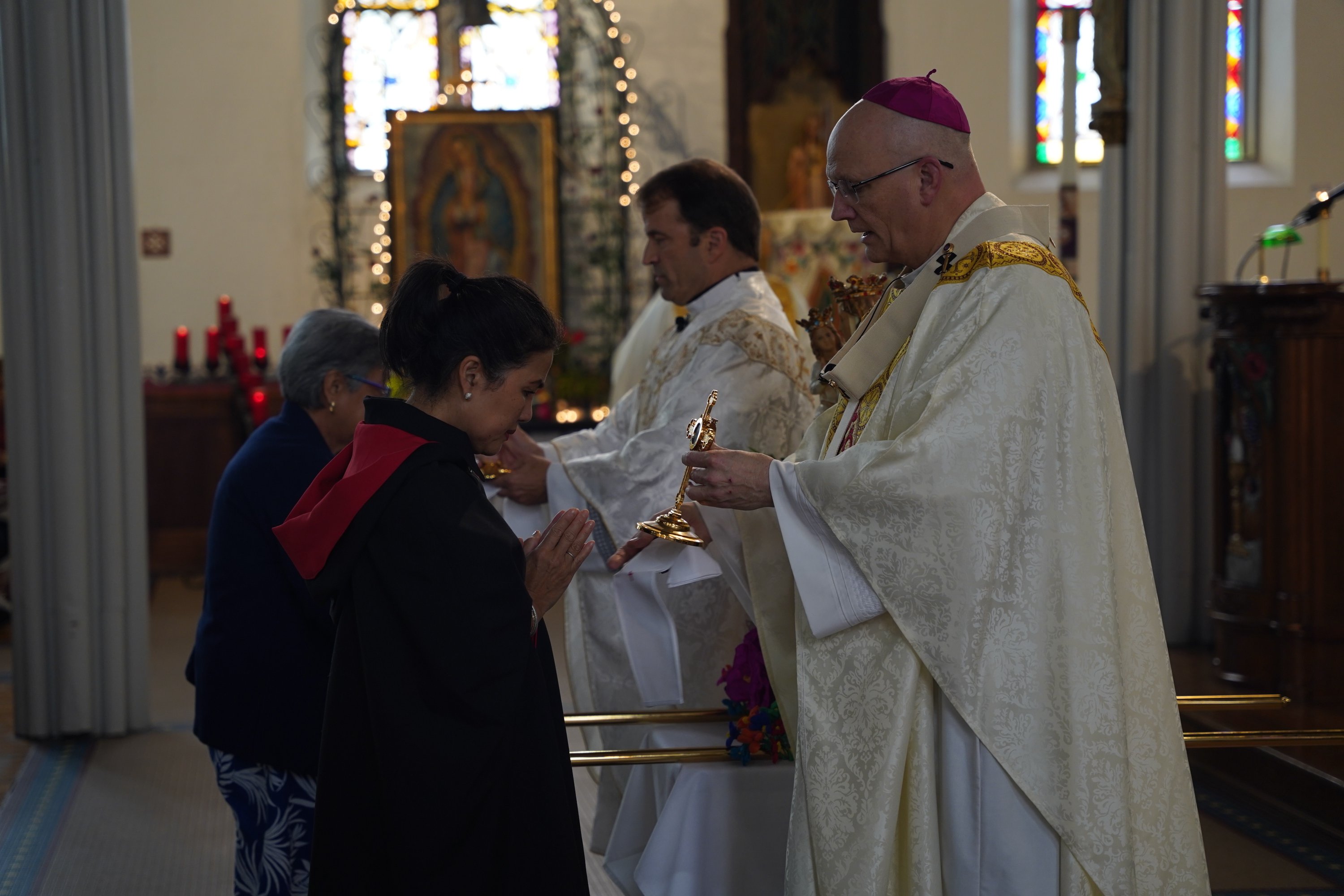
Devotion to St. Anne grew, first in the Eastern Church by the Fourth Century and later in the West, particularly in France’s Brittany region.
When French explorers built the first Ste. Anne Church, within the perimeter of Fort Pontchartrain du Detroit, roughly at the intersection of Woodward and Griswold in downtown Detroit, they established St. Anne as patroness of the city through all its triumphs and tragedies.
“I found it interesting in a clarification from the Vatican in just 2011 at the petition of Archbishop (Allen H.) Vigneron, it was clarified by the Holy See that St. Anne has been our patroness from the first day the church was planted,” Archbishop Weisenburger said. “On these sacred shores, where the church was first established in this region. That's our noble history, and it's a moving history, but if you're like me, it's a reality that I think speaks powerfully to us today.”
Stephanie Le, a Dame of Malta who took part in the procession to begin Mass, was very emotional as she venerated the relic of St. Anne, her baptismal saint and a go-to for spiritual guidance.
“It was her dedication and unfailing faith in God, as Archbishop Weisenberger has mentioned, that inspires me so much," Le said. “And because of that, she has granted blessings in my own motherhood, and that itself is a miracle, so I have a special devotion to St. Anne and the Blessed Mother as well.”
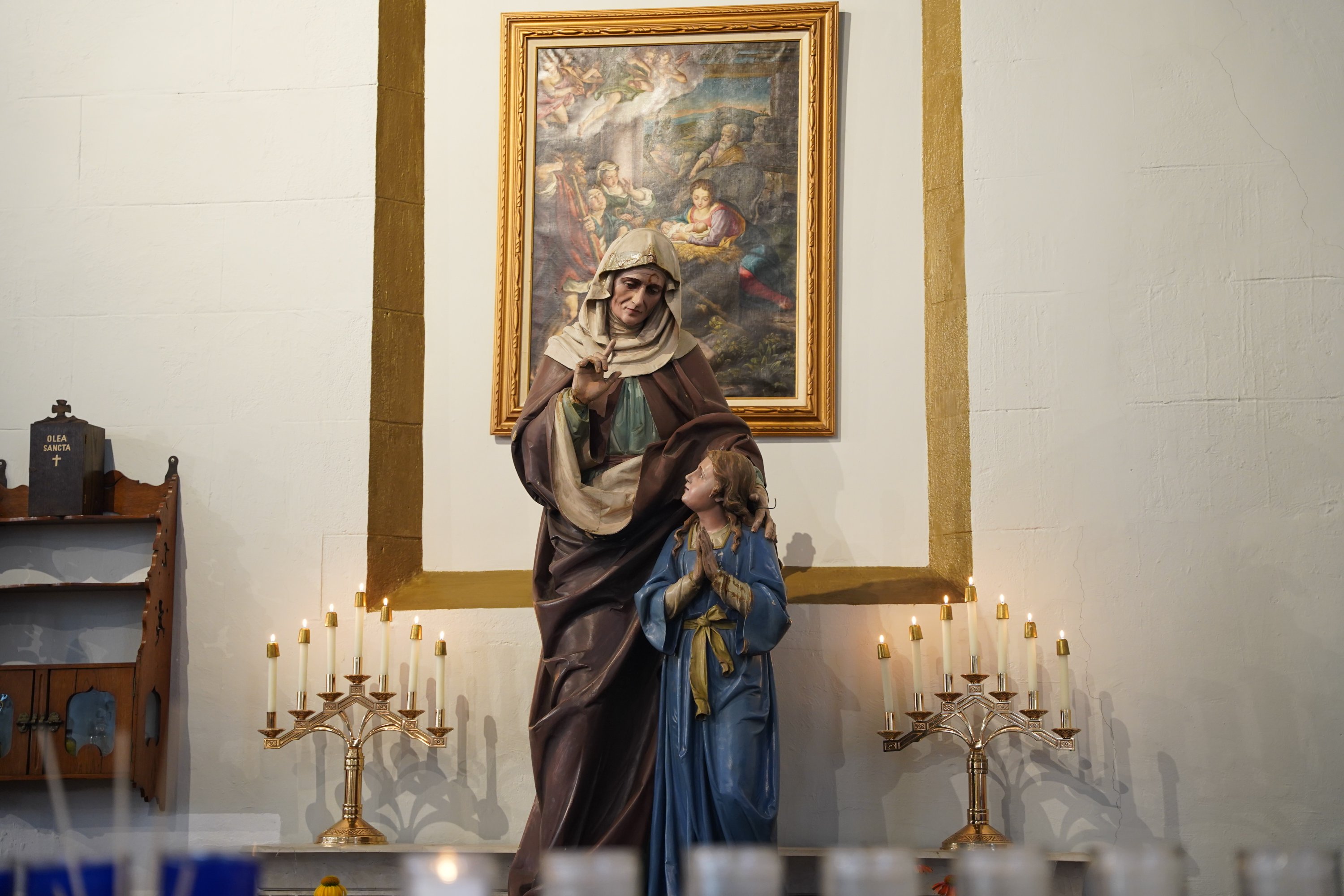
Le added that she wasn’t expecting the opportunity to venerate a relic of St. Anne during Mass, calling the experience “surreal.”
“It's an honor, but very surreal since I hadn't realized that we were having the relic of St. Anne here for me to be able to touch her relic,” Le said. “It's emotional. It was very, very emotional. I would encourage people to do some research and to read more about her life and her devotion to God.”
Following Mass, parishioners of the Basilica of Ste. Anne processed a statue of St. Anne throughout Most Holy Trinity, and the choir sang the Magnificat. After the procession, the faithful prayed to St. Anne for spiritual favors and the Little Rosary of Ste. Anne: three mysteries of one Our Father and five Hail Marys each, followed by petitions to Jesus, born of Mary; Mary, daughter of St. Anne; and St. Anne, grandmother of Jesus.
Following the Litany of St. Anne, the faithful had the opportunity to venerate the patroness's relics.
The archbishop concluded his homily by quoting the entire Gospel passage from St. Matthew – perhaps one of the shortest Gospel passages in the liturgical year.
The archbishop said that all the holy men and women of the Old Testament would gladly trade places with the faithful today to know that the Messiah had been born to redeem the world.
“He was born to Mary, perfectly sinless and forever a virgin,” Archbishop Weisenburger said. “But in order that this Mother of God would be made perfect for God's own Son, God prepared Mary by giving her to Anne and Joachim. These great saints received their daughter, a great gift to them, with love; raised her with great love and nurtured a divine love within her. In their lives, great hardships were overcome, promises were fulfilled, and they witnessed what humanity had longed to see from the dawn of time.
Brothers and sisters, this is St. Anne, the great saint and patroness woven into our Detroit Catholic DNA,” Archbishop Weisenburger added. “Let us seek her help in every challenge of our own. Let us take hope in the unexpected promises fulfilled in her.”