
Archbishop encourages seminarians Christian Pulido and Jonathan Ligenza to continue to follow wherever God leads
DETROIT — To the question of whether they are willing to help reconcile God's creation to the Father in the Archdiocese of Detroit, Christian Pulido and Jonathan Ligenza both answered with a firm "yes."
The two seminarians for the Archdiocese of Detroit, studying at Sacred Heart Major Seminary, both affirmed their desire to continue discerning the priesthood Aug. 11, when Detroit Archbishop Edward J. Weisenburger welcomed them to formal candidacy for holy orders during a Mass with their fellow seminarians at the Cathedral of the Most Blessed Sacrament.
Pulido and Ligenza are now publicly recognized as seminarians for the Archdiocese of Detroit, donning the Roman collar for the first time.
“I’m very grateful for what God has done today for me, and for my classmate, and I’m very grateful to my formators, to my family, everyone present here, for all the work they have done to help form us,” Pulido, a parishioner of St. Francis of Assisi-St. Hedwig Parish in Detroit, told Detroit Catholic.
Pulido and Ligenza will now begin the Configuration stage of their seminary formation, which involves four years of studying theology. In that time period, the seminarians will be installed as lectors and acolytes — the intermediary steps before, God willing, they are ordained as transitional deacons.
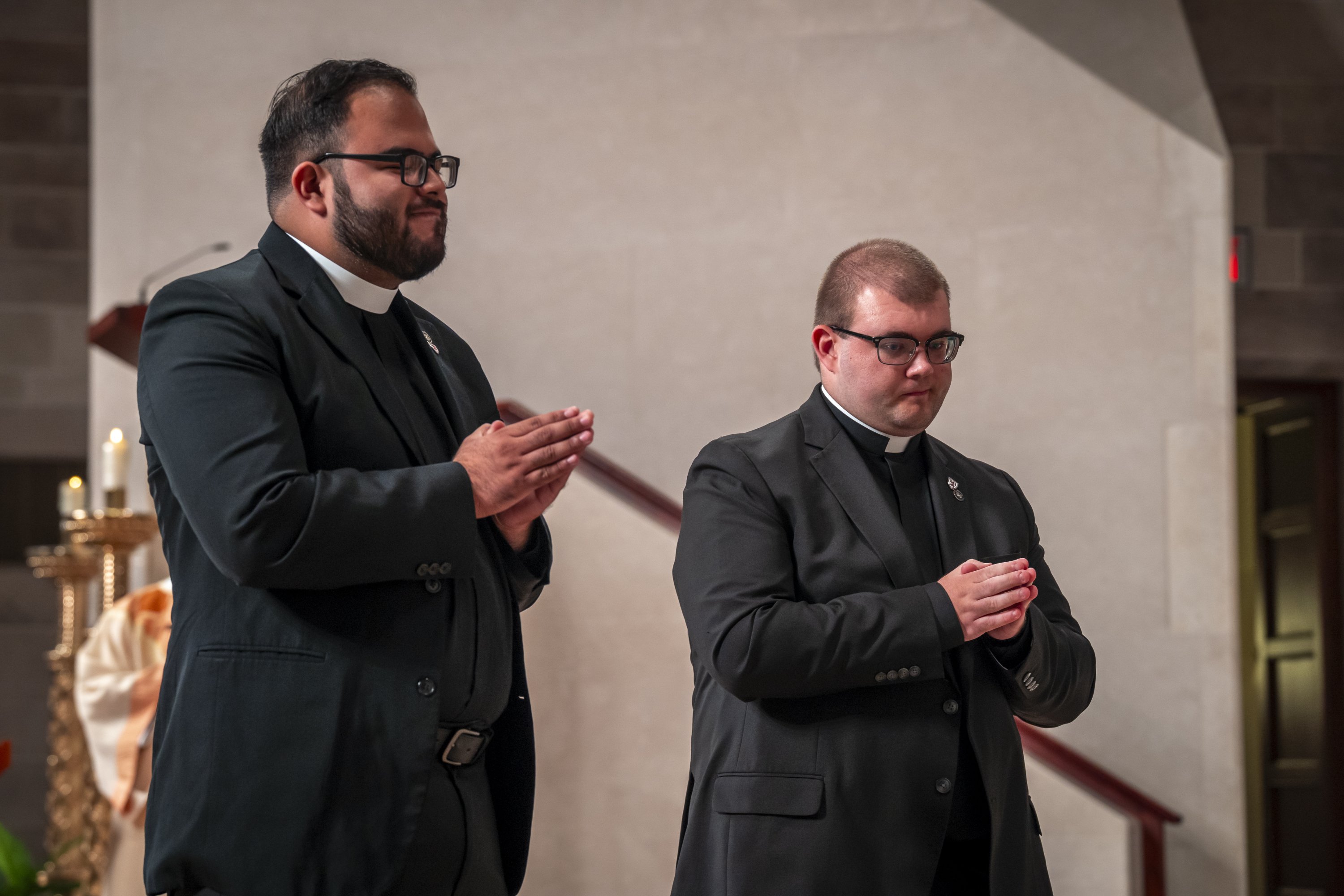
“I know wearing the Roman collar is a great responsibility to represent the Church in this way, and I’m going to continue to pray that Jesus continues to do the work in my life, as well as all my brother seminarians who this year are taking on the collar,” Pulido said.
Ligenza said the candidacy Mass is the first public “yes,” he has made in discernment, as opposed to the more private matters of choosing to enter the seminary and complete pre-theology studies.
“Saying this 'yes' means just keeping my eyes focused on Christ and to configure myself more to him, the high priest,” Ligenza said. “In a way, it’s weird, surreal to think that I’m to this point in formation, how close I am to receiving other ministries in the Church.”
Ligenza, a parishioner at Our Lady of Sorrows Parish in Farmington, asked that the faithful throughout the Archdiocese of Detroit pray for himself and Pulido, but also to pray for an increase in vocations, for more men to say ‘yes,’ to God’s calling.
“The home parishes, especially, are key to fostering vocations,” Ligenza said. “Families and parishes really need to encourage more men to discern, to say 'yes.' And pray for all of us seminarians, for us to grow in holiness every day.”
In his homily, Archbishop Weisenburger told Ligenza, Pulido and their brother seminarians that there is tremendous value in saying "yes" to God’s calling. The archbishop recalled how, as a seminarian for the Archdiocese of Oklahoma City, he had been asked by his formators to study in Europe at the University Catholique of Louvain in Belgium, while the rest of his seminarian classmates were to stay in the United States.
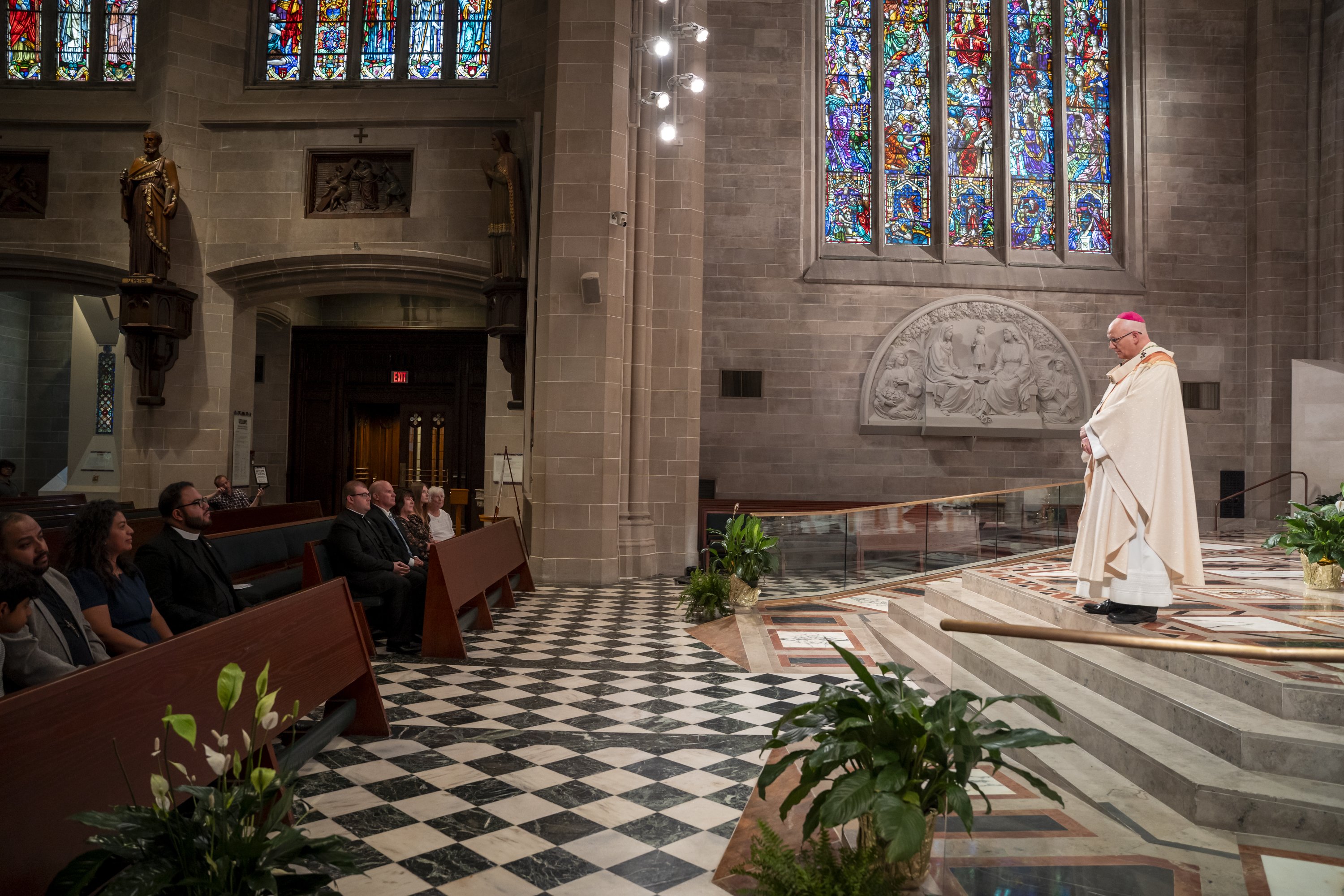
After listing to his spiritual director all the reasons he shouldn't go, the archbishop recalled his director's advice: Like the Blessed Virgin Mary, "just say 'yes.'"
“I remember him saying, ‘What’s the worst that could happen?’” Archbishop Weisenburger said. “I said I could fail. He answered, ‘What’s so bad about that?’”
“I’ve been struggling, oftentimes imperfectly, to say 'yes' for the last 43 years,” the archbishop continued. “There have been times when I fell on my face. But I must tell you that saying ‘yes’ is very freeing; it takes you out of it and allows it really to be about God.”
Reflecting on the Gospel reading from St. Matthew (18:15-20) in which Jesus instructs his followers how to handle disagreements and quarrels, Archbishop Weisenburger said holy orders is about reconciling the world to Christ, just as Christ reconciles the world to the Father.
“Today, our culture loves fighting, loves disagreement, which leaves us a little bit out, but we need to stand out,” Archbishop Weisenburger said. “We need to stand out as men and women of reconciliation. And for those who would enter candidacy for holy orders — if that be your call — it’d be a call to reconcile in a most unique and sacred way.”