Minutes before meeting his Creator, celebrated Irish poet Seamus Heaney entrusted his final words to a language of antiquity and a device of modernity: Noli timere, he texted his wife, “Do not be afraid.” These same words echoed time and again on the lips of St. John Paul II: Do not be afraid, he pleaded with his Polish fellow countrymen, to articulate and oppose the inhumanity of communism; do not be afraid, young people, to open your hearts and lives to Christ.
Heaney was reminding his wife of the Christian hope of resurrection; the pope was urging the world to trust in the power and love of God; both could say Noli timere because of the One who is Himself the resurrection, who is omnipotent, who is love. Noli timere, Christ commands the synagogue official whose daughter has died (Luke 8:50); noli timere, says John, narrating Jesus’ triumphal entry into Jerusalem on Palm Sunday and quoting Isaiah’s prophecy of a savior (John 12:15); noli timere, Christ reassures His first apostles as He calls them from fishing for food to fishing for souls (Luke 5:10).
Many kinds of fear can enter into our lives, the fear of our own death, for example, and the fear of what will happen to our loved ones when they die and to us who must continue without them. Like the synagogue official, we must bring this trepidation before Our Lord in prayer. Like Martha and Mary, Christ’s dear friends, we can and should tell Him of our anxieties and our grief; only then can we hear His voice: “I am the resurrection and the life” (John 11:25). When we are completely honest with Him, He can reveal the absolute truth of Himself and His conquest of the illness and death that entered the world with sin.
But Christ has overcome not only the results of sin but sin itself: by embracing death for us, He redeemed us. From his knowledge of this victory, John Paul II drew the courage to preach fearlessly the ultimate downfall of totalitarianism: a system built on disregard for God and contempt for the human person is bound eventually to crumble. So as we beg the Lord’s mercy for our own country and for our world, we encounter Christ as savior; from the cross, He reigns.
Finally, we cannot fear to entrust all our talents, our choices, our every moment to God’s providential guidance. This generosity, especially necessary for individuals discerning their vocational path, must also characterize the continued living of one’s vocation. Married couples must invite God into their decision-making. Consecrated persons must give themselves unstintingly to their work, undertaken in obedience.
Will God betray this trust or ask of us sacrifices that will make us unhappy? Never! He who is Love, He who is bliss, will only ever draw us down paths that lead to our ultimate happiness. The apostles surely felt wrenched from their nets, but could anything have proven more exciting and rewarding than to walk for three years alongside the Fisherman par excellence?
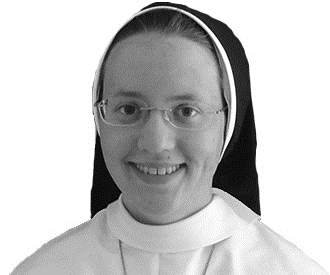
Sr. Maria Veritas Marks is a member of the Ann Arbor-based Dominican Sisters of Mary, Mother of the Eucharist.

Poets and popes remind us of Jesus’ words: ‘Do not be afraid’