
 Sr. Maria Veritas Marks, OP
On May 24, Dominicans celebrated a beloved feast, the “translation of the relics of St. Dominic,” that reminds them annually of God’s limitless goodness. When Dominic died in 1221, he asked humbly to be buried like any other friar “under the feet of the brethren” in the Dominicans’ church. In the following years, thousands of the sick and suffering found healing at his tomb. The friars, however, were reluctant to recognize the miracles God was working; they removed the tokens people left in gratitude at the gravesite, and when burgeoning vocations required construction of a larger church, they razed the old one and left Dominic’s tomb exposed to the elements.
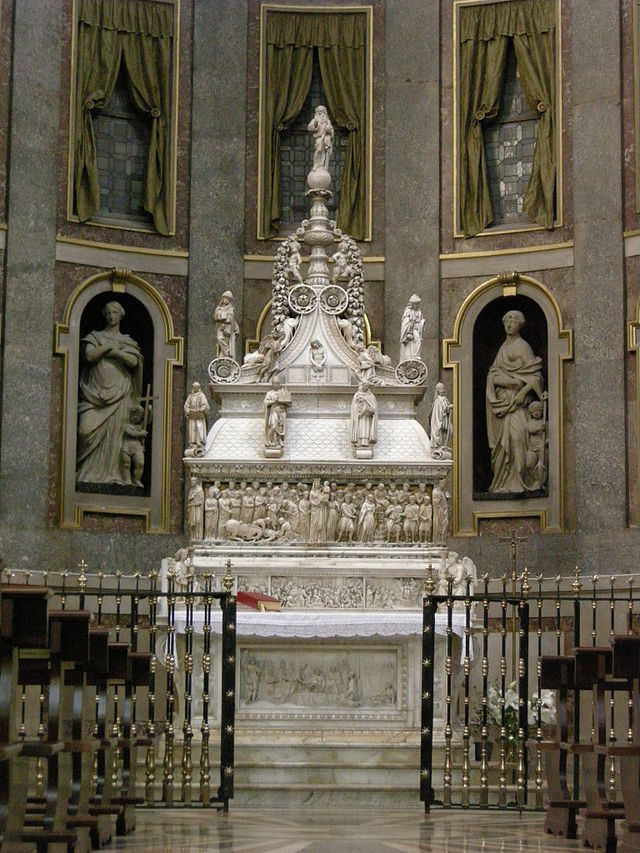 The Ark of St. Dominic, containing the 13th century saint's relics, is seen in the basilica named for him in Bologna, Italy. (Sailko)
In 1233, a shocked Pope Gregory — who would canonize Dominic just one year later — rebuked the order for its neglect and ordered that Dominic’s remains be removed to a more suitable location. In preparation, political and ecclesiastical dignitaries gathered alongside crowds of faithful and friars. The latter especially awaited the tomb’s opening with trepidation: had the body decomposed? Would the stench diminish the universal opinion of Dominic’s holiness?
As friars laboriously chipped away the cement and levered the stone upward, what met the multitude’s straining senses was no stench but a fragrance of ineffable beauty. It resembled nothing anyone had ever smelled and surpassed all imagining. One by one, archbishop, bishops, friars, and faithful fell to their knees, joy welling up in tears and praises of God. The fragrance lasted for days and clung to those who touched and kissed St. Dominic’s bones, inspiring many conversions.
Why did God do it? God worked dozens of miracles through St. Dominic during his lifetime, including raising people from the dead. He owed the world no more signs of His love. But undreamt-of gratuity is characteristic of God’s goodness. At Cana, Christ changed water into the finest wine — about 600 bottles of it. On the Sea of Galilee, His word brought so many fish flocking to the apostles’ boats that their nets almost split.
And the magnificence of God’s gifts is not limited to AD 30 or AD 1200. Every day, Christ not only awaits us, Body, Blood, Soul, and Divinity, in our tabernacles but seeks to make us — us! — His tabernacles, through our consumption of the Eucharist and our correspondence to His grace throughout the day. He offers us not only His forgiveness but the audible assurance of it in the sacrament of confession, as well as supernatural assistance specifically for the sinful tendencies we have confessed.
The Church’s obligations and recommendations, like weekly Mass and frequent confession, are meant not to constrain us, but to protect us from our own stinginess, lest, in our blindness, we, like those silly early friars, seek to evade God’s gifts. Let us not evade but take advantage of our Father’s limitless love, so we can be more and more transformed into His image, spreading the “sweet fragrance of Christ” (2 Cor 2:15) to the world.
Sr. Maria Veritas Marks is a member of the Dominican Sisters of Mary, Mother of the Eucharist, based in Ann Arbor.