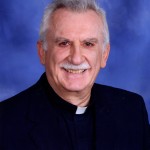
 Fr. Dino Vanin, PIME
This is the rally cry, the slogan that Archbishop Allen H. Vigneron has chosen for us to enact, to “unleash the Gospel,” to free the power that God has placed in the Gospel in order to transform the Archdiocese of Detroit.
Archbishop Vigneron puts it this way:
“We know the world is not as God wants it to be, and that the Church of Detroit has faced challenges in a rapidly changing society — challenges that impact our Church as an institution, but also that affect us deeply in our families and with our neighbors. Amid this, all of us should know that we have an unfathomable power that is capable of overcoming these challenges, of healing the wounds of our culture — we have the power of the Gospel. As disciples of Jesus, we live to share the Gospel.”
To further this mission in Detroit, an archdiocesan synod will be held from Nov. 18-20. A synod is a special gathering of our spiritual leaders and experts assembled to come up with solutions to the challenges that our archdiocese is facing.
The desired result of this synod would be an increase in faith, hope and charity among Catholic believers, along with more resolve and courage in bearing witness to Christ and to the Gospel, while showing loyalty and faithfulness to the teachings of Jesus Christ and his Church.
However, lest all this remains mere hot air, let me point out some of the power of the Gospel that is still “on leash,” still to be freed so that it can be lived out and become a source of salvation.
These are simple snippets taken from the readings a few weeks ago. They prove that the Gospel has the power to free us from the encumbrance of our past.
Isaiah 43:18: “Remember not the events of the past, the things of long ago consider not; See, I am doing something new! Now it springs forth, do you not perceive it?”
We ourselves might still experience the pull of our past mistakes and sins. That pull can be so potent that we might be paralyzed by remorse and fear. The sacrament of reconciliation, if properly approached, frees us from our past so that we can bear the fruits of the Spirit for our personal benefit, the good of our family and neighbor and the glory of God.
Philippians 3:8: “More than that, I even consider everything as a loss because of the supreme good of knowing Christ Jesus my Lord. For his sake I have accepted the loss of all things and I consider them so much rubbish, that I may gain Christ.”
We are surrounded by material things. They have the power to enslave us so that money and what money can buy would consume all our life and energies. Through the Gospel we will find the way to free our hearts of material pursuits that are not necessary for our livelihood and for our family’s well-being so that we can be free to hold on to Christ as to our ultimate treasure.
Philippians 3:10: “to know him and the power of his resurrection and (the) sharing of his sufferings by being conformed to his death.”
Sufferings are inevitable. They are the consequences of sin, which is a most irrational infraction that strikes its perpetrator directly and, at random, so many others beyond boundaries of time and space, including innocent children and very good people.
John 8:11: “She replied, ‘No one, sir.’ Then Jesus said, ‘Neither do I condemn you. Go, and from now on do not sin anymore.’”
If we are to unleash the power of the Gospel, Christian ethical behavior must be the hardest testing ground. So many people, Catholics included, would like the pope to change some rules of the Christian moral code in the areas where, in their human frailty, they fall most often. However, that won’t happen because God knows too well the devastating power of sin.
Sin cost the life of His only Begotten Son Jesus on the cross. So, God will never reshape His laws of ethics in such a way that He would condone sin. If God were to water down His moral code, He would allow sin to devastate the lives of even more innocent people. For sure, God will always forgive any contrite heart, but He always steers His beloved children away from continuing to live in sin.
In the Scriptures, we have ample suggestions on how to live out the Gospel of Christ and on how to share it with those who are eagerly waiting for the power of the Gospel to change their lives. Let us begin.
Fr. Dino Vanin is a councilor of the PIME Missionaries, whose North American headquarters are based in Detroit. This column originally appeared at CatholicJournal.US and is reprinted with permission.