
 On Thursday, Nov. 21, at 7 p.m., I will preside at a Holy Hour in the Cathedral of the Most Blessed Sacrament to pray for the suffering Christians in the Middle East. This date is the Memorial of the Presentation of the Blessed Virgin Mary in the Temple in Jerusalem, and so it is a fitting occasion for us to invoke her protection for her sons and daughters who live now in the lands where she herself, along with the Lord Jesus and St. Joseph, lived out the mystery of her vocation as the Mother of the Incarnate Word.
I invite all of you, please, to join with me in this prayer, to ask Our Lady, the Queen of Peace and the Help of Christians, to come to the aid of the Christians in the Middle East whose grievous afflictions are the “stuff” of daily news reports. Along with the priests and parishioners of the Archdiocese of Detroit, I have sent special invitations to the pastors and people of the Eastern Catholic Churches — Chaldean, Maronite, Melkite, Syriac and Armenian — to be part of this prayer.
I consider our gathering for this Holy Hour to be part of my keeping the resolve I made when I left Rome at the end of the 2010 synod. In October of that year I was at the Vatican as a member of the Special Assembly of the Synod of Bishops for the Church in the Middle East. (I was appointed to the synod especially by Pope Benedict because there are so many Catholics from the Middle East here in our areas.) As we Synod Fathers departed from our assembly, we received a charge that in the months and years ahead, we should not let the rest of the Church forget the suffering of our brothers and sisters in the Middle East. It is for this reason that I am calling all of us together to the Cathedral of the Most Blessed Sacrament.
I received a vivid reminder of the need for such prayer recently in an open letter from Archbishop Amel Nona, the Archbishop of Mosul in Iraq, written “to Christians in the West,” titled “Faith in the Time of Persecution.”
In this letter, the Archbishop speaks movingly of the challenges which his flock, and he along with them, faces as they live out their lives day after day under the threat of violent death. For me perhaps the most powerful part of this word from a persecuted Church is his insistence that for them the great challenge is not to lose that love which is born of faith and hope, a love which extends even to those who set themselves up as their enemies. He writes: “(I)n the face of suffering and persecution — a true knowledge of our own faith and the cause of our persecution is of fundamental importance. By deepening our sense of what it means to be Christians, we discover ways to give meaning to this life of persecution and find the necessary strength to endure it. To know that we may be killed at any moment, at home, in the street, at work, and yet despite all this to retain a living and active faith — this is the true challenge.” And at the end of his letter, Archbishop Nona recaps this point eloquently: “Saint Paul says that ‘where sin abounded, grace did still more abound’ (Rom. 5:20). With him, we may also say that wherever there is persecution, there too will be the grace of a strong faith — and therein lies our salvation.”
Not only does the Archbishop report to us Christians in the West about the situation in the Middle East, he also calls upon us to stand with his flock in spiritual solidarity. I see our Nov. 21 prayer service as a way to respond to him.
And I take this matter very personally, since during the meetings of the 2010 synod I was seated next to Archbishop Nona. I was first stuck at the Archbishop’s youth; he was only 42 and had been ordained the Archbishop of Mosul only months earlier. On several counts I quickly felt a connection with Archbishop Nona. As some of you will recall, a distinguished pastor of Mother of God Chaldean Church in Southfield, Msgr. George Garmou, had been called by God a generation earlier to leave our community to be the Archbishop of Mosul, and occupied that office until his death in 1999. Archbishop Nona has many relatives in Southeast Michigan, and so we had friends in common. And, perhaps most significantly for me, I realized that this young pastor was taking up his episcopacy as the successor to a man, Archbishop Paulos Rahho, who had been murdered along with one of his priests: so young, so “green” and called to such a challenge.
I urge all of you to take the time to read the letter from my friend and brother, Archbishop Nona (Here is a link to the letter). The Archbishop’s testimony to the call God is giving to his flock in this age to witness faithfully to the Lord Jesus will speak more eloquently than what I can say to move you to join me at Blessed Sacrament Cathedral on Nov. 21. We cannot not pray for the Christians in the Middle East, that through the prayers of Our Blessed Mother, God will protect them, especially that he will protect and preserve their faith.
Sincerely yours in Christ,
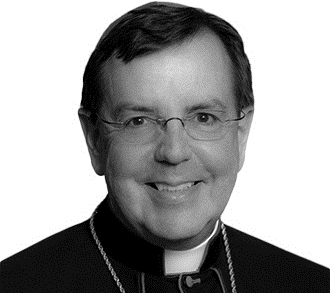
The Most Reverend Allen Vigneron
Archbishop of Detroit