
On April 1, 1989, a funeral procession wound its way through Vienna. When it arrived at the crypt of the Capuchin church, herald Heinz Anton Kafner knocked upon the door. From within, a friar asked, “Who wants entry?” The reply listed all of the deceased’s royal titles: “Zita, Empress of Austria, Apostolic Queen of Hungary, Queen of Bohemia, Dalmatia, Croatia, Slavonia, Galicia, Lodomeria, and Illyria, Queen of Jerusalem, Archduchess of Austria, Grand Duchess of Tuscany and of Krakow, Duchess of Lorraine and Bar, of Salzburg, Steyer Carinthia, Carniola and Bukovina, Grand Princess of Transylvania, Margravine of Moravia, Duchess of Upper and Lower Silesia, of Modena, Piacenza and Guastalla, of Auschwitz and of Zator, Teschen, Friuli, Ragusa and Zara, Princess Countess of Habsburg and Tyrol, of Kyburg, Görz and Gradisca, Princess of Trent and Brixen, Margravine of Upper and Lower Lusatia and Istria, Countess of Hohenems, Feldkirch, Bregenz and Sonnenberg, Mistress of Trieste, of Cattaro and the Windische March, Grand Voivode of the Serban Voivodeship, Infanta of Spain, Princess of Portugal and of Parma!”
From within came the simple reply: “We don’t know her!”
Hafner knocked again. Once more, “Who wants entry?”
“Zita, Empress of Austria and Apostolic Queen of Hungary!”
“We don’t know her!”
A third time Hafner knocked. A third time the friar asked, “Who wants entry?” This time, Hafner answered, “Zita, a mortal and sinful woman.”
“Let her come in!” And the gate to the imperial crypt swung open.
A sinner looked upon by God. This is how Pope Francis described himself when confronted, in an interview marking the beginning of his pontificate, with the bold opening question, “Who is Jorge Mario Bergoglio?” It is the identity we claim on Ash Wednesday, wearing on our foreheads the sign both of our mortality and of our repentance.
Reclaiming my identity as a mortal and sinful man or woman helps me to reclaim my relationship with God. God always gazes upon me with mercy, and He always extends His hand in friendship; it is I who turn away to idols of my own making, to a false sense of security or control, to doing my own will, to petty sins of gossip, self-seeking, disordered pleasure, moodiness.
In Scripture, God speaks the scripted words of the Austrian royal burial ceremony, “I do not know you,” to those who mistake their miraculous deeds done in His name for an actual relationship with Him (Mt 7:23) and to the foolish virgins of the parable who lack the oil of virtue for their lamps (Mt 25:12). Of course, God does not literally “not know” us; He created us! But when we refuse to know ourselves as we truly are, sinners looked upon by Him, we hide from Him, as Adam did in the Garden.
During Lent, we attempt to gain self-knowledge through works of sacrifice and charity, so as to grow in knowledge of God. We place our trust not in those works — that would simply repeat the idol-worship we seek to eradicate! — but in the mercy of Him whom the Church has long called the “lover of Mankind.” We acknowledge our mortality and sinfulness to meet His gaze of love, so that, one day, He will say to us, “Come in, good and faithful servant!”
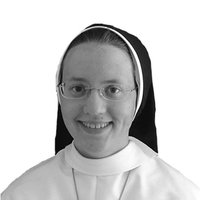
Sr. Maria Veritas Marks, OP, is a member of the Ann Arbor-based Dominican Sisters of Mary, Mother of the Eucharist.