
Archbishop Weisenburger: Solanus’ humility an example for how to build up the church
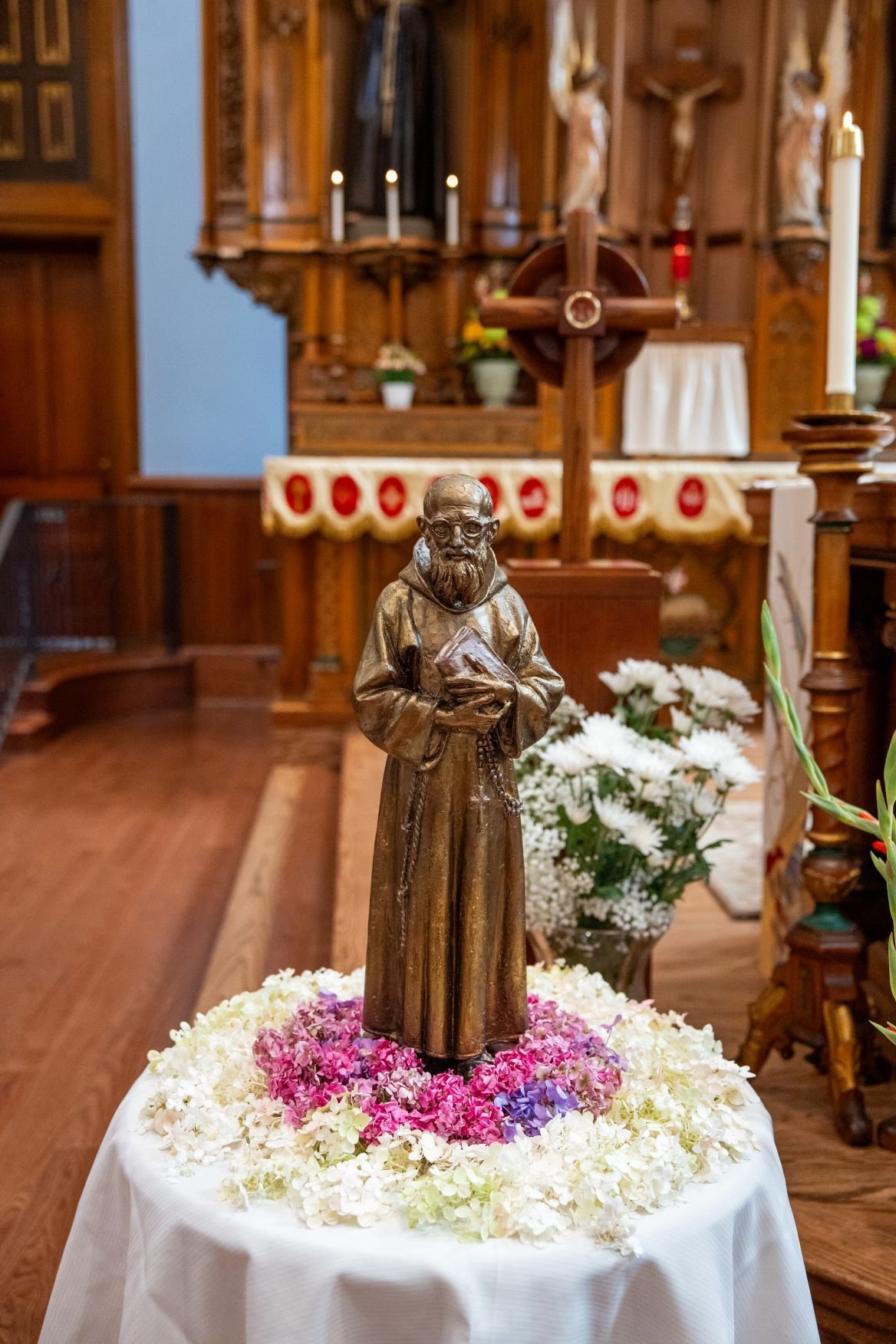
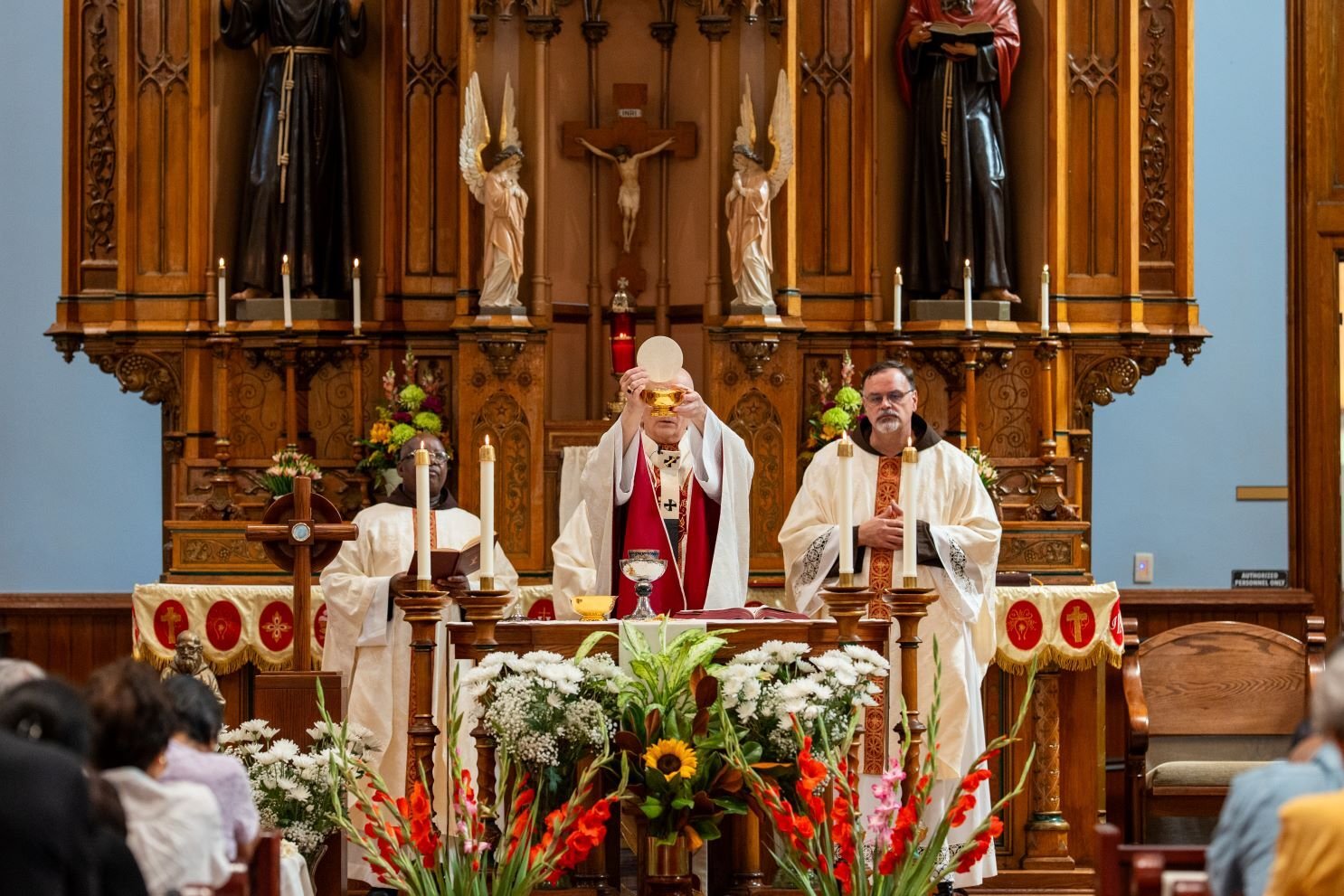
DETROIT ─ St. Bonaventure Monastery Chapel and the hallway linking it to the Solanus Casey Center were packed with the faithful celebrating the Feast of Blessed Solanus Casey, Detroit’s very own prospective saint.
July 30 has become a fixture on Detroit’s liturgical calendar ever since Solanus Casey (1870-1957) was beatified in 2017, with Archbishop Edward J. Weisenburger of Detroit celebrating with the Capuchin Franciscan community this year.
“What a joy it is for us to gather on the Blessed Solanus Casey’s solemnity,” Archbishop Weisenburger said. “For us to reflect on his life is actually for us to reflect upon an image of Christ, as Christ has come alive in our very midst through the work of Solanus Casey.”
The liturgy featured a Collect referencing Solanus Casey and his tireless service to the poor and asked God to grant the same generosity and joy in serving others for the faithful gathered.
During his homily, Archbishop Weisenburger acknowledged the Capuchin present for the liturgy, noting it was the Capuchin community that shaped Blessed Solanus’ service.
“It’s important for us to remember that Blessed Solanus continues to fashion us through his example and faith into the saints we’re called to be,” Archbishop Weisenburger said. “But I think it’s good for us to remember that it was Blessed Solanus’ good Capuchin brothers who fashioned him. God worked his wonders through the people who helped form him in religious life.”
Archbishop Weisenburger recalled living in western Kansas, where many parishes are staffed by Capuchins, and working with the Capuchins when he served as Bishop of Salina, Kan. (2012-2017). The archbishop also mentioned another American Blessed, Blessed Stanley Rother, an Oklahoma missionary priest who ministered and was martyred in Guatemala.
“I was asked to be on the team for Blessed Stanley Rother’s cause, and he was beatified about six months before Blessed Solanus,” Archbishop Weisenburger said. “I’ve always seen the two of them kind of together. And while I don’t wish to reflect too much on the life of Stanley Rother here, Blessed Stanley was thrown out of two seminaries because he couldn’t learn Latin.”
Archbishop Weisenburger liked Blessed Stanley Rother to Blessed Solanus – who famously struggled with Latin and taking classes in German at St. Francis de Sales Seminary in Milwaukee – before discerning a vocation with the Capuchins.
“So they decided that (Solanus) didn’t have much of an upside as a student because he couldn’t speak German, just as Blessed Stanley struggled to learn Latin, but eventually became fluent in Spanish and mastered a dialect of the Mayan language,” Archbishop Weisenburger said. “Isn’t it funny what God does for people who don’t seem to have much potential?”
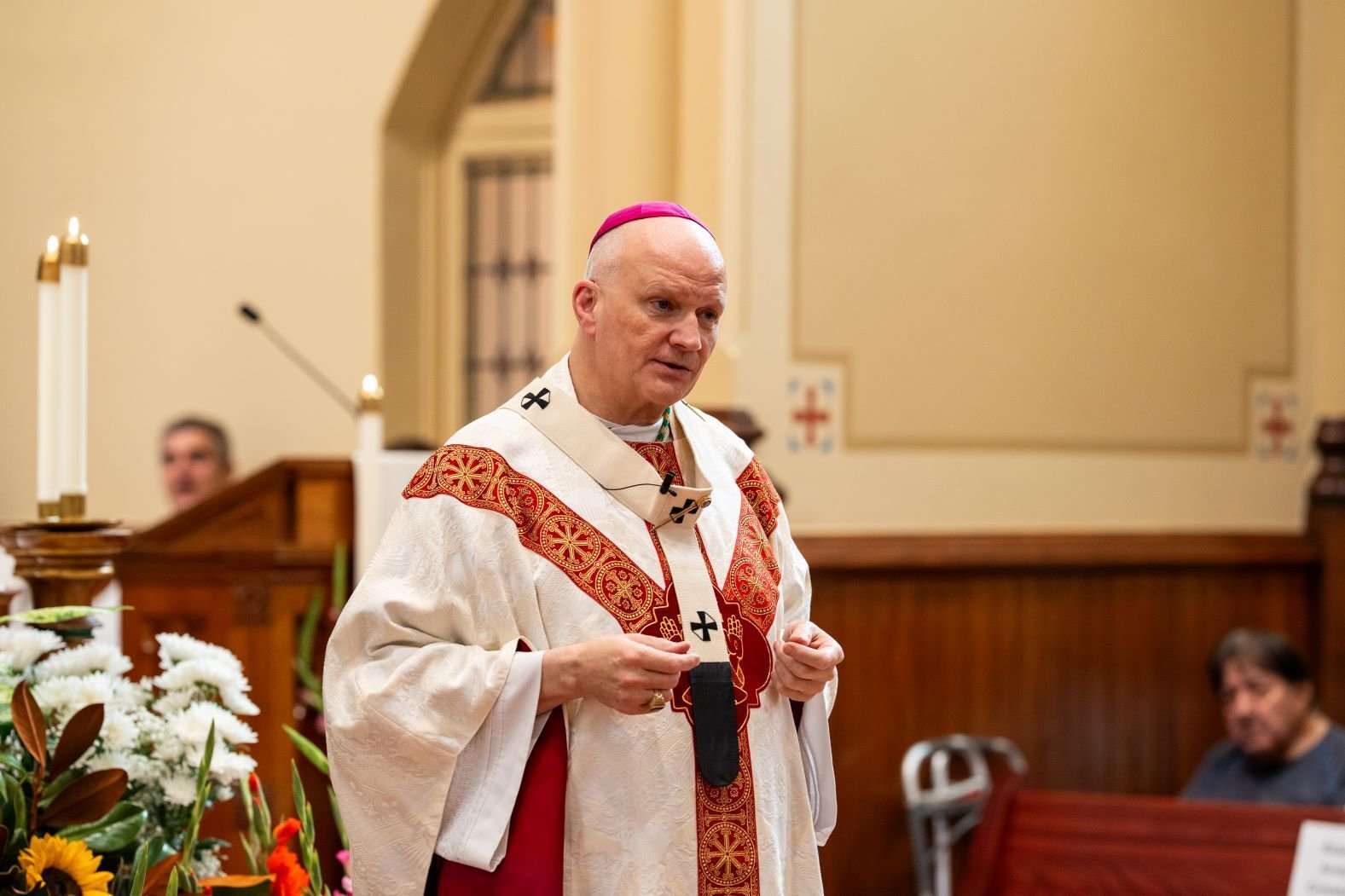
Archbishop Weisenburger said that what blesseds and saints must possess is not necessarily theological insights or superintelligence, but a humility to accept God’s graces in every situation.
“Moreover, the saints of every era, and most especially in the prism of the life of Blessed Solanus, how marvelously the Gospel is refracted in His life,” Archbishop Weisenburger said. “Because he didn’t go out seeking or searching for any kind of particular mission or ministry, rather, he accepted whatever was brought to him and with great humility. And those individual souls, all those individuals encounter, become the very stuff that a saint was made of.”
Archbishop Weisenburger reflected how the early church grew because of personal, one-on-one encounters was how the church grew and disciples were formed – not through massive programs – but through bearing witness to the Gospel.
“It’s important we see that in the life of Blessed Solanus, how he reflects a quality of the early Apostles and the early followers of Jesus Christ,” Archbishop Weisenburger said. “We need programs and processes. I’m on that again. The way evangelization works and the way our church works under the influence of the saints, especially Blessed Solanus Casey, the way it's going to work is when we follow this example, one relationship at a time, one person entering the faith at a time, one person witnessing the faith, even when not using the word Christianity or Gospel, but an extraordinary acts of over, mercy, generosity, mercy and compassion.”
In the buildup to the Feast of Blessed Solanus Casey, the Solanus Casey Center hosted a novena, with special intentions for each day related to Solanus Casey’s ministry. The overall theme of this year’s novena was centered on Solanus’ holiness.
“This year we focused on all the virtues he was practicing in life, reminding ourselves of these virtues we can practice each and every day,” Fr. Ben Joseph, OFM Cap., director of the Solanus Casey Center, told Detroit Catholic. The novena and feast day are an opportunity to celebrate a man whose family was grounded in strong faith, which shaped his approach to the people whenever they came to him at the door as a porter. He received the people, listened to them and consoled the people. All these were the points of reflection for this year.
“And to this year, what mostly inspired people to Solanus Casey is his love for the poor and the sick, because he said, ‘I have two loves, one is the poor, and one is the sick.”
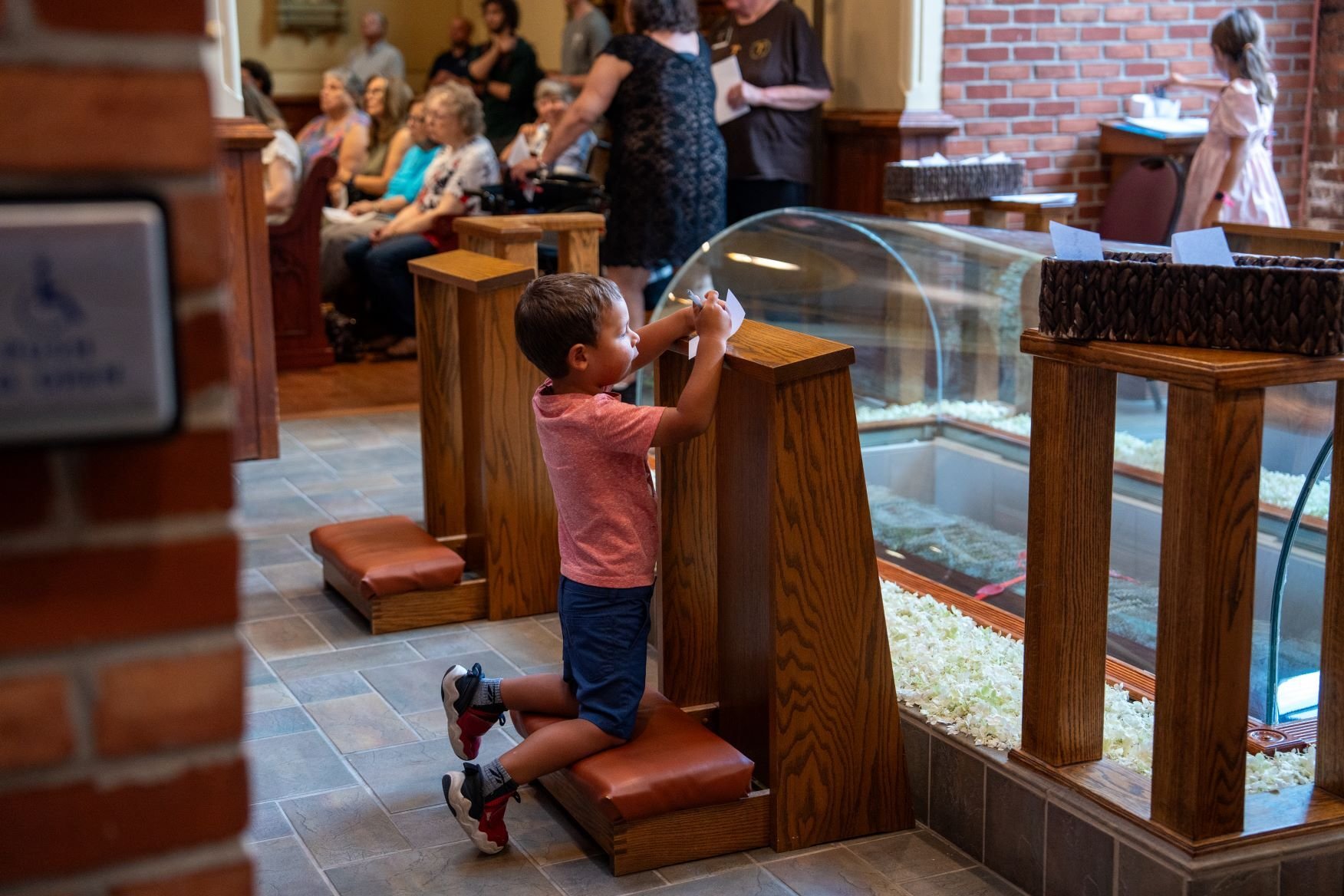
Reaching out to the poor, the lonely, those in need of comfort is what draws people to the church, Archbishop Weisenburger said to conclude his homily, noting how in Blessed Solanus Casey, the faithful have an example of what Christian discipleship looks like.
“When we live out the Gospel, we really will be learning from one of the very best,” Archbishop Weisenburger said. “By learning from someone like Blessed Solanus or Blessed St. Stanley, or all of the great saints,” Archbishop Weisenburger said. “When we do that, in time, we’ll build a church and might find ourselves standing in the footsteps of this marvelous, blessed man.”