
Cardinal Peter Ebere Okpaleke leads one of the youngest dioceses in the world, brings message of hope for Michigan’s Catholics
DETROIT — Above everything else, Cardinal Peter Ebere Okpaleke of the Diocese of Ekwulobia, Nigeria, has come to Detroit to preach the Gospel of Jesus Christ.
Cardinal Okpaleke, the leader of one of the world's newest dioceses, has many responsibilities as an administrator, a peacemaker, an advocate and a representative of approximately 700,000 Catholics in one of the poorest areas of the globe.
But more than all of that, he's a humble messenger of the good news of Jesus Christ, bringing that message of Christian hope with him wherever his travels take him.
From nearly 6,000 miles across the globe, the 63-year-old Nigerian cardinal is visiting the Archdiocese of Detroit for three weeks at the invitation of Detroit Archbishop Edward J. Weisenburger, following a brief visit to the area last year.
During his visit, the cardinal made time for an interview with Detroit Catholic, when he spoke about the warm welcome he's received in the Motor City.
“The main reason for my coming here is as a result of my encounter with Archbishop Weisenburger last year, when I shared my experiences with him of our vision for the new Diocese of Ekwulobia,” Cardinal Okpaleke told Detroit Catholic during an interview at Sacred Heart Major Seminary in Detroit. “I specifically spoke of our family apostolate, taking care of children and vulnerable adults and our grassroots evangelization in general, which piqued his interest. So, he invited me to spend three weekends in three different parishes, to make a mission appeal and to share my vision of the diocese.”
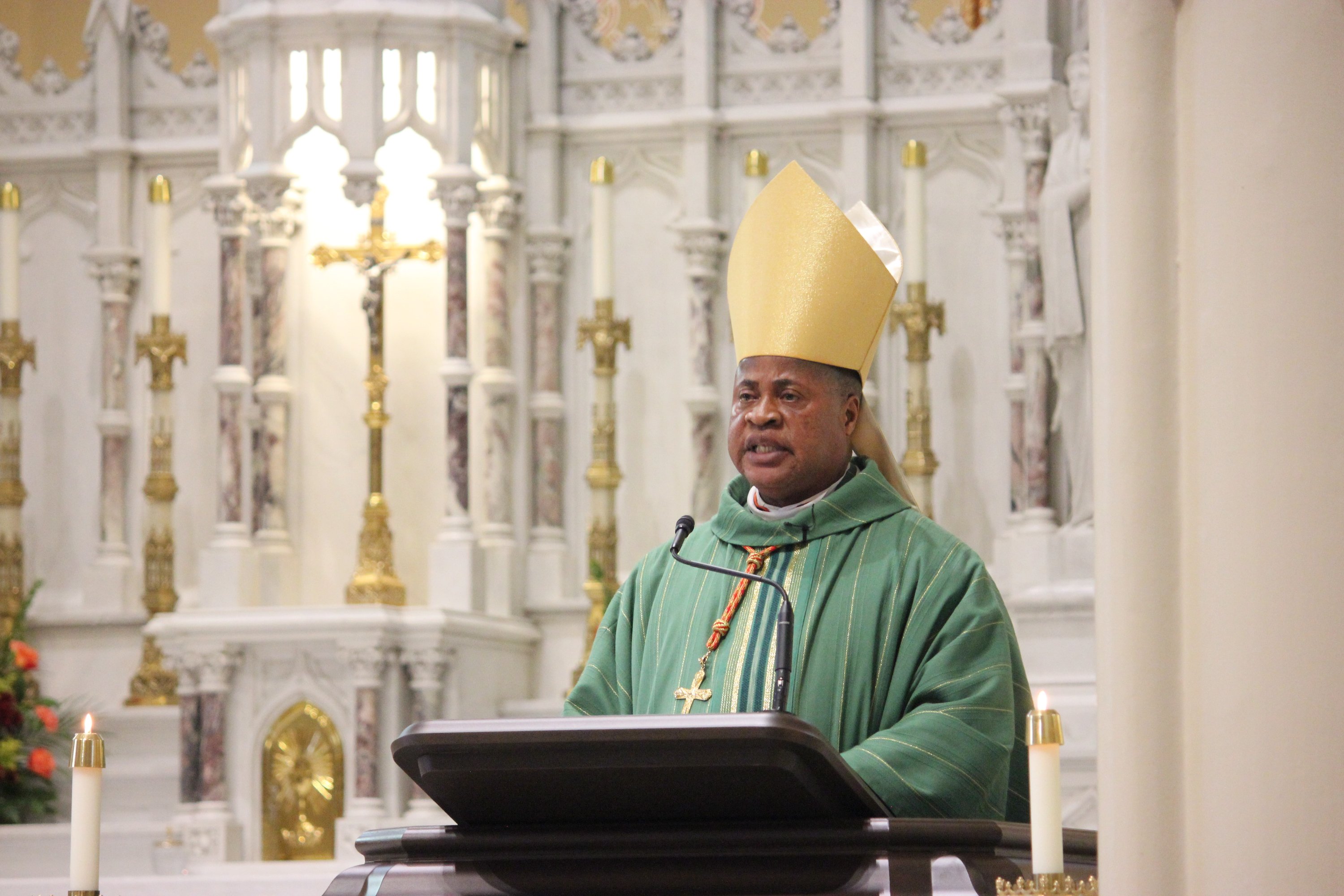
Cardinal Okpaleke visited St. Paul on the Lake Parish in Grosse Pointe Farms the weekend of Oct. 10-11, and plans to visit St. Hugo of the Hills Parish in Bloomfield Hills and Holy Name Parish in Birmingham the following weekends before stopping to visit another bishop friend in Springfield, Ill.
The cardinal also plans to take time to visit fellow Nigerian priests in the area and spend time with the Nigerian diaspora community, while raising support for his diocese back home.
Cardinal Okpaleke became the founding bishop of the Diocese of Ekwulobia, located in Anambra State in southern Nigeria, when it was erected by Pope Francis in 2020.
In 2012, Pope Benedict XVI appointed him as bishop of Ahiara, Nigeria, and he was consecrated a bishop in 2013. However, local clergy and lay members of the majority Mbaise ethno-cultural group refused to accept his appointment, preventing his installation in the diocese. Then-Bishop Okpaleke submitted his resignation amid a standoff with certain members of the Ahiara presbyterate, which Pope Francis reluctantly accepted in 2018.
On March 5, 2020, Pope Francis appointed Bishop Okpaleke to lead the newly created Diocese of Ekwulobia, formed from territory carved out of his home Diocese of Awka.
Two years later, on Aug. 27, 2022, Pope Francis elevated Bishop Okpaleke to the College of Cardinals.
The Diocese of Ekwulobia has an estimated 700,000 Catholics and covers a region that is predominantly Christian; among Christians, Catholicism is the predominant church. The diocese has 257 priests serving 101 parishes in what Cardinal Okpaleke describes as a “concentrated area where just about everybody has already heard of Jesus.”
Cardinal Okpaleke said the diocese's biggest priority now is reaching out to people not already in the pews through what he calls “grassroots evangelization.”
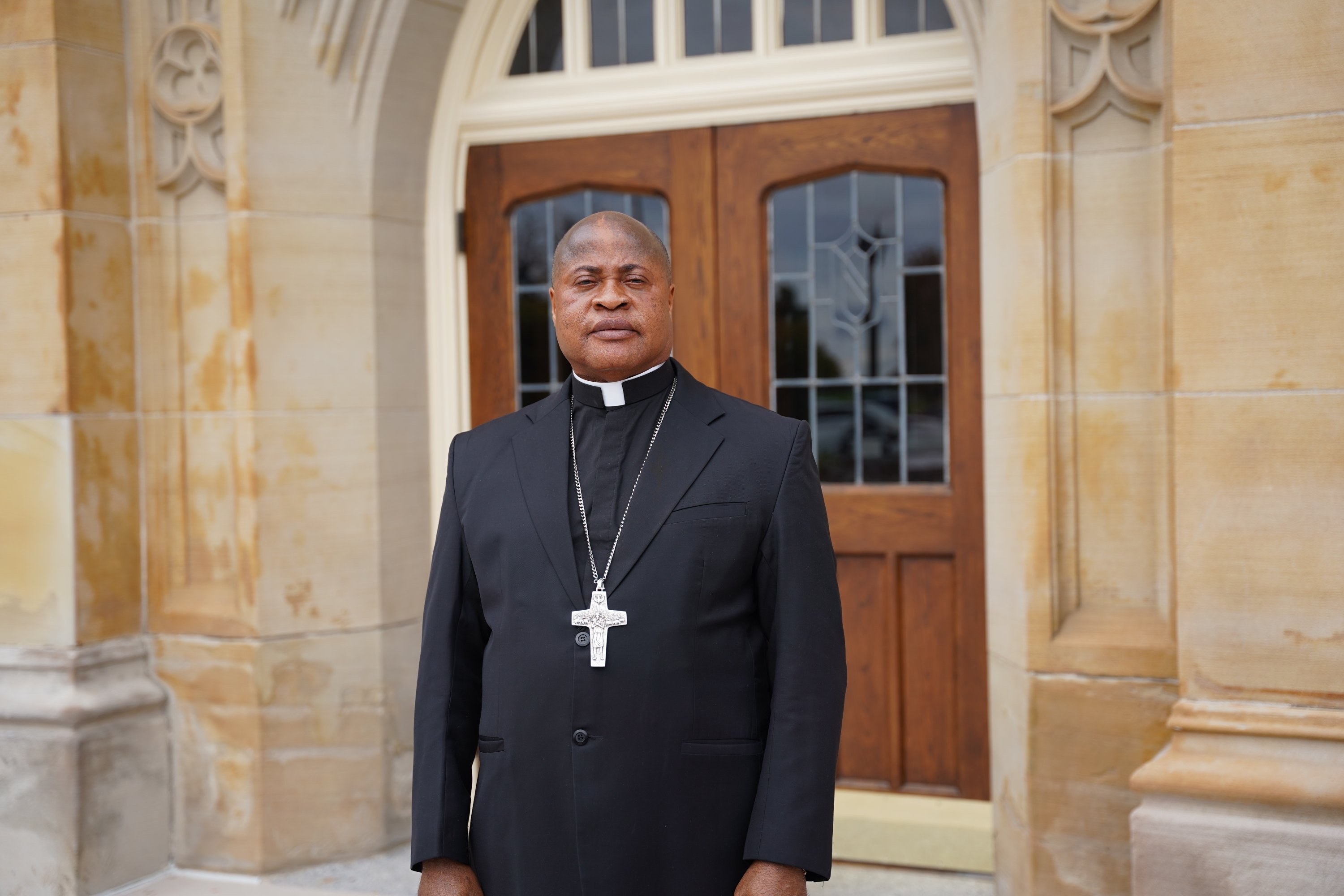
“You visit families wherever they are,” Cardinal Okpaleke said. “The pastor, the vicar, even I as the bishop, at every opportunity, from funerals to marriage ceremonies and cultural festivities, we have to meet these men and women where they are and show them Jesus.
“For us, that means going through the organizations we have already in Nigeria — the family,” Cardinal Okpaleke continued. “We pay particular attention to families, the family of the children of God, because we value the family as the domestic church. So, when we catechize the children at the parish, they go home and teach the parents. The parents are living with their in-laws and cousins, and it all expands to the extended family system. When you evangelize one person, you evangelize the family.”
While there are particular challenges in starting a new diocese — setting up the curia, vocations office, charity organizations and all the infrastructure that goes with it — there still are particular graces in leading a smaller diocese, Cardinal Okpaleke said.
“The joy is that the Church is coming nearer and nearer to the people with the creation of a new diocese,” Cardinal Okpaleke said. “The bishop is very close to the people. They can now access the people and priests of the diocese. Smaller parishes tend to give more detailed attention to the faithful. But we still have challenges in infrastructure. We need to have places of worship to bring the people together. We are trying to build new parish churches and more rectories to accommodate the priests and minister to them.”
The Church’s presence in Nigeria dates to 1885, when Irish missionaries first brought the Gospel to the country. Nigeria remains a wellspring of vocations and missionaries who travel throughout the world — even amidst persecution from terrorist organizations such as Boko Haram and Al Qaeda.
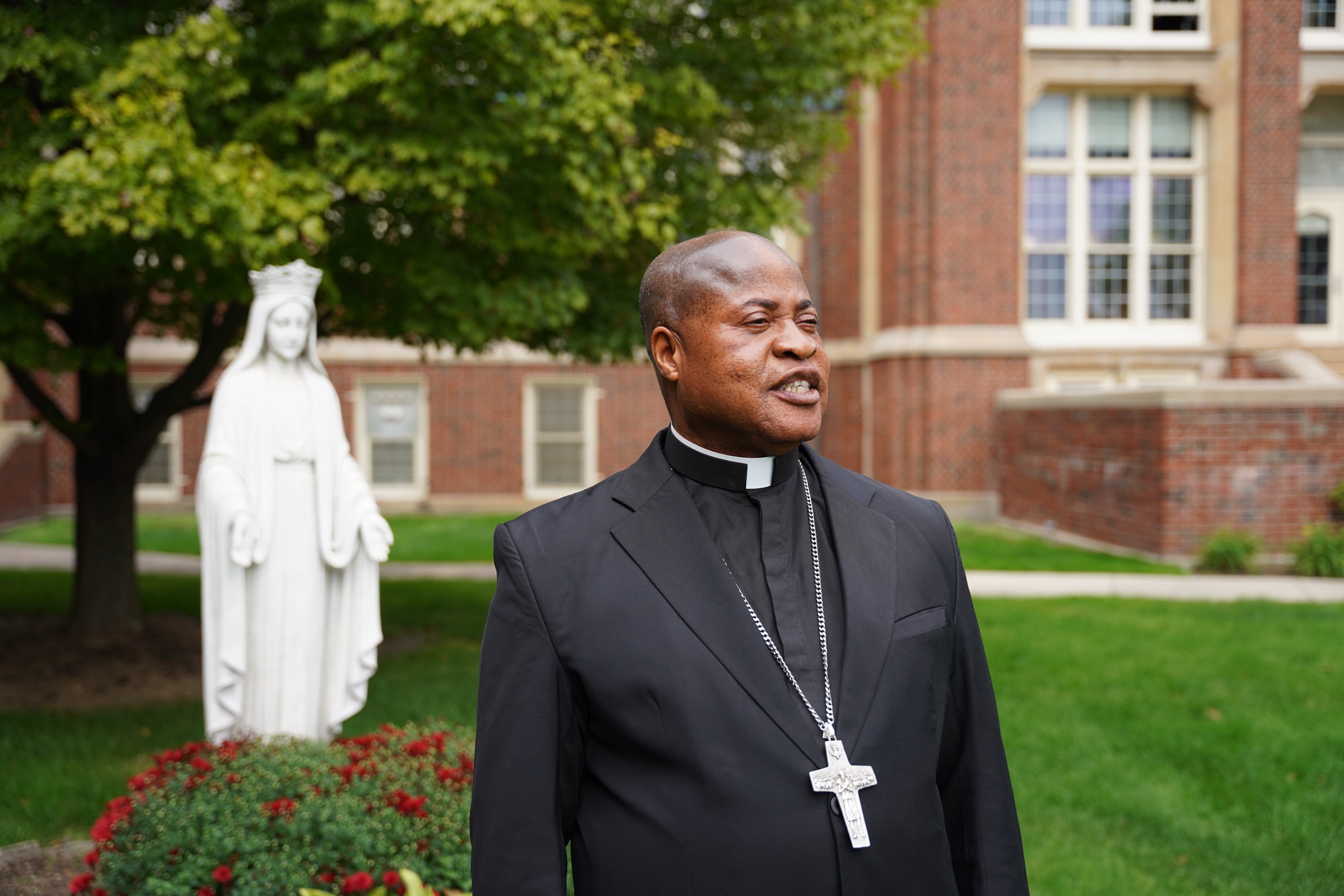
“More or less now it is difficult to find a community that has never heard about Jesus, so it’s a question of depending on the truth,” Cardinal Okpaleke said. “We are focused on what St. John Paul II called the ‘new evangelization,' preaching the Gospel to those who have heard it before. But evangelization is not old or new, strictly speaking; it’s an ongoing process. Even a person who has lost the faith at a point in time needs to be evangelized, so you need to re-evangelize them. We call it the 'new evangelization,' but it’s the same item, reaching out to the child of God.”
The Nigerian church has greatly contributed to the evangelization of the universal Church in recent decades, Cardinal Okpaleke said.
Just as the Irish evangelized the Nigerian people a century ago — and the Irish themselves were evangelized by missionaries who came to their shores — Cardinal Okpaleke said Nigerian missionaries today are continuing to fulfill the Great Commission that Christ gave to his apostles to go out into the world and preach the Gospel.
“It was Irish missionaries who came to Nigeria to preach the faith, but now Nigeria, I would say, is known worldwide for Nigerian priests going out to Europe, to North America, and that’s where the faith grows,” Cardinal Okpaleke said. “After all, those Irish missionaries, how did they get the faith? Through others. Even the Europeans, we know Jesus was not born in Europe. So how did they get the faith? It spread through missionaries, from people spreading the good news.”
In his visit to the Detroit area, Cardinal Okpaleke continues to deliver that message of Jesus Christ, both to the Nigerian diaspora community and all the other faithful in the Archdiocese of Detroit.
“It’s my first week here, but my message is what the Church continues to deliver: that we are one in Christ, brothers and sisters,” Cardinal Okpaleke said. “The same vocation Jesus has given me, he has given to Europeans, to Americans, to Africans, to go out and preach the good news wherever, without boundaries.”
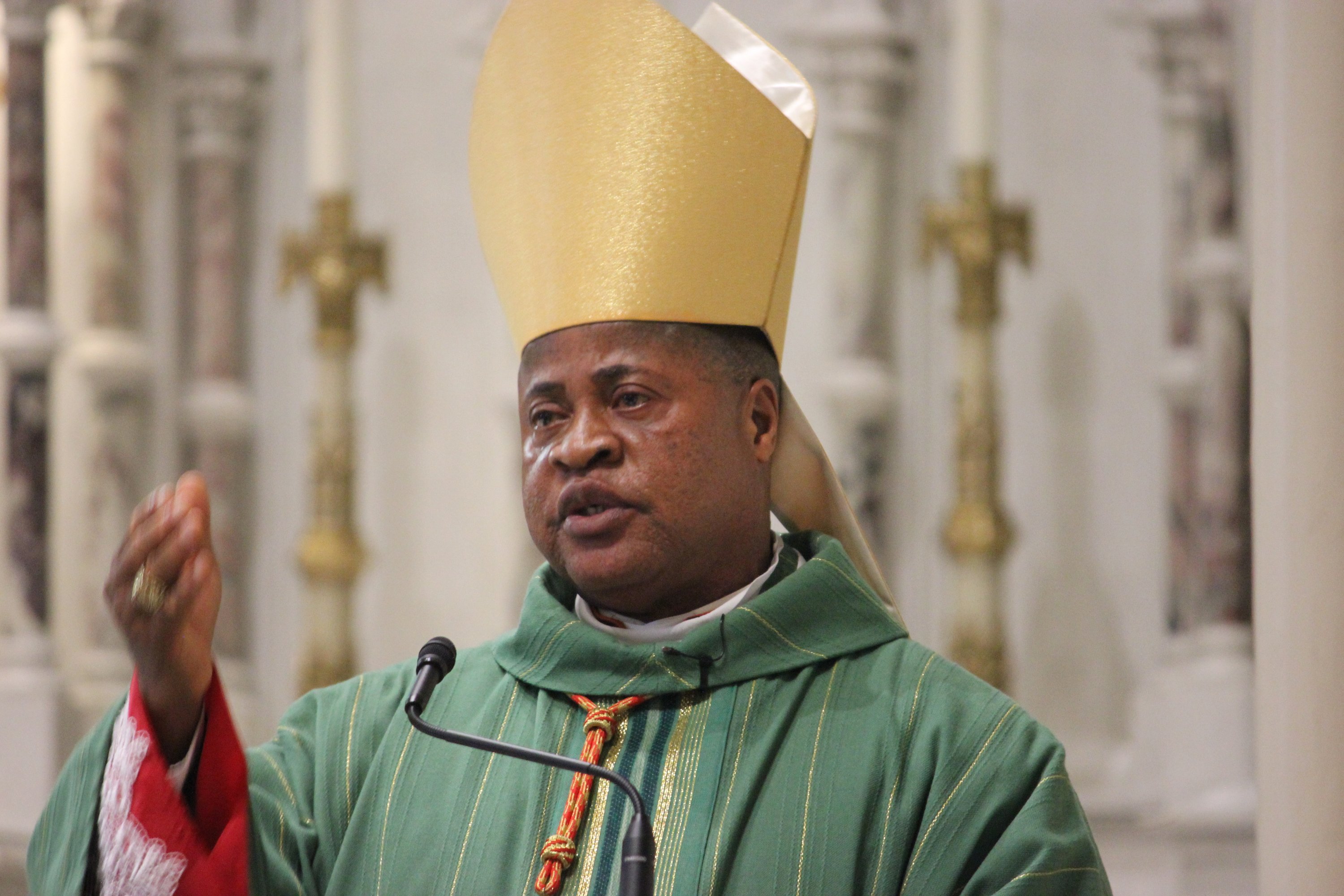
Cardinal Okpaleke experienced those boundaries when he was first assigned to be the bishop of Ahiara, but was unable to take his seat because of external pressures rooted in mistrust and misinformation.
“In the Diocese of Ahiara, we were from the same tribe, the same ethnic group, but because of certain misinformation on the part of some of the people, they would not let me be with them to preach Jesus to them, and that’s the tragedy,” Cardinal Okpaleke said. “Even until today, there are people who still long to be with me as their bishop. But I know this has been something that has happened elsewhere in the history of the Church, even outside Africa.”
During his three weeks in the Archdiocese of Detroit, it's Cardinal Okpaleke's goal to cast aside such divisions, recognizing and celebrating the cultural richness of the different communities that make up the universal Church.
In particular, he looks forward to greeting priests from Nigeria assigned to parishes in the Archdiocese of Detroit, as well as lay members of the area's Nigerian diaspora, reminding them of their call to be missionaries for Jesus Christ, wherever they go, but to never forget from where they first learned they were sons and daughters of God.
“When it comes to the Nigerian people in particular, the vibrancy of the Church and young people embracing the faith, growing up in the faith, working hard to retain their faith, it gives us joy that there is hope,” Cardinal Okpaleke said. “I’m here to remind them to be good Catholics, to be good Americans, to be good Nigerians.”